Tuesday, February 11, 2020

Labour And The Island Of Ireland


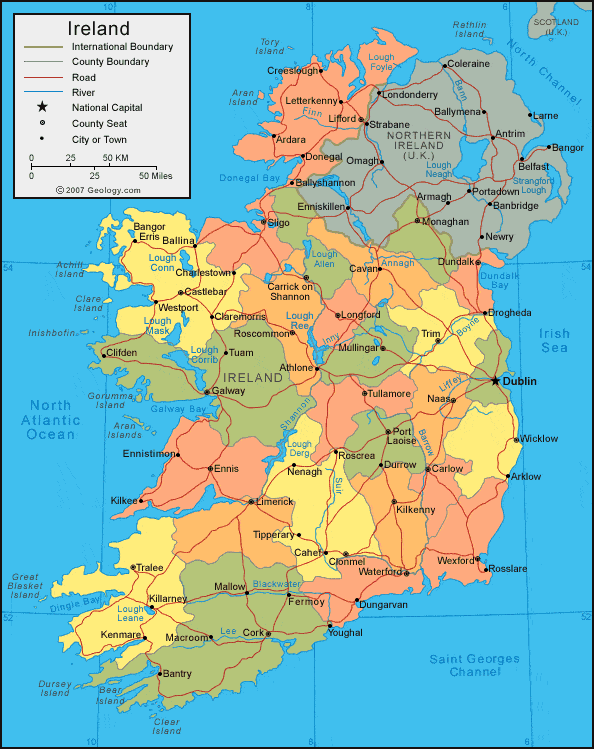
 Ireland political map
The Irish Labour Party had a spell in politics when it was as successful in electoral terms as Sinn Fein has just now become. Sinn Fein having acquired 37 seats, which is the same number which Labour acquired in the 2011 General Election and when a Fine Gael-Irish Labour coalition was then founded. I give below a link to the Irish Labour Party's recent Election Manifesto, which seems to me to have attractive features. But Irish Labour have only now obtained six seats. There should be scope in the politics of the island for Labour Party activities to be aimed at establishing a good relationship between the Irish Republic and Northern Ireland. But although people in Northern Ireland can now join the UK Labour Party it has no similar constituency structure to the rest of the UK. When Dick Spring was the leader of the Irish Labour Party he pointed out that it was easier to unite one set of people living on two islands than to unite two sets of people living in one island. But as the majority of the people in Northern Ireland are not currently in favour of a united Ireland, two mobilised Labour Parties across the island could fruitfully work together to extend and improve relationships. This is especially required given Brexit, where within the EU the Irish Government needs to be pressed to work to overcome any future form of border controls. Given Sinn Fein's history and its hard line united Ireland stance, socialists should be looking instead for the alternative avenues I suggest. I need to find out whether any of the candidates for our Labour Leadership agree with me. See - https://www.labour.ie/manifesto/building-an-equal-society/
Hat tip: Geology.com - the source of the above map.

Wednesday, January 15, 2020

Labour and Life Long Learning

   In a speech to the Association of Colleges on 14 November 2017 Jeremy Corbyn said "Just as Nye Bevan created the National Health Service in the aftermath of World War 2, the next Labour Government will create a National Education Service. We will offer cradle to the grave education that is free at the point of use."  This was a huge and massively important commitment which Labour now needs to retain and develop for the future. When achieved it will help to transform and improve our society massively. Providing us with a seriously minded society (yet one that is more happy and fulfilled) and which uses its developing understandings to ensure that our political system will be fully democratized and meet the needs and requirements of masses in our society who are currently in depressed and deprived circumstances.
   The establishment of an appropriate system of Lifelong Learning will, however, be much more complex than setting up the NHS was. For generally a person (or their relatives and friends) will be aware whether they are in need of help from a doctor, ambulance or hospital services. Determining when someone is in need of forms of adult learning facilities (and whom they should approach) will require a more complex range of life-time openings.
   The Labour Party Manifesto at the recent General Election included a section which briefly spelt out Labour's intended direction of travel on the matter of Lifelong Learning. See the items entitled "Further Education and Lifelong Learning" which appear on pages 40 and 41, click here.

   Unfortunately, this was not an issue which was able to obtain much coverage during the General Election period itself. This was partly due to failings by the media, but it also arose from the fact that Labour's own work in shaping its approach was only reaching fruition when the election was on top of us.
 Image result for Labour Party Lifelong Learning Commission
   A "Lifelong Learning Commission" co-chaired by Estelle Morris and Dave Ward only issued its Interim Report in July 2019. It was then only able to come up with its final 85 page report containing more detailed  recommendations as we moved into the dissolution of parliament for electoral purposes in November. Click here.   A summary of its 16 major recommendations appear on pages 58 and 59 of the report.

I will now confine myself to what has been my own specific interests in forms of adult learning, which is just the tip of the iceberg.
 
  My own commitment towards forms of lifelong learning developed after some of my early failures via school education and from later experiences starting from the time when I undertook my National Service as an 18 to 20 year old. My involvement with forms of lifelong learning being mainly restricted to the areas of politics, economics, industrial relations and philosophy. Labour's proposals go well beyond these matters. But I will now restrict myself to my own experiences.
  As an only child, I came from a solid coal mining background. My father and his five brothers all came to work at the same local pit and his only sister married a local miner. Only my Uncle Arthur finally moved away and joined the RAF. My mother's two brothers also started work in the pit, one then moving  into nursing. My mother and one of her three sisters also married coal miners. This meant that I had the advantage of being brought up in a tightly mining environment with close social bonds.
  But my shortcomings at Primary School were centered around extreme shyness and a serious inability at spelling. So I failed the then 11 plus exam and went to a Secondary Modern School and not a Grammar School. Then I had never read a book from cover to cover until at 12 a teacher took our class into the school library and made us borrow and read a book. I read John Buchan's "Mr Standfast" and was hooked. I later made it to Grammar School via an "occasional admissions" exam. But I was no success there when it came to the "O level" exams at 16, failing the key subjects of English Language and Maths. But in a post war period shaped by the Attlee Government there were lifelong job opportunities and I made it as a Railway Clerk. By then I was regularly into purchasing books such as H.G. Well's "Short History of the World" and visiting the local library, where my mother also borrowed serious novels.
   A key step in my own form of lifelong learning started when I undertook my National Service via an RAF Movements Unit at Basra, linking in with Iraqi State Railways. I was shocked by the harsh living and working conditions I saw many Iraqi people experiencing
   Then there was a book shop I visited in Basra which sold Rational Press Association books which challenged what had been my Methodist background. There were other books to buy and I also ordered works by writers such as G.B. Shaw, GDH Cole, James Joyce (recommended by a corporal), a volume of Shakespeare's plays and Tolstoy's "War and Peace".
   The man who ran the shop said that he had been stopped from my ordering Karl Marx's "Das Capital" when he checked the matter out with the local chief of police. But I also obtained the "New Statesman" weekly on rice paper, plus "Reynolds News" and the "Observer" which came by sea and were then two weeks old.
   I was finally demobbed at 20 in the midst of political turmoil around the British invasion of the Suez Canal and the Russian invasion of Hungary. It was a politically stimulating period. My initial avenue for expressing my developing political views were letters to the local press. Then a year after my demob I joined a body stimulated by GDH Cole called the International Society for Socialist Studies and even heard him addressed them. I also joined the Labour Party and after a few months became a local branch secretary and arranged for the meetings to rush through business each second month and then have a speaker and a discussion. A local Fabian Society was then founded at near bye Peterlee and I became their Secretary. I was into the dialectics of political debate.
   I then attended a Fabian Summer School held at Ruskin College in Oxford where I discovered that the College itself was for people like me, who had an interest in subjects such as Politics and Economics but no relevant "A" level qualifications as a pathway into such studies. I later made it into Ruskin College via references (one from Manny Shinwell my MP), writing an essay for them and attending an interview. My fees and living allowance being met by the Durham County Council. After 2 years full-time study, this led me to obtain an Oxford University Diploma in Economics and Political Science which enabled me to get a place at Hull University where I gained a degree in Politics and Philosophy.
    But that was only a leg up to my fuller involvement with Lifelong Learning. For from 1966 to 1987 I was a tutor in the Sheffield University Extramural Department (later called the Division of Continuing Education) taking Day Release Classes for Trade Unionists from areas such as the Coal, Steel and Railway industries plus classes for shop stewards. I mainly taught Politics, Industrial Relations and Student Skills. Numbers of my students also moved on to full time study at Adult Education Colleges, including Ruskin. Others became more fully involved in their Trade Unions and in areas such as Local Government.


        1983 Derbyshire Miners Day-Release Class

   Then my Department established an Access Course mainly providing openings into Sheffield University for adults without formal qualifications. I taught classes on Philosophy and then acted as Course Director. Those who successfully made it to full-time University Studies at Sheffield via our classes ended up generally with above average degree results.
   Then when I became an MP in 1987 three of my fellow Labour colleagues were former Yorkshire Miners whom I had taught on Industrial Day Release Classes and another Labour MP from that background had been a fellow student with me when I was at Ruskin. Dennis Skinner had also attended our Derbyshire Miners classes, then Ruskin. He was a day release student with us the year I arrived in Sheffield, but I was then teaching a different Derbyshire Miners Class.
   Although I studied and taught politics for 21 years before becoming an MP and then took many classes down to parliament on day trips, my parliamentary activity was also a huge learning curve. Not only was the range of parliamentary activity widespread, but constituents came forward with a complex range of problems which needed to be tackled. Luckily I soon learnt that if an issue was new to me, the first place of call to find out about a topic was the research staff in the Commons Library. For Conservative Government Ministers (at the best) would only answer the specific questions I asked them. Whilst a researcher would know that I was new to a topic and would explain what I really needed to know and pursue. The loss of their services are the main thing I have missed since retiring from the Commons in 2005.
  As an MP lifelong leaning was an issue I pursued, but circumstances dictated that this had to be in a  defensive capacity. Thatcherism struck at the work of Adult Education Colleges such as Ruskin and also ended payments of student fees. Next even Tony Blair (with my full opposition) removed University allowances for students for living purposes, thus adding further to their borrowing costs. These matters still need to be tackled.
   When I finally retired from parliament in 2005 I returned to an old habit of setting up monthly discussion meetings. This time as Political Education Officer for my local branch of the Labour Party in Dronfield where I have now lived for 50 years. I only passed on that commitment last year, but I still keenly participate in the group's discussions. In fact this item on Lifelong Learning arises because Bob Heath a former Sheffield University Extramural colleague of mine (whom I initially studied with at Ruskin College and then Hull University) discussed this very issue with us at our last meeting. Click here.   John Halstead who involves himself in both ILP activities and our local discussion group, being a further colleague from my Extramural days. He works closely with the Society for the Study of Labour History.  
   Then three other sources feed my attempts at my own form of continuing adult learning. First, I continue to read works in my areas of interest. Having found hardly any scope for fiction since I first turned up at Ruskin in 1960. Secondly, I scan the Internet for serious forms of information relevant to my interests - whilst seeking to avoid those comment boxes where people just fart at each other about politics. Then also there is the ILP.  Under the influence of Keir Hardie it was founded in 1893 and helped shape the Labour Party. But in experiencing a departure by Labour from its basic values, it set out on its own in 1932. It finally returned to the fold in 1975 changing its name to Independent Labour Publications. I then joined and participated with them in a wide range of Labour movement discourse.  

  Whilst I am for the forms of adult learning which I have stressed, Labour's recent publication correctly goes way beyond these matters, showing the wide number of areas where varying forms of Life Long Learning are very deeply needed. The whole issue should not just be an add on to Labour Policy, but needs to be at its heart.     


Monday, December 16, 2019

The Way Ahead For Labour

Image result for Drawings of Sidney Webb
   
   As a consequence of Labour's collapse at the General Election and the move towards  electing a fresh leader, a serious yet comradely debate is needed within the Labour Movement on what our future direction of travel should be - and who can best lead this. Even if this is unlikely to happen, some of us should try to push for it. 
 
   The Manifesto that we should have been fighting the general election on should now form a major part of our discussions in relation to our direction of travel. For apart from the section on Brexit which arose from an unsatisfactory attempt to reconcile conflicts inside both the PLP and the wider movement, it is a very important document. Although as a Manifesto it should really have honed-in on what could feasibly have been delivered within the lifetime of the new parliament. Yet it was so fully directed at overcoming the major strengths of the controls of capitalism, that many of its proposals would have been undermined by such very powers within the operations of a mere five year period.
   Sidney Webb in shaping Labour's old Clause 4 and planning earlier socialist programmes from near the end of the first world war, was so fully aware of the powers of capitalism that he stressed the need for care and gradualism. He was even depicted as walking slowly in front of a socialist steamroller holding a red flag. For when any specific expliotive power of capital is tackled, it is itself likely to turn to fresh devices that will then further need to be dealt with - and that slows up the process. We can't just wish away the powers of Capital. It requires steamroller type persistence and gradually mastering anti-social activities.
   Labour's recent Manifesto should not be seen as something which could ever have been delivered in the life of a single parliament, but as a general direction of travel. The Manifesto did, however, start out on a key item which needs to be a top priority (before we run out of time) - the need to tackle climate change via what it called a "Green Industrial Revolution." On this, the Manifesto covered the key areas of the economy and energy, transport, environment and animal welfare. It is a pity that its proposals were not given wider publicity - even by the Party itself. There was even a case for the Green Party pulling out of many parliamentary contests and joining in the support of Labour Candidates on this key matter.
   The other key sections of the Manifesto were on the need to "Rebuild Our Social Services", how to "Tackle Poverty and Inequality" and the need for "A New Internationalism". But as this was a Manifesto for a General Election in which we were seeking to become a Government for the next five years, it was not something we could democratically have fully hoped to deliver in that period. Yet there were few references in the Manifesto to time restraints. Apart from a time qualification which was made in saying that ''Labour will deliver free full-fibre broadband by 2030" and not by the likely next election in 2025.

   There were, however times, when the Manifesto went over the top in its claims. Such as - "We will adopt an ambitious Vision Zero approach to UK road safety, striving for zero deaths and serious injuries". Well that is not going to happen as long as we have road transport - although actions could significantly reduce such killings and injuries.
   Then the section sub-headed "Ministry for Employment Rights" contains the need for no less than 30 key items. It is difficult to see these getting onto the statute books within a five year period - unless we adopt a Militant-style Enabling Act. Which is more a revolutionary socialist technique than a democratic socialist approach.
  Yet the direction of travel in the Manifesto (except over the matter of Brexit which is now mainly outside of Labour's control) is something which we fully need to press for. Which candidate for the Labour leadership will now see that this is the type of approach (given a sensitive form of gradualism) that needs to be retained as a basis for its agenda? 


Sunday, December 01, 2019

Labour's Key Policies


The Web-site of Independent Labour Publications is running a really important pro-Labour article in relation to the current General Election.


The writer Barry Winter covers Labour's proposals to tackle a range of massively important social problems. These include - (1) Poverty and Low Pay. (2) 200,000 children living in absolute poverty. (3) School and Youth Services being pushed past breaking points. (4) Wide areas where those over 65 are also seriously hit. (5) Many private tenants being trapped in squalid slum houses. (6) An NHS with serious staff shortages. (7) 25,000 annual deaths linked to the effects of pollution.

The article is a must for democratic socialists and also needs to be more widely absorbed. It can be found if you link here.

Saturday, November 16, 2019

Easington Colliery - aspects of its past.

https://easingtonmemories.files.wordpress.com/2013/08/4647709512_c02e2ebd1c_o.jpg

Crowd waiting for news outside the pit at Easington Colliery following its 1951 pit disaster. I was 14 year old at the time. My father was in the pit when the disaster occurred. He survived as he was working in a different seam from the explosion. He later helped with the salvage work. I also had four uncles and a number of cousins working at the pit then. None were killed. Many escaped by being on different shifts to those who were killed.  All were deeply devastated.

Four articles of mine concerning aspects of the history of Easington Colliery can be found via the links below. They all appeared in annual publications of the journal of the North East Labour History Society called "North East Labour History".

They can be accessed fully via the following links. Just click into the top one and scawl for the rest.


Pages on this link are 47 to 57 as double pages. Those in the journal being 88 to 108.  

http://nelh.net/wp-content/uploads/2018/11/North-East-History-Issue-43.pdf 
Pages on this link are 78 to 96. Those in the journal now on single pages being 76 to 94.

http://nelh.net/wp-content/uploads/2018/11/North-East-History-Issue-44.pdf
Pages on this link are 106 to 124. Those in the journal being 104 to 122.

http://nelh.net/wp-content/uploads/2018/11/North-East-History-Issue-48.pdf
Pages on this link are 83 to 91. Those in the journal being 81 to 89.

Also see the item below this one on this blog. There also is a link at the close of this for 30 items on "Easington".    


Wednesday, November 13, 2019

My Early Life At Easington Colliery


Image result for Easington Colliery photos


 See the penultimate paragraph below for reference to the above.

 I was born at Easington Colliery in 1936 and it was my home base for 27 years until 1963 when I married and my wife and I moved to Hull where I was then an adult student at their University.
    However earlier I spent spells away from home. Between 1954 to 1956 undertaking my National Service in the RAF. For the bulk of 1955 and 1956 I served in Iraq. Then I later became a full-time student at an adult education college in Oxford from 1960 to 1962, returning to Easington for the vacations.
   I next studied at Hull University from 1962. For my first year there I again returned to my home to live at Easington during the vacations. I then married Ann in the summer of 1963 and we rented a flat in Hull for two years. She originated from nearby Shotton Colliery. Both of our fathers being local coal miners. My dad being down the pit at the time of the 1951 disaster, but in a different seam to the explosion. He later helped with salvage work.  
    After my graduation at Hull my new employment as a lecturer took Ann and myself to Worksop for a year, then to Sheffield for three years until Ann and I moved next door to Dronfield in North Derbyshire just over 50 years ago. Where I eventually became the local MP between 1987 and 2005.
    Ann and I returned to the North East on a regular basis whilst our parents were still alive. My mother living the longest until 1999. We have made occasional visits to the area since then.
    In fact until I was called up to undertake my National Service in 1954 I had never travelled anywhere further south from Easington than York. I did a day trip to there at 16 when I was interviewed for my first job as a railway clerk. My employment as a Railway Clerk whilst living at Easington taking me no further away than work at Stockton to the south and Sunderland to the North. My first two years being spent at the neighbouring Horden Station.
    So despite my moving away from Easington Colliery 56 years ago at the age of 27, it has always been a pull for me. I had three articles about its history published in the annual journal of the North East Labour History Society in their 2011, 2012 and 2013 editions. These covered the period from the initial efforts to sink its coal mine in 1899 up to 1935. I would have liked to have continued with these articles in order to finally cover at least the period up to the closing of the pit in 1993. But when the 2013 edition was published I had reached 77 years of age and was walking badly. Nor do I drive a car, yet I had been travelling regularly to Durham as my main research required me to make visits to the Durham Library research facilities via public transport. Unfortunately it was all getting beyond me. I also, however, wrote a more personal piece about my Easington background for the Labour History journal for their 2017 edition. The following provides a link to search for these articles - http://nelh.net/the-societys-journal/previous-issues/
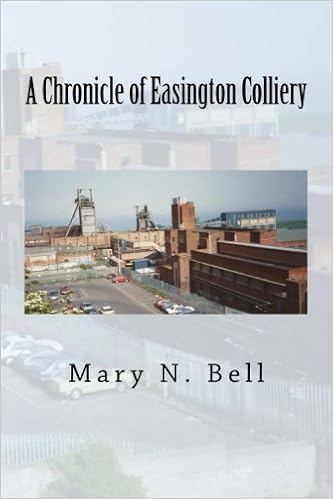
    I also wrote a forward for Mary Bell for her fine book “A Chronicle of Easington Colliery” which was printed by Amazon in 2014. It is a publication that everyone interested in the area should read. Amazon also printed her fine book of poems entitled “Where the Pits Were”. Another telling publication is “Easington Throughout The Years” by Eileen Hooper. See here for avenues of access to these three publications - https://www.amazon.co.uk/Chronicle-Easington-Colliery-Mary-Bell/dp/1501025481
    My blog was established on my 70th birthday, hence it is called “Three Score Years and Ten”. Its thread on “Easington” now shows 30 items which can be trawled back to. These items have attracted above average readership. See -

Tuesday, November 05, 2019

63 Years Ago Today At RAF Habbaniya in Iraq


Habbaniya
The photo shows what was its HQ.
On 5th November 1956 Britain and France invaded Egypt in what became known as the Suez Crisis. The Iraqi Government then had Nuri al-Said as Prime Minister and were under British influence having signed the Baghdad Pact in 1955. Immediately riots broke out against the Suez invasion in areas such as Baghdad, Basra, Mosul, Najaf, Kafu and Hilla. These could be seen as triggers which eventually led to the Iraqi Revolution of 1958 under Qasim.

At the time of the outbreak of the unrest I was in Iraq. I had undertaken the bulk of my National Service in the Royal Air Force at a Movements Unit in Basra. But as I was due to be demobbed I had been moved to the RAF camp at Habbaniya to await a plane to take me back to Britain. So I did not directly experience the unrest, being stuck in the camp.

But on 5th November a flight in front of mine set of from Habbaniya to Cyprus on the first leg of its journey back to Britain. But as it was approaching a fighter base in Syria permission was withdrawn for it to fly over that country. So it had to double back to Habbaniya.

Whilst having a meal in Habbaniya I listened to the BBC News over the loud speakers telling us that there were no British troops in Iraq ! Plans were then made, however, for RAF flights to and from Iraq to be made via Ankara in Turkey. And I was given a place on the first of these. Although we were intercepted by Turkish fighters who made signs to us that we would be shot down if we did not return to Iraq. Luckily they must have received radio information confirming that we had permission to proceed, as they then flew away.

As reservists who had completed their National Service were at the time being called up to help with the fight in Eqypt, I was worried that I would not be demobbed and be caught up in the conflict. But I only had clerical experience working with Iraqi State Railways and Shipping lines. Pen pushers such as myself (filling out Arabic forms in English) were not what the invasion needed.

Unfortunately, my life was then taken over by my being demobbed and returning home to my previous job as a railway clerk. So I never discovered exactly what turmoil faced my former RAF colleagues at Basra. I had served there for 20 months and had never experienced any problems whatsoever from the local community; yet I moved almost daily around areas such as its railway station, good yards, docks and the Basra town centre. Then Iraqis worked as clerks and labourers on our camp. But this peace and tranquility are likely to have changed a great deal after 5 November. I had avoided any problems by the skin of my teeth.

For what was happening in Iraq at the above time, the following is a useful source – pages 115 to 117 of “Iraq” by Adeed Dawisha, Princeton University Press. I refer to the first paperback version published in 2009.

It was, however, my experiences in Iraq and the Suez Crisis which drew me into subsequent political activity. I have since attempted to make up for my failure to reconnect with RAF Basra personnel at the time of my demob and now hold a proud certificate of honorary membership of the Iraqi Federation of Trade Unions – who surfaced in 2003. 

For more on Iraq follow the link below 

Thursday, October 10, 2019

LEE ROWLEY'S PARLIAMENTARY RECORD


This item has been updated to cover Lee Rowley's first full parliamentary period from the June 2017 General Election until its final dissolution. 
In the 2017-19 period Lee Rowley was the Conservative MP for North East Derbyshire.  I served as Labour MP for the same constituency from 1987 to 2005. 

I give below my assessment of his parliamentary record with many of the details being drawn from Hansard. I initially cover the period from the 2017 General Election up to the proroguing of parliament on October 8th this year for a fresh Queen's Speech. It is only near the close that I cover the recent and short parliamentary session from 14th October up to 6th November. The main and opening material refers to the earlier and much longer period covering 29 months.

In parliament Rowley involved himself much more fully with activities in Westminster Hall than with those on the floor of the Commons. In fact he was seldom seen in his place in the Commons' Chamber.

Whilst Westminster Hall is an area which many MPs need to use on occasions it is much smaller than the Common's Chamber and is more thinly attended, having no facilities for a normal parliamentary division to take place. And also it sits for much shorter periods than does the Commons Chamber. So Lee Rowley sometimes used it to criticise his own Government over matters such as their traditional stance on fracking, but as there are no contested votes in Westminster Hall this will then have given him no real trouble from the Government Whips.

On the floor of the Commons in this period he made 17 speeches. Around a speech every two months. But these lasted for only an overall total of 89 minutes, yet this time also covers intervention from other MPs. So they have really averaged less than 5 minutes. He often left the Commons soon after he has made his contributions, so others didn't then respond to him in such circumstances. Back in March he carried the first reading of a 10 Minute Rule Bill to restrain fracking operations, but in the remaining seven months of the parliamentary session he did not then get the Commons' authorities to print the proposed Bill. Yet the authorities are helpful and skilled in providing the technical details of what any proposed Bill requires. With the proroguing of parliament for the recent Queen's Speech his former authority to have his Bill printed was then lost. He should have acted earlier to deliver on this matter.


His equivalent contributions in Westminster Hall (who meet for much shorter periods) was  24 speeches, lasting in his case twice as long as those in the Commons - at a total of 181 minutes (again allowing for interventions). And whilst in the Commons he has only ever once introduced an item (the one above under the 10 Minute Rule procedure), he obtained the right to introduce debates on several occasions in Westminster Hall. These added to his total number for such contributions, for they also led on to him having concluding contributions and he also intervened during numbers of these debates. Then an MP can barely disappear from a debate which they have introduced. Debates on a topic are normally much shorter in Westminster Hall than those in the Commons Chamber and are more normally thinly attended.

There is nothing wrong with making good use of Westminster Hall debates, but these should not be used as a substitute for also pressing matters on floor of the Commons. 

He also submitted 94 Questions for written answer. That is roughly at the rate of one a week for when parliament was sitting. 31 of these related to fracking, 16 to rail or other forms of transport, 7 to health issues, 5 to drones and only 3 on Brexit.

He involved himself with the work of certain All Party Groups. Chairing the groups on the Impact of Shale Gas and on Alternative Lending (which seeks to ensure private market development.) He was also Vice Chair of the Group on Artificial Intelligence and a member of the group on Data Analytics.

He was and still is Co-Chair of an outside group of free-market freaks called FREER and has written articles for the House of Commons Magazine and newspapers on their behalf, expressing strong free market ideas. FREER are a body which propounds free enterprise principles such as those pursued by INEOS and other fracking companies. This clashes with his anti-fracking stance, which he clearly pursues merely for local electoral purposes. See here and then here with its claim that “we need to make the moral case for capitalism”.

Then there is a helpful parliamentary avenue he refused to use – Early Day Motions. These are published by the Commons and are normally used by back-bench MPs only. Technically they seek a Commons debate on their proposals. Although very few achieve this objective, unless other avenues are then also pursued. But they can be used to publicise a proposal and give the MP who submits an EDM the opportunity to see which fellow MPs then add their signatures to their proposal. This can be very helpful in building up support on a issue – even cross-party support. In just over a week of the opening of parliament after I was first elected in 1987 I submitted an EDM (supported by Jeremy Corbyn) aimed at getting the relevant Conservative Government Minister to agree to meet a deputation to seek Government assistance to deal with the consequences of a local underground fire in Dronfield. I then pursued other parliamentary avenues on the matter and the meeting was later granted. It was just a start down this track. 

However, Lee Rowley breached his principle of not signing EDMs on a single occasion during the parliamentary period under review. Being amongst 82 Conservative and DUP MPs adding their names to an EDM from Bill Cash, entitled "Exciting the European Union". So we can now ask him, "why that one and not any others ?"     

Excluding my own first two years as an MP for which I can't find relevant records, the Commons shows that over my next 16 years as an MP I submitted a total of 503 EDMs, seconded 31 and signed another 12,010. Yet Lee Rowley until near the end of his first parliament he had not submitted, supported nor amended a single EDM. He claims that they cost too much to publish and are just a pretense at doing something. Yet they can be used especially at the start of a parliamentary (or wider) campaign, with MP's then finding further opportunities to refer to their contents in relevant Commons' debates. They also let people know where an MP stands on a wide range of issues. Lee Rowley's refusal to make use of this established parliamentary avenue except once in his first parliament (along with his few appearances on the floor of the Commons) is just  a failure to pursue aspects of his parliamentary responsibilities.

On his facebook site Lee Rowley recently said "We’ve got to stop this; people are tired of MPs messing around and want Brexit sorted. I’ll keep trying to ensure that happens." Yet why did he not press his views about what should happen (and how) to the Commons during its recall and prior to the last election? The past Speaker provided ample (and even excessive) opportunities for MPs to do this. Yet there is no record in Hansard of Rowley making a single such contribution. And when I looked at the TV coverage at various key periods he was nowhere to be seen.

Then his parliamentary record in the recent short parliamentary session from 14 October to 6th November was very strange. He was selected by the Government to move support for the Queens Speech which set out proposals for what could have been a long parliamentary session if the coming General Election had not got in the way. This shows that dispite his past conflict with Boris Johnson when a Westminster Councillor (see the details later), he has now moved closer to the Prime Minister's general stance. Yet in an 11 minute parliamentary contribution (when theoretically supporting the Queen's Speech) he said little or nothing about the Speech and its contents nor just why it should be supported. This is a very stange form of support for what is really a Prime Minister's speech read out by the Monarch. You can check my claims for yourself by reading his strange ideas which theoretically are in support of the Queen's Speech - click here. 

Then although parliament then sat for another 14 days before the General Election, Lee Rowley only managed then to ask a single parliamentary question.
   
Just who is Lee Rowley ?
He is aged 39. Although born in Chesterfield near NE Derbyshire, he later spent time outside our North Derbyshire area. First studying at Oxford and Manchester Universities, then holding various positions with Barclays, a multi-national professional services network called KPMG and Santander. From 2006 to 2014 he served on the Westminster City Council (living in that area). He became their Cabinet Member for Parking and sort to introduce certain parking charges, but this was opposed by environmental and disability campaigners and he faced calls to resign. His stance was even criticised by Boris Johnson when Mayor of London and it was then blocked by the High Court. In 2010 he stood unsuccessfully for parliament in the Bolsover Constituency.

In the Commons he served on the Statutory Instruments Select Committee from October 2017 to April 2018. They check Government measures which are pursued under authority granted to them by Acts of Parliament. He then became a member of the Public Accounts Committee in February 2018 and then soon resigned from his position with the Statutory Instruments Committee. The Public Accounts Committee examines the value for money of public expenditure. He prefers to press for restraining public rather than exploitative private powers.

He records his parliamentary interests as being energy, housing, planning, financial services, transport and artificial intelligence. We need to appreciate that this is all in the context of his overriding commitment to the unrestrained powers of free-market capitalism.

There is also a coverage of his parliamentary voting record - click here. It shows that he voted 427 out of 463 divisions, voting in line with the Conservative whip 415 times and rebelling 12 times. Each rebellion was in opposition to the deal which the Conservatives  had then struck for leaving the EU and for nothing else. He was then for leaving with "no deal". But when the deal was slighly adjusted under Boris Johnson, he moved to supporting it. He missed votes (or abstained) 36 times.  

Added 6 March 2020. From July 2019 until the December 2019 General Election, Lee Rowley served as one of the two Private Parliamentary Secretaries (PPS) at the Treasury, which meant that he was then obliged to follow the Conservative Government's whip. After the 2019 General Election he was re-appointed as a PPS, but I am still searching to find whether his post is still the Treasury one.   Added 17 April 2020 - I have finally discovered via the Cabinet Office that he is now no longer a PPS.

Monday, September 30, 2019

Worthy Of Our Support - The Derbyshire Unemployed Workers' Centres.

 Image result for Derbyshire Unemployed Workers' Centre
  I am deeply concerned that the newly Conservative controlled North East Derbyshire District Council has ended that Council's financial support for the essential work of the Derbyshire Unemployed Workers' Centres (DUWC).
   The DUWC are first rate organisations who provide telling assistance and help to deprived and depressed unemployed workers.
   When I was the local MP between 1987 and 2005 for the NE Derbyshire Constituency I developed a close relationship with this body and held half of my MP's surgeries in their office which was then situated on Saltergate in Chesterfield. Due to the shape of North East Derbyshire which curls as a C shape around Chesterfield , I felt that the venue was an important central point where constituents could visit me for my own assistance. Of course, I kept Chesterfield MPs informed of my activities within their constituency boundaries. Then I held the rest of my surgeries scattered around the Constituency itself.
   I hope that people will closely examine the value of the work of the DUWC as far as the well-being of this areas most deprived people are concerned. And that you will then press the leaders of the North East Derbyshire Council over the need to restore that bodies former support for the DUWC's essential operations. To help make up the current shortfall arising from the Council withdrawing its financial support for the work of the DUWC, donations can be sent to them by individuals, trade union branches and other progressive bodies. Your help is keenly needed on this.

   For more details about the essential work of the DUWC and how you and the bodies you are associated with can aid its essential operations, click here.


Friday, September 27, 2019

For Motions Adopted and Policies Announced at the Labour Party Conference


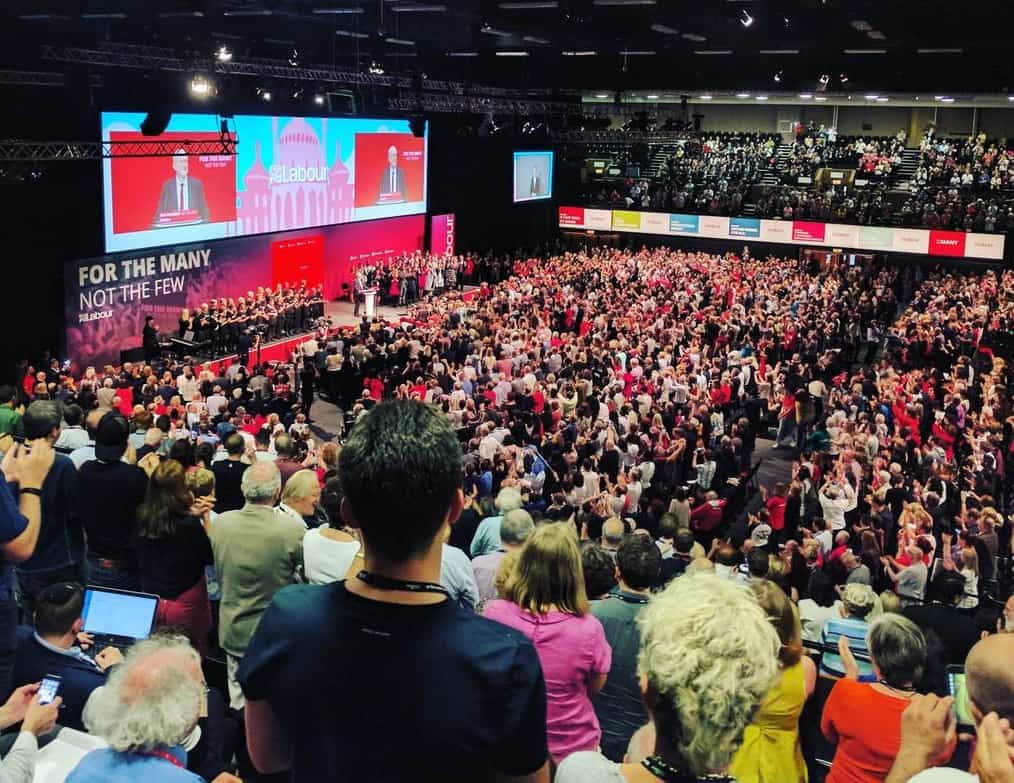
Image result for Labour Party Conference 2019                                                    See via this link.     

Hat tip "Labour List".                                                 

Thursday, August 29, 2019

Brexit : Parliamentary Arithmetic and Constitutional Conundrums

 This first item was updated at 11.30 am on 8th September 2019 and again corrected at 2.40 pm. Then adjusted following the move by Sam Cyimah to the Lib Dems on 14 September.
 EU Countries Map
Hat tip for map. See here.  
                             
                          We Now Have A Clear UK Minority Government

The party status of no less than 46 MPs has altered since they were first elected – 31 are former Conservatives. 15 former Labour. This is a post-war record for such changes.
    
                                    2017 General Election         Currently
                                       % Votes     Seats                      Seats
Conservatives           42.4        317                        286  One Deputy Speaker
Labour                      40.0        262                        247   2 Deputy Speakers
SNP                            3.0          35                          35
Lib Dems                   7.4          12                          19
DUP                           0.9          10                          10
Sinn Fein                    0.7          (7)                         (7)   Refuse to attend
Plaid Cymru               0.5           4                            4
Green Party                1.6           1                            1
Independents                              1 (Hermon)          34 +Defected/Removed
Change UK                                                              5   Defections
Speaker                                      1                            1   Only casting votes
Resigning                                                               (1)  PM's brother
(Source of percentages -    https://www.bbc.co.uk/news/election/2017/results)

Initially Conservatives with the support of the DUP (and less their Deputy Speaker) enjoyed 326 potential votes to the oppositions 313. However the DUP's support on Brexit issues could not be guaranteed over the backstop issue.

Currently with the Conservatives taking the whip away from 21 MPs and with two resignation, then even with potential support from the DUP on most issues the Government are technically in a minority position of 343 to 295 over a hard Brexit. But even on other matters where those Conservatives who have lost or resigned the whip could still go into the lobby with them, they still (even with DUP support) only have a maximum of 316 votes with a possible 322 against them.

Luciana Berger and Angela Smith have moved their party attachments no less than four times each in the current parliament. Each from Labour to Change UK to Independents and now to the Liberal Democrats. 

                           Parliamentary Arithmetic on Brexit
 
When it comes to having any future votes in the Commons on how to leave the European Union, it is difficult to see how a majority vote can be carried. Other than a possible vote of no-confidence in the Government. For there are blocks of MPs in at least four different camps, which make it almost impossible to cobble together a simple majority on any position.
    1. There are those who wish to leave the European Union without any agreement. Their main numbers are within the Conservative Party as expressed via the European Research Group which at one time was discovered to have at least 55 members. But there are many others who also adopt its approach, at least as a fall-back. Boris Johnson's current tactics aid their stance.
    2. The SNP, the Lib Dems, Plaid Cymru, the Green MP, Change UK, Independents and sections of the Labour Party generally favour a fresh referendum. Most hoping that it will then determine that we will remain in the EU. Others claiming that any plan to leave the EU should require endorsement or rejection via a Referendum.
    3. Then there are those who still look for a departure deal with the EU , even if time for this is running out - unless we can again get them to further postpone the date for our departure. Yet even here the hoped for options differ. There is still the existing EU deal with Theresa May, especially if progress could be made to overcome its problems concerning the Northern Ireland backstop.
    4. Then there is even the claim that a fresh deal could be pursued on say our operating a Customs Union with the EU.
But there is no conceivable majority in parliament for any of these or any related options. Unless, perhaps, a procedure was adopted to engage in an exhaustive ballot to decide which road to pursue. But to give parliament time, that would still require Boris Johnson to get the EU to seek to get an extension for our proposed date of departure. This is now most unlikely.

                                         Constitutional Conundrums

With Boris now arranging to end the parliamentary session and have a fresh Queen's Speech just a few weeks before we are due to embark on the process of leaving the EU, we are driven back to the significance of the very decision which initially set this ball rolling.
After the result of the referendum on 23 June 2016 the Commons first voted on 1st February 2017 to implement the UK's use of Article 50 of the Lisbon Treaty in order to start the procedure for us leaving the EU. With Jeremy Corbyn as Labour leader and with his support, the initial vote on this proposal was carried by 498 to 114. There were 47 Labour MPs who rebelled on the issue. The only Tory rebel (plus five who abstained) being Ken Clarke. The date for our departure from the EU was then invoked by Theresa May on 29 March 2017 in order it provided for our leaving by 12 April 2019. When her proposals for that departure failed to get parliamentary approval, she made arrangements  with the EU to put the final date for our departure back to 31st October, which is just three parliamentary weeks after the coming Queen's Speech. Then in the limited time available parliament has now decided to try to get the EU again to push back the final date for our departure.
Time is running out fast for options other than leaving without a deal. Then will a fresh general election emerge to lead on to any later change of direction? Or would it just produce a new parliament which merely repeated the current divisions on the issue ? Then what if Boris wins the election comfortably? The latest YouGov Poll with its field work done over the last two days gives Conservatives 34%, Labour 22%, Lib Dem 17%, Brexit Party 13%, Greens 8%.


Click here for a parliamentary link which covers the constitutional complexities. 


Major Treaties and Agreements.

1952 to 2002. European Coal and Steel Community.
1952  Court of Justice (which moves to the Common Market and then the EU).
(1953 European Court of Human Rights via the Council of Europe, which also covers EU nations but goes beyond covering some 47 nations).
1958 Treaty of Rome – EEC and EURATOM (i.e Common Market and Customs Union).
From 1967 to 1999 Merger Treaty (a collective defence alliance).
1987 Single European Act (towards a single market).
1993 Treaty of Union – the Maastrict Treaty (goes beyond economic matters to security and justice, with some joining its Euro).
1999 Treaty of Amsterdam.
2003 Treaty of Nice.
2009 Treaty of Lisbon – a clause which the UK is currently acting upon to depart the EU by the end of October. 


EU Members from their years of access.
1958 (6) Belgium, France, Germany, Italy, Luxembourg, Netherlands.
1973 (3) Denmark, Ireland, UK.
1981 (1) Greece.
1986 (2) Portugal and Spain.
1995 (3) Austria, Finland and Sweden.
2004 (10) Cyprus, Czechia, Estonia, Hungary, Latvia, Lithuania, Malta, Poland, Slovakia, Slovenia.
2007 (2) Bulgaria, Romania.
2008 (1) Croatia.

The significance of the UK leaving the EU is seen from the fact that we are its third largest nation in terms of population, out of its 28 member states. Our population being larger than 15 of its member states added together. The current EU's total population is only exceeded by those of China and India, being more than that of the USA. We are 13% of its population. 

Added 12 September : see this link for the relevant Yellowhammer information which the Government have recently been pushed into publishing, although it has a redacted section which is said to read “15. Facing EU tariffs makes petrol exports to the EU uncompetitive. "Industry had plans to mitigate the impact on refinery margins and profitability but UK Government policy to set petrol import tariffs at 0% inadvertently undermines these plans. This leads to significant financial losses and announcement of two refinery closures (and transition to import terminals) and direct job losses (about 2,000).”

Added 15 September ; the Liberal Party Conference has now voted in opposition to our using Article 50 of the EU's Lisbon Treaty under which the UK can make arrangements to withdraw from the EU.  Yet back on the 1st February 2017 Liberal MPs (less three abstentions) voted in the Commons in favour of our Government making use of Article 50.  So we now seem to have many MPs who have flip flopped and many others who have been consistently incorrect. But will a general election resolve matters ?

Sunday, June 30, 2019

Natascha Gets It Wrong Again

Image result for Zero Carbon Target

On 28 June the following item appeared in the Times newspaper from Natascha Engel the former MP for NE Derbyshire and former Shale Gas Commissioner. I then give my criticisms of her stance.         
Net-zero carbon target is reckless and unrealistic
natascha engel

As Theresa May takes to the G20 stage in Japan to urge her fellow leaders to follow the UK’s moral leadership on climate change, she should hope that their parting gift is, politely, to ignore her.

As impressive as the target of net-zero carbon emissions by 2050 sounds, other countries will recognise the capacity it has to destroy UK plc for generations to come. The lack of scrutiny of what would be the most expensive and socially disruptive public policy since the Second World War is truly remarkable.

The announcement and cross-party self-congratulations last week were short on any ideas about how we get there and who picks up the tab. The chancellor has estimated that the cost would be more than £1 trillion. That’s £1,000 every second for the next 30 years.

That may please our international competitors but it’s unlikely to be a domestic vote winner. Given that the UK contributes just 1 per cent of global greenhouse gas emissions, it’s also unlikely to have any effect on climate change.

The problem with putting targets into law is that no amount of legislating can make magic happen. In fact, we have seen too often how setting a target distracts us from what we are trying to achieve and results only in the time-honoured massaging of statistics.

Recently the Department for Business published the impressive fact that in 2018 “total UK greenhouse gas emissions were 43.5 per cent lower than in 1990”. This sounds remarkably like we are on track (or very nearly) to meet the 100 per cent target.

A few days later, the Department for Environment published a less selective statistic which included the UK’s consumption emissions. These include, for example, the carbon emitted in the steel we now import from China after Redcar was closed (at a cost of more than 2,000 jobs) and our doubled coal imports from Russia, with a fivefold higher carbon footprint compared with coal mined in the UK. Added together, our actual carbon reductions since 1997 are 3.4 per cent.

So our carbon emissions over the past 20 years have dropped by less than 5 per cent — and we think we can reduce them by 100 per cent in the next 30 years?

About 80 per cent of the world’s energy use still comes from oil, coal and gas. If we want global emissions to fall we need to decarbonise, to capture and store carbon dioxide. Developing the technology and making it pay is what other countries might buy from us. Meaningless targets and virtue signalling, on the other hand, will simply be ignored.

Natascha Engel was the UK’s first commissioner for shale gas.

Natascha ignores the fact that the UK is in a key position to seek to lead the world in moving away from the considerable dangers of greenhouse gas emissions. And thus be able to press other nations (especially via international institutions) into following our proposed pattern. We can lead by example.

We have (a) a huge coast line for our size which experiences masses of tidal waves, (b) with numerous running rivers down to the sea, (c) persistent winds which are growing due to the results of the world's gas emissions and (d) periods of record sunshine. Under modern technology we are in a position to expand considerably on our use of such power sources.

In terms of greenhouse gas emissions we are, in fact, in 17th position out of the world's 187 nations. If we take a lead in removing greenhouse emissions, we begin to be in a key position to influence developments in much large nations such China, the USA, India and Russia who because of their sizes are currently responsible for 53.6% of the world's harmful emissions.
We can take a lead towards climate change (1) by example (2) by doing our bit (3) in working on and with other nations to extend our objectives and (4) using pressures inside international institutions.

We can't just sit back and do nothing if we wish to save the planet. One item would be to drop the idea of fracking.

6th October :  Just Discovered, Natascha new job from 2 months ago - see here. 
What she seemingly covers - see here.
Then there is all this about her - click here.

9th October : More on Natascha's fracking failures - see here.
 
6th November 2021 : Wide coverage on Natascha -  https://www.desmog.com/natascha-engel/ 

Wednesday, June 19, 2019

Suggested Priorities for Democratic Socialists

See my proposals on the Independent Labour Publications (ILP) web-site here, where subject to moderation comments can easily be placed.

Wednesday, May 22, 2019

To What Extent Does Labour Have A Problem Of Antisemitism ?


2939105950                                                                                                                                                                       In my blog of 27 March (two items below this one) I put forward the case for people pursuing the "dialectics of debate" over political issues. For in a serious discussion which goes beyond mere point scoring, sometimes a third position can be reached which is more satisfactory and deeper than the initial two opposing sides to a case. Yet it can be more than just a compromise between two conflicting approaches. And will provide a deeper understanding.

This is an approach which I feel is essential for the current labour movement, but is seldom pursued. Instead people are too often given to sloganising from their own political perspectives rather than engaging in serious discussion and debate. This often leads to people making dramatic claims for their different stances, without giving due weight to other considerations.

An issue which would benefit from the form of detailed and comradely debate which I advocate is the matter of whether there is a significant and worrying problem of strands of antisemitism within the Labour Party - and if so how this can best be tackled.  It is (hopefully) within the spirit of the dialectics of debate that I will now test out aspects of a detailed and researched document by Prof Alan Johnson which claims that antisemitism in the Labour Party is indeed a major and serious problem.

He has produced a 105 page document to support his claims, to which are then added no less than 302 references many of which can be looked into by using the internet links which he is generous in supplying. I know of no more detailed and fully researched publication on the issue. Even though it is from one side of the case only. His work (as shown on the cover above) is entitled "Institutionally Antisemitic : Contemporary Left Antisemitism and the Crisis in the British Labour Party". It is a Fantham publication which can be found here.

It is a serious contribution, but I feel that it can nevertheless be questioned in numbers of areas and that some of its sources actually point in directions which the author does not share.

He presents no less than 134 examples of claimed antisemitic practices. Yet 12 of these in one section relate to left-wing avenues outside of the Labour Party, such as the Morning Star. So these are rather being used as quilt by association. Then some others show that the Labour Party has not really been guilty of ignoring the issue. For 43 items deal with people who have experienced suspensions from membership over the matter. These include 18 who were later re-admitted, 17 who seemingly remained suspended at his time of writing, 3 who resigned, 3 expelled and two barred as Council Candidates.

The remaining 79 examples are more complicated to summarize. Some are already in the public domain. These include Jeremy Corbyn's well known position over a wall mural, Tom Watson's non-detailed claim that he knows of 50 cases, Luciana Berger's generalized claims which due to her subsequent departure from the Labour Party may mean that these will never be fully presented nor examined, plus Margaret Hodge's claim to have sent an unpublished dossier to the police. Many such examples tend to be difficult to fully cash into.

Although Johnson points to antisemitic positions which have been taken place within the Labour Party dating back to remarks by Keir Hardie, he concentrates more on claimed recent developments. In drawing his conclusion he is especially critical of the role of Corbyn and of those close to him. For instance, Andrew Murray is highlighted. He only joined the Labour Party at the end of 2016 after 40 years as a Communist and was seconded by UNITE to Labour HQ for the 2017 General Election. Corbyn's links with Murray developed  especially from the latter being a Chair of the "Stop The War Coalition" which opposed the invasion of Iraq in 2003. Corbyn was fully active via that body. 

As both Johnson and myself eventually came to clash with Corbyn and others on developments around this matter, I will now deal with our concerns. For they may still shape Johnson's current feelings about Corbyn. Whilst I initially participated with "Labour Against The War" who were a wing of the Stop the War Coalition and I joined in the mass demonstration that was held in London, both Johnson and myself later came to be highly critical of the line the Coalition took following the actual invasion of Iraq. For me, circumstances dramatically altered once the invasion had taken place. Whilst many of the practices of UK and USA operations in Iraq needed strong criticism (along with the fact that they were there at all), it was clear that the armies were not going to be pressed into upping sticks and leaving.  Circumstances alter cases. So both Johnson and myself felt that it was then necessary to press for feasible improvements in the internal conditions in Iraq. A key group who obtained our backing (and that of the TUC) was the quickly established Iraqi Federation of Trade Unions (IFTU).

The leader of the IFTU was Hadi Salah. On a visit to this country to build up practical support for their efforts he met with the TUC and I had the privilege to chair a meeting he addressed in the Commons. Later he returned to Iraq. Along with some other IFTU activists he was then murdered by reactionary Iraqis.

Johnson along with Abullah Muhsin then wrote a fine TUC publication entitled "Hadi Never Died : Hadi Salah and the Iraqi Trade Unions" - for Hadi's ideas lived on. Numbers of our Trade Unions supplied the IFTU with practical support. Earlier Muhsin had been an underground opponent of Sadam Hussain and had escaped from Iraq immediately upon voting against him in a rigged election for President. In this country Johnson, Muhsin and myself where amongst those who participated in a body called "Labour Friends of Iraq"  and supported the IFTU's development. Then on a visit to Iraq in 2006, I was presented with a prized possession - a certificate of honoury membership of the IFTU. It was in recognition of the supportive work of "Labour Friends of Iraq".

Unfortunately, the Stop the War Coalition (with Corbyn) did not see how circumstances and needs had changed after Iraq was invaded. They came up with the impractical and dangerous demand that "any methods possible" should be used to remove the occupying forces. This was just not effectively going to happen and was a harmful approach. Instead support and assistance for progressive elements in Iraq (and those working with them) was then the priority. Such was the line taken by Labour Friends of Iraq for whom I was a Joint President and which Mushin and Johnson had links with. As part of the dispute I placed an appropriate Early Day Motion on the Commons Order Paper, but Corbyn put down a hard line amendment in support of the Coalition's stance. (See here, you may need to click into the amendment at the close.)

In fact when Jeremy stood for the leadership of the Labour Party, I never voted for him (sending in a spoilt ballot paper on the second vote). There were other grounds for my actions, but when it came to the Arab world I felt that his judgment was often suspect. Although Johnson and myself have both been critical of many aspects of Isreali policy and have looked towards a two state solution to assist Palestinians, we both felt that in his own approach to such matters Corbyn had worked too closely and uncritically with bodies such as Hamas.

But Johnson and I part company in seeing Corbyn as being basically soft on antisemitism. I spent 18 years as an MP in the Socialist Campaign Group alongside Corbyn and although the situation in the Middle East provided scope for discussion, I never heard him (nor Ken Livingstone whom I shared an office with for a period) express antisemitic ideas. For instance, Corbyn fully and strongly condemned serious antisemitic actions such as the killing of 25 Jewish people and the injury of over 300 at two Istanbul synagogues in 2003. He did not choose just to ignore such hateful events. See here. 

 I also feel that in becoming leader, Corbyn has seen the need to to be much less cavalier about the avenues he uses on a whole host of issues, including tackling the plight of the Palestinian people. It is one thing having a regular go on issues in the Commons from the back benches for 32 years before he became leader and also tub thumping from public platforms. Suddenly to jump straight into the position of leader of the opposition is a massively different ball game. Corbyn had never before then seriously sort for even the most junior of Labour Government or opposition post.  The methods he now uses to further Palestinian rights need to be crafted to fit his new stance. He is in a stronger position to aid his cause, but has to work through the reality of where he now stands and try to hold the Parliamentary Labour Party together around his approach. He is now seeking to do this on some other issues. Such an approach can also help to clear away what some see as the remnants of elements of antisemitism in the Labour Party.

Labour's collective attitude to the Palestine-Israel situation needs to draw from moves which happened in Northern Ireland to achieve (the still imperfect yet dramatic) move to peace and reconciliation between Protestant and Catholic communities. Such an approach requires us to press for collective and humane developments across the boards.

A matter which concerns me from Johnson's side of the case is his stress on the use of the 13 point International Holocaust Remembrance Alliance definition of antisemitism. As a rough guide the definition can, of course, have its uses. But it must not be handled in such a way that someone can just argue gleefully "we have got you on item x".  It is only when you look at the wider context in which a person's remarks are made that you can work out how relevant an HRA point is to their general stance.

I feel that a dictionary style definition of antisemitism is enough for the basis of our use of the term. My Concise Oxford Dictionary defines an antisemite as "a person hostile to or prejudiced against Jews". Then Wittgenstein (the break-through philosopher of language analysis) pointed out that the meaningful uses (especially of judgmental words) each have their own family resemblance. This means that most of us using and understanding a dictionary definition of antisemitism and also acting carefully should be able reasonably to judge whether someone is saying something that is antisemitic or not. So whilst a list of 13 examples of forms of antisemitism by the HRA may have its uses in showing the depth of the use of a term, it may not even cover every possibility. Whilst the weight of a lengthy list can over egg its useage.  It is the context, stress, depth and use of a term which relates to its meaning in a specific context. On the danger that a 13 point list may even come to miss out on a particular instance, no lengthy list can cater for every possibility of the way a word can legitimately be used. Innovations of legitimate usuage are always possible. Discourse can be both creative and informative. Yet we should still be able to judge if a usage is legitimate or not. Words are not just restricted for use for those with encylopedic check lists.

We all need to be free to employ normal language. It is not just for specialists. If someone points out that the way we have spoken could have antisemitic implications for some reason, then most of us would readjust what we have said to overcome any such danger. For with such refinements we should not be frightened to discuss Jewish issues or the activities of the State of Isreal. For we are otherwise in danger of avoiding subjects which should be solidly part of the dialectics of debate. Without discussions (which can avoid extremes) we avoid important avenues of understanding which we can arrive at via the dialectics of debate - although such debates tend to have no end.  This is all needed as much on the issue of anti-semitism as for almost on any other issue related to politics.

It is 62 years since I first joined the Labour Party where Manny Shinwell was my local MP and was of Jewish decent.  In all that time I have never (face to face) come across anti-semitic utterances in a Labour Party context. Some of this could arise from the fact my Labour Party activity at grass roots level has been in constituencies with no significant Jewish populations and I have not then heard an anti-semitic remark or concerns arising out of coversations.

In fact the only time I have came across such an anti-semitic comment face to face was in a South Yorkshire Miners Day Release Class which I was teaching. The adult student making the offensive comment was immediately challenged by another miner who had a Jewish wife. But there was no great ranchor between the two as everyone in the class were friendly with each other. Without my hammering the person responsible for the offensive remark, I encouraged a debate on the issue. Then although the person who had made the offensive remark never completely back-tracked, we finally all left for a coffee break and did the normal intermingling.  Perhaps openness and comradeship can help overcome such divisions. The person who made the offensive comment never repeated it again in our later meetings. And he was a good solid student on other issues.

Tackling antisemitism within a non antisemitic organisation should be possible via the dialectics of debate. The more Labour engages in internal debate and in the shaping of its overall policies, the easier it should be to transcend any pockets of antisemitism. But it does require people debating with each other. Some of this can be done via the internet if we move beyond its regular uses for point scoring. But the beauty of meeting and socialising is that debate can take place amongst comrades who can look into each others eyes.

I have an admiration for Alan Johnson's considerable efforts on the antisemitism issue (which we can all delve into), but I feel that his evidence and his general stance can be checked out and do not properly establish that Labour under Corbyn has become more antisemitic than during the years prior to his leadership. It seems to me to have usually been a slender problem. Any current problems which can be unearthed should, of course, be tackled. Yet (except in extreme cases) a sensitive approach might work and pull offenders away from such influences.  For the dialectics of debate can help overcome many remaining problems. It is a technique we should push for. Whilst there is always the backstop of discipline and expulsions for persistent and deep cases.      

Added 28 May.  Today the Equality and Human Rights Commission has announced that it is carrying out an enquiry into the issue of antisemitism in the Labour Party. Its terms of reference state
"The Commission suspects that The Labour Party (‘the Party’) may have itself, and/or through its employees and/or agents, committed unlawful acts in relation to its members and/or applicants for membership and/or associates."
See the Commission's full terms of reference here.  

Added 21 July . See this lengthy Wikipedia item entitled "Anti-semitism in the UK Labour Party"  which at its close provides connections to no less than 439 items, one of which is Prof Alan Johnson's publication which I deal with above. Link here.   

Then there is also today's "Labour launches anti-Semitism guide to party members". Link here.

Added 3 August. See this telling article Link here.