Showing posts with label Dronfield Blather. Show all posts

Monday, March 30, 2020

In Memory of Joe Ashton

I am very sorry to hear about the death of Joe Ashton the former Labour MP for Bassetlaw. Although he served longer as an MP than I did we were both MPs together over a shared period of 14 years from 1987 to 2001, during which time I got to know and admire his work.  In his memory, I re-produce below a report of a fine Discussion Meeting which I arranged for him to address in Dronfield back in January 2009.  


Joe, The Shop Steward For Former MPs

First, Joe in full flight. Then, Christine Smith (Chair, Dronfield Labour Party), Joe Ashton and me.


The photos are from our latest discussion meeting, which was addressed by Joe Ashton. He has always been a popular speaker in Dronfield, having in the past addressed a local May Day Rally and a packed public meeting. It was no surprise that he doubled the average size of our attendance.

Joe was the MP for Bassetlaw in North Nottinghamshire for over 32 years. After he left the Commons, he helped to establish the Association of Former Members of Parliament gaining a positive response to his initiative from Michael Martin, the Speaker of the Commons as well as from many of his past colleagues.

A survey of former MPs was conducted on behalf of the Association by the School of Politics and International Studies at Leeds University where 343 members of the Association were issued with a questionnaire. Copies of the Leeds University report which was published in October 2007 were circulated at our meeting. As were copies of the Associations magazine "Order! Order!".

Although some MPs (as I did) announced their retirement well in advance and prepared to move into either retirement or a fresh career, others faced the trauma of losing their jobs in the glare of often adverse publicity. This can occur contrary to expectations, with a former MP often then having immediately to start from scratch to build a fresh life.

Whilst in our current era of the credit crunch and major job-losses, people may not see MPs to be a special case; Joe is keen that a body should be maintained which can seek to further ex-MPs' concerns and draw upon their past experiences. The average shelf life of an MP on the parliamentary benches is only 8 years, so the rapid turn over is likely to involve many hidden problems. On top of this, former MPs have developed interests and areas of expertise that should not just be thrown to one side.

Joe was christened as the MPs' shop steward during his time as an MP. It is, therefore, entirely appropriate that he should continue that role during his own retirement on behalf of his fellow former MPs.

As would be expected, the bulk of the time at our Dronfield discussion meetings is taken up with debating our speaker's presentation. However as Joe was well known to everyone as a former columnist, author, playwright, frontbencher and Sheffield Wednesday supporter; the discussions were bound to go well beyond the initial scope of his presentation. But as with all worthwhile discussion meetings, people left buzzing and continued their own discussions in groups. Which is exactly what discussion meetings are supposed to be about.

Wednesday, January 15, 2020

Labour and Life Long Learning

   In a speech to the Association of Colleges on 14 November 2017 Jeremy Corbyn said "Just as Nye Bevan created the National Health Service in the aftermath of World War 2, the next Labour Government will create a National Education Service. We will offer cradle to the grave education that is free at the point of use."  This was a huge and massively important commitment which Labour now needs to retain and develop for the future. When achieved it will help to transform and improve our society massively. Providing us with a seriously minded society (yet one that is more happy and fulfilled) and which uses its developing understandings to ensure that our political system will be fully democratized and meet the needs and requirements of masses in our society who are currently in depressed and deprived circumstances.
   The establishment of an appropriate system of Lifelong Learning will, however, be much more complex than setting up the NHS was. For generally a person (or their relatives and friends) will be aware whether they are in need of help from a doctor, ambulance or hospital services. Determining when someone is in need of forms of adult learning facilities (and whom they should approach) will require a more complex range of life-time openings.
   The Labour Party Manifesto at the recent General Election included a section which briefly spelt out Labour's intended direction of travel on the matter of Lifelong Learning. See the items entitled "Further Education and Lifelong Learning" which appear on pages 40 and 41, click here.

   Unfortunately, this was not an issue which was able to obtain much coverage during the General Election period itself. This was partly due to failings by the media, but it also arose from the fact that Labour's own work in shaping its approach was only reaching fruition when the election was on top of us.

 Image result for Labour Party Lifelong Learning Commission
   A "Lifelong Learning Commission" co-chaired by Estelle Morris and Dave Ward only issued its Interim Report in July 2019. It was then only able to come up with its final 85 page report containing more detailed  recommendations as we moved into the dissolution of parliament for electoral purposes in November. Click here.   A summary of its 16 major recommendations appear on pages 58 and 59 of the report.

I will now confine myself to what has been my own specific interests in forms of adult learning, which is just the tip of the iceberg.
 
  My own commitment towards forms of lifelong learning developed after some of my early failures via school education and from later experiences starting from the time when I undertook my National Service as an 18 to 20 year old. My involvement with forms of lifelong learning being mainly restricted to the areas of politics, economics, industrial relations and philosophy. Labour's proposals go well beyond these matters. But I will now restrict myself to my own experiences.
  As an only child, I came from a solid coal mining background. My father and his five brothers all came to work at the same local pit and his only sister married a local miner. Only my Uncle Arthur finally moved away and joined the RAF. My mother's two brothers also started work in the pit, one then moving  into nursing. My mother and one of her three sisters also married coal miners. This meant that I had the advantage of being brought up in a tightly mining environment with close social bonds.
  But my shortcomings at Primary School were centered around extreme shyness and a serious inability at spelling. So I failed the then 11 plus exam and went to a Secondary Modern School and not a Grammar School. Then I had never read a book from cover to cover until at 12 a teacher took our class into the school library and made us borrow and read a book. I read John Buchan's "Mr Standfast" and was hooked. I later made it to Grammar School via an "occasional admissions" exam. But I was no success there when it came to the "O level" exams at 16, failing the key subjects of English Language and Maths. But in a post war period shaped by the Attlee Government there were lifelong job opportunities and I made it as a Railway Clerk. By then I was regularly into purchasing books such as H.G. Well's "Short History of the World" and visiting the local library, where my mother also borrowed serious novels.
   A key step in my own form of lifelong learning started when I undertook my National Service via an RAF Movements Unit at Basra, linking in with Iraqi State Railways. I was shocked by the harsh living and working conditions I saw many Iraqi people experiencing
   Then there was a book shop I visited in Basra which sold Rational Press Association books which challenged what had been my Methodist background. There were other books to buy and I also ordered works by writers such as G.B. Shaw, GDH Cole, James Joyce (recommended by a corporal), a volume of Shakespeare's plays and Tolstoy's "War and Peace".
   The man who ran the shop said that he had been stopped from my ordering Karl Marx's "Das Capital" when he checked the matter out with the local chief of police. But I also obtained the "New Statesman" weekly on rice paper, plus "Reynolds News" and the "Observer" which came by sea and were then two weeks old.
   I was finally demobbed at 20 in the midst of political turmoil around the British invasion of the Suez Canal and the Russian invasion of Hungary. It was a politically stimulating period. My initial avenue for expressing my developing political views were letters to the local press. Then a year after my demob I joined a body stimulated by GDH Cole called the International Society for Socialist Studies and even heard him addressed them. I also joined the Labour Party and after a few months became a local branch secretary and arranged for the meetings to rush through business each second month and then have a speaker and a discussion. A local Fabian Society was then founded at near bye Peterlee and I became their Secretary. I was into the dialectics of political debate.
   I then attended a Fabian Summer School held at Ruskin College in Oxford where I discovered that the College itself was for people like me, who had an interest in subjects such as Politics and Economics but no relevant "A" level qualifications as a pathway into such studies. I later made it into Ruskin College via references (one from Manny Shinwell my MP), writing an essay for them and attending an interview. My fees and living allowance being met by the Durham County Council. After 2 years full-time study, this led me to obtain an Oxford University Diploma in Economics and Political Science which enabled me to get a place at Hull University where I gained a degree in Politics and Philosophy.
    But that was only a leg up to my fuller involvement with Lifelong Learning. For from 1966 to 1987 I was a tutor in the Sheffield University Extramural Department (later called the Division of Continuing Education) taking Day Release Classes for Trade Unionists from areas such as the Coal, Steel and Railway industries plus classes for shop stewards. I mainly taught Politics, Industrial Relations and Student Skills. Numbers of my students also moved on to full time study at Adult Education Colleges, including Ruskin. Others became more fully involved in their Trade Unions and in areas such as Local Government.


        1983 Derbyshire Miners Day-Release Class

   Then my Department established an Access Course mainly providing openings into Sheffield University for adults without formal qualifications. I taught classes on Philosophy and then acted as Course Director. Those who successfully made it to full-time University Studies at Sheffield via our classes ended up generally with above average degree results.
   Then when I became an MP in 1987 three of my fellow Labour colleagues were former Yorkshire Miners whom I had taught on Industrial Day Release Classes and another Labour MP from that background had been a fellow student with me when I was at Ruskin. Dennis Skinner had also attended our Derbyshire Miners classes, then Ruskin. He was a day release student with us the year I arrived in Sheffield, but I was then teaching a different Derbyshire Miners Class.
   Although I studied and taught politics for 21 years before becoming an MP and then took many classes down to parliament on day trips, my parliamentary activity was also a huge learning curve. Not only was the range of parliamentary activity widespread, but constituents came forward with a complex range of problems which needed to be tackled. Luckily I soon learnt that if an issue was new to me, the first place of call to find out about a topic was the research staff in the Commons Library. For Conservative Government Ministers (at the best) would only answer the specific questions I asked them. Whilst a researcher would know that I was new to a topic and would explain what I really needed to know and pursue. The loss of their services are the main thing I have missed since retiring from the Commons in 2005.
  As an MP lifelong leaning was an issue I pursued, but circumstances dictated that this had to be in a  defensive capacity. Thatcherism struck at the work of Adult Education Colleges such as Ruskin and also ended payments of student fees. Next even Tony Blair (with my full opposition) removed University allowances for students for living purposes, thus adding further to their borrowing costs. These matters still need to be tackled.
   When I finally retired from parliament in 2005 I returned to an old habit of setting up monthly discussion meetings. This time as Political Education Officer for my local branch of the Labour Party in Dronfield where I have now lived for 50 years. I only passed on that commitment last year, but I still keenly participate in the group's discussions. In fact this item on Lifelong Learning arises because Bob Heath a former Sheffield University Extramural colleague of mine (whom I initially studied with at Ruskin College and then Hull University) discussed this very issue with us at our last meeting. Click here.   John Halstead who involves himself in both ILP activities and our local discussion group, being a further colleague from my Extramural days. He works closely with the Society for the Study of Labour History.  
   Then three other sources feed my attempts at my own form of continuing adult learning. First, I continue to read works in my areas of interest. Having found hardly any scope for fiction since I first turned up at Ruskin in 1960. Secondly, I scan the Internet for serious forms of information relevant to my interests - whilst seeking to avoid those comment boxes where people just fart at each other about politics. Then also there is the ILP.  Under the influence of Keir Hardie it was founded in 1893 and helped shape the Labour Party. But in experiencing a departure by Labour from its basic values, it set out on its own in 1932. It finally returned to the fold in 1975 changing its name to Independent Labour Publications. I then joined and participated with them in a wide range of Labour movement discourse.  

  Whilst I am for the forms of adult learning which I have stressed, Labour's recent publication correctly goes way beyond these matters, showing the wide number of areas where varying forms of Life Long Learning are very deeply needed. The whole issue should not just be an add on to Labour Policy, but needs to be at its heart.     


Sunday, July 15, 2018

Fracking Dangers for Coal Aston and Dronfield


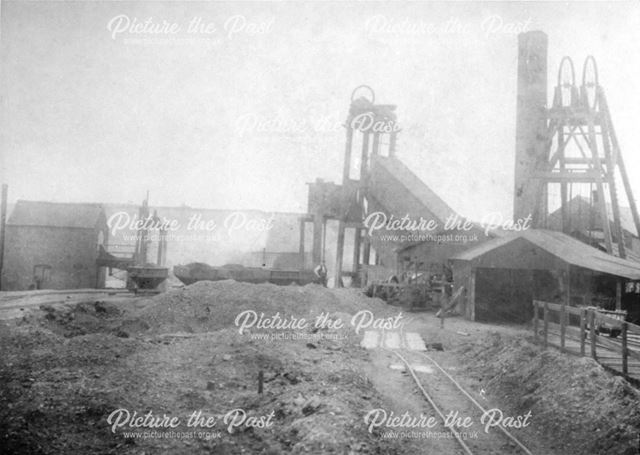
Image result for Gosforth Colliery Dronfield

Gosforth Colliery, Dronfield. In 1896 it employed 95 underground and 35 surface workers.

To access significant areas of shale gas, INEOS's need to engage in underground fracking operations using horizontal techniques in areas which have either (a) remaining untouched coal seams and/or (b) have had past coal mine workings. The appropriately named "COAL Aston and Dronfield Against Fracking" body covers territory which completely fits both of these categories. Untouched coal seams remain in areas such as the High Street and Church Street, because they had been built upon before coal mining operations expanded throughout the rest of what was then Dronfield's green fields, especially in the 19th and early 20th Century. And also at times well before that.

To see the range of former coal mining activity across the whole area covered by the Dronfield Town Council, it is essentail to visit this Coal Authority Interactive Map and home into our area - which is south of Sheffield. There is a key index to link into at the top right hand corner of their map. The former mining operations which have been discovered so far, mainly took place in the 19th Century. Although some go back much longer than that. (Of course, the general points I make below about the Interactive Map also apply to many other parts of the country and they should be more widely checked out.)

All of Dronfield is supposed to be part of the Coal Authority's area of concern. We fall completely into their three categories as (1) a surface coal research area (2) a coal mining report area and (3) a coalfield consultation area. Then they cover over 90% of the area in their abandoned mine catalogue. Red crosses used on the Interactive map show over 250 mine entries, whilst brown crosses are used to show over 80 separate mine exits - although many mines also used their entrances as exits.

A whole range of other categories reveal problems - including Development High Risk Areas, Past Surface Mining, Shallow Coal Mine Workings and Coal Outcrops. A series of green crosses can be found. If you click into these it will tell you the deepth of the pit shafts concerned. Many of these being about just 100 feet deep. The working dates of the operations can be found by linking into a range of some 40 purple crosses. These are mainly from the 19th century.

There is much more information which can be obtained. Those living in the territory can check to see how close they live, work, shop, school, park, walk, drive, worship or obtain entertainment near such areas. Then they can assess how they would feel if INEOS's seismic operations were to take place beneath such areas. Without INEOS being under an obligations to cover the costs of any damages. And without anyone having the right to stop INEOS operating beneath their properties - not even the Derbyshire County Council when it comes to our schools.

The Coal Authority Interactive Map may be difficult to master, but it is well worth the effort. But it is a pity that the Coal Authority are not themselves also pressing such matters. They raised no objections to INEOS's proposals at the recent Bramleymoor Lane enquiry. Even though their interactive map shows two mine shafts in close proximity to INEOS's proposed operations. And these are also categorised as being "Development Risk Areas".

If eventually INEOS came to be able to use its Bramleymoor Lane site for underground fracking operations, these would easily reach to Coal Aston. Then a firm Haliburton in the USA operated over a much longer distance in Texas - far enough to get from the Bramleymoor Lane site to the Unstone-Dronfield By-Pass. The main entrances to the former Gosforth Valley mine (as shown in the above photo) being close to the point where the By-Pass is now carried over a viaduct. There it is close to the entry to the large Tarmac housing estate on Gosforth Valley.

Added 19 July, 2013. Here is a link to a 351 page article by A.N. Bridgewater concerning former North Derbyshire Coal Mines. It contains many maps and photos. Pages 128 to 133 (with some later items) give details about many former coal mines which operated in the Dronfield and Unstone areas. Showing detailed maps and photos. Then "Bramley Moor Old Mine" (of relevance to the recent INEOS application) appears on page 140 during coverage of mines in the Eckington and Mosborough areas. Killamarsh is then dealt with. The writer also points out that sections of the Chesterfield area show the existence of 900 former mining operations. See here. 

A book (with numerious photos) which is also well worth pursuing is "The Coal Industry of Sheffield and North East Derbyshire" by Ken Wain (Amberly 2014).  Link here. 


This is the Coal Authority Map which you need to click into (via the earlier link above) -


Thursday, November 09, 2017

60 Years Hard Labour : Easington and Beyond


Postcard photograph entitled Welfare Hall, Easington Colliery, showing the exterior of the front and side of the building; four indistinct small figures can be seen in front of the building

Easington Colliery Welfare Hall : Venue for Labour Party Branch Meetings -  Past and Present


60 years ago today (at the age of 21) I attended my first Labour Party event. It was a meeting of the Easington Divisional Labour Party in County Durham and was held at the Workmens' Club Hall at Blackhall Colliery. It was well attended, for I am aware that a later annual meeting I went to had 76 delegates present.

I had applied to join my local Labour Party as a means of entering an essay competition on nationalisation which was being run and paid for by the local Labour MP, Manny Shinwell. I don't know how many people entered this contest, but my essay was numbered 16.

I was given the second prize of £3 (which is considerably more at today's prices) and went to the meeting at Blackhall for Shinwell to present me with my winnings. The first prize went to John Alderson who was an English Teacher at Shotton Colliery Secondary Modern School. Ann, the girl I was later to meet and marry was one of his students around that time, being seven years younger than myself. Within the following two years an active local Fabian Society was established at nearbye Peterlee, with John as Chair and myself as Secretary. 

The first Labour Party Branch meeting which I attended was held the following month at Easington Colliery where I lived (the above photo shows the venue). At the following year's Annual Meeting a few months later I became their Branch Secretary, acting as a sub-agent for Manny Shinwell at the 1959 General Election. Shortly before then I was also runner-up for the position of Constituency Party Secretary, when the former long serving Secretary stood down and five of us sort his post.

But my initial burst of Labour Party activity came to a halt after almost three years, when I went to study Politics and Economics full-time at Ruskin College in Oxford from October 1960.  Because of the clash of dates, I even pulled out of being my constituency's delegate to the 1960 Labour Party Conference - missing Gaitskell's famous "fight, fight, fight and fight again" speech. Yet it was a resolution adopting a "ban the bomb" position (in opposition to Gaitskell's stance) which I had drafted which had become our Constituency Party's policy.

Whilst attending Ruskin College for two years and then during the first year of my subsequent studies at Hull University, I still retained my Easington Colliery Labour Party membership. But when Ann and I married in 1963 and we moved to Hull, I stopped being a card holder for the following five years. I was now studying politics and philosophy at University, whilst keeping links with the Labour Movement by attending Tribune and similar meetings.

My lapse of Labour Party membership was due to the fact that Ann and I were moving around via Hull, Worksop and Sheffield until we finally settled in Dronfield in Derbyshire; where I have now been an active member of the Labour Party for the past 48 years. This has included a spell as the local Labour MP for 18 years. At the moment as an octogenarian I hold the positions of Political Education Officer (for our activities, click here ), delegate to the Constituency Labour Party and member of its Executive Committee. But at my age and hobbling with a stick I tend to let my fingers do my walking - a bit like writing that essay for Shinwell's competition.


Tuesday, October 31, 2017

Vote, Vote, Vote for Harry Barnes


I first attended an internal Labour Party meeting at Blackhall Colliery in County Durham on the 9th November 1957, almost 60 years ago. It was a prelude to my quickly becoming a local Labour activist via its Easington Colliery Branch.

I later became an adult full-time student studying politics and related matters and eventually settled in Dronfield in North East Derbyshire. I have been an active member of its local Labour Party Branch now for over 48 years. I moved to Dronfield when teaching politics and industrial relations to classes of trade unionists.  This was a role I went on to fulfill for 21 years, until I became the local Labour MP for North East Derbyshire from between 1987 to 2005.

After my retirement I became Political Education Officer for the Dronfield Branch of the Labour Party and have run over 120 discussion meetings for activists since then - mainly involving outside speakers as can be seen via this link.

Over all this time I have never sort to serve on the National Executive Committee of the Labour Party, but to my surprise I was nominated to stand for that position at my local Constituency Annual Meeting which was held in Dronfield on Saturday. Thinking that I had nothing to lose and perhaps something to offer after years of Labour Party involvement,  I accepted the nomination.

My problem now is that this was an entirely unplanned move and I now need another four nominations from Constituency Parties to get my name onto the ballot paper. And these have to be submitted exceptionally soon - by 5pm on 16 November.

One means of checking me out is to look at the blog which I have been running since my 70th birthday. It can be found via this link. (i.e. here, so scrawl down).

Nominations will need to contain my Labour Party Membership number, which I can forward to any Constituency Party which approaches me via (for instance) the two links given above. Those without a blog facility can more easily approach me via the first of these.

For those who wish to check me out, then in addition to my parliamentary record a glance at my above blog may help. It is called "Three Score Years and Ten" to mark its birth.

In parliament I was a member of the Socialist Campaign Group, but I was not just a camp follower and both inside and outside of the Group was willing to express views which sometimes departed from the consensus.  For I believe that socialist politics requires more than rubber stamps - even to those I associated myself with.

Yet if that makes me seem a moderate, what about this ?   On 28 September 1998, the "Independent" published an article entitled "Revealed : Blair's 'bastard' MPs who could make his life a misery in No.10.".  It pointed out that "Since 1992, 38 Labour MPs have voted more than 20 times against their party instructions in the House of Commons. Indeed, 12 of them have rebelled 40 times or more. Unsurprisingly, Dennis Skinner, the "Beast of Bolsover", heads the list with 95 separate acts of parliamentary defiance, followed by Harry Barnes (Derbyshire NE) with 75 and Jeremy Corbyn (Islington North) with 64.".

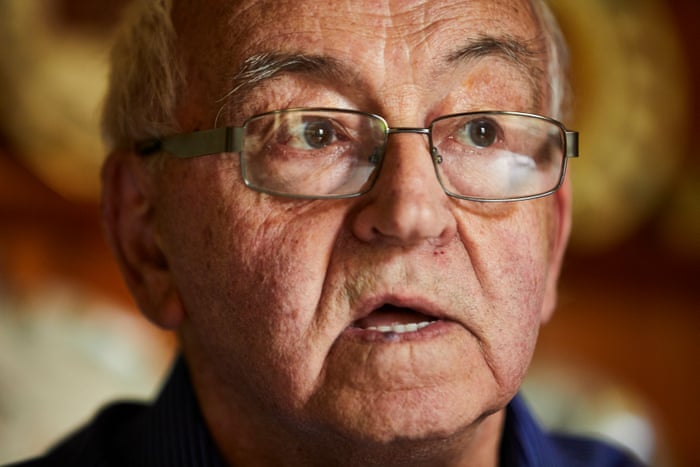
Hat Tip - the Guardian for the photo. Luckily this is not a beauty contest.

Whoops - I only seem to have obtained two nominations, so I never made the ballot paper. Well it is their loss and not mine !


Sunday, August 13, 2017

50 Years And A Day

Yesterday a meeting was held at the Contact Club, Snape Hill Lane, Dronfield to mark the 50th Anniversary of its formal opening as its permanent home. During the meeting, I distributed the following details for discussion purposes. The point being that when the opening cerimony took place, Labour had a majority in our local North East Derbyshire Constituency of 19,600, which is an all-time record. Yet recently, the Conservatives took the seat for the first time since the 1931 General Election. We discussed some of the reasons for this huge transformation.

The table also has wider implications. For even though Labour had a good result at the last General Election, back in 1966 it took a 101 more parliamentry seats.


                             LABOUR DURING THE CONTACT CLUB YEARS

Election Year     Labour Leader   % Votes      Seats    Percentage Turnout       Government

1966                           Wilson              47.7            363                  75.8                          Labour

1970                           Wilson              42.7            287                  72.0                          Con

1973 UK joins the EU.

Feb 1974                    Wilson              37.2           301                  78.8                          Labour

Oct 1974                     Wilson             39.3            319                  72.8                         Labour

1975 Referendum to remain in the EU.

1979                           Callaghan        36.9             268                  76.0                         Con

1983                           Foot                 27.6             209                  72.7                         Con

1987                           Kinnock          30.8              229                  75.3                        Con

1990 Poll Tax - start of electoral registration problems, which then grew for other reasons.

1992                          Kinnock            34.4              271                  77.7                       Con

Below this, move to lower turnouts.

1997                          Blair                  43.2              418                 71.4                        Labour

2001                          Blair                  40.7              412                 59.4                        Labour

2005                          Blair                  35.2              355                 61.4                        Labour

2010                         Brown                 29.0             258                  65.1                       Con/Lib Dem

2015                         Miliband             30.4             232                  66.1                       Con

2016 Referendum to leave the EU.

2017                        Corbyn                40.0             262                  68.7                       Con

2017 saw the third highest Labour % since the 1970 General Election. With an age divide in voting patterns replacing a more traditional divide by social class.

An impact on percentage Lab/Con votes throughout being the relative strengths and weaknesses of third parties.


Thursday, November 17, 2016

Dronfield Against The Fracking Threat

FRACKING IS PLAIN D.A.F.T! (dronfield against the fracking threat).

If you have concerns or questions & want to know what this means for you, your family and your community & what you can do, then please come to this vitally important meeting at: Dronfield Civic Hall S18 1PD
 
On: December 8th 7.30pm Thank you Don’t miss out! See you there!

From "Dronfield Against Fracking" 

Monday, August 01, 2016

Hello Jeremy Corbyn and Owen Smith


 Image result for Jeremy Corbyn and Owen Smith
The candidates for the leadership should be pushed to come to an agreement to stand by Labour Party policies as these have been (and will come to be) agreed by Labour Party Conference. This does not unreasonably bind them. They should still be free to suggest changes that they would like to seek in future Conference's policies, whilst sticking by what has been established in the meantime. Furthermore leaders and the PLP can still have a say about the priorities, timing and the detail when acting on Conference decisions. They will also often have to act on new and passing items, without having specific Conference guidance at the time. This is currently the case (until the coming Conference ?) on  policies over leaving the EU. 

Most of current Conference policies formed the basis of our last election manifesto. Any alterations, additions or elaborations (e.g. on Syria) have only emerged so far from last year's Conference.  Most of Conference policies arise (of course) from the work of the Policy Forums. Prior to the General Election, I summarised these in a number of blog items. These can be found via links in this item.    These proposals should form the basis of Labour"s current parliamentary approach, until subject to later Conference alterations.

It is also possible for candidates to press for the further democratisation of the Labour Party. It is also a difficult approach for candidates to argue against when facing the votes of the membership in a leadership contest.

I hope that Labour Party members will push such a line. It could be a position which any candidate could find it difficult to reject in current circumstances.
For those without a blog facility, it should be possible to comment at this version of the above.

Tuesday, October 02, 2012

The Clay Cross Rent Rebellion


It is the 40th Anniversary of the Clay Cross Rent Rebellion. So what was it all about?

In 1970, the Conservatives had a surprise electoral victory. Ted Heath replaced Harold Wilson as Prime Minister and became known as Selsdon Man, because he adopted a set of free market and anti-working class policies which were in line with what would later be called Thatcherism. The strong reactions against his approach later led him to alter his basic stance via a set of "U" turns, for which Thatcher was later to deride him.

In the year in which the Heath Government was established, council house building was still widespread and only fell marginally short of the total number of houses built under private enterprise for both owner occupation and renting. Furthermore, many Labour Councillors themselves lived in Council houses and understood the needs and interests of communities they were part of.  The Heath Government wished to switch the housing pattern for working class people away from their heavy dependence on council housing.

In pursuing their interests, the Conservatives produced a White Paper entitled "Fair Deal for Housing" which prefigured their Housing Finance Act which received the Royal Assent on 27 July, 1972. Well before the measure became law, the Government's intentions were well understood and were creating considerable concern amongst council tenants and their Labour Councillors. Government subsidies to reduce rents were to end. Councils were to be stopped from supporting council rents from the rates. Then (as a start) most Council Rents would have to be raised by £1 per week in October 1972, which is an amount approaching £11 in today's prices. If a Council failed to act in conformity with these provisions (a) any subsidies for Council House Building would be ended and/or (b) a Housing Commissioner would be sent in to operate the Act. 

On 10th June 1972, 223 delegates from 87 ruling Labour Groups met in Sheffield and carried a resolution by 74 votes to 1 (with 5 abstentions) demanding that "the labour movement shall not take steps which may lead to the implementation of the Bill."

Clay Cross in North Derbyshire had a population of 10,000 and had 1,400 council tenancies catering for over half of its population. Its 11 Councillors were all Labour. On 4th September 1972 it unanimously adopted the following motion - "That this Council will not operate any of the provisions contained in the Housing Finance Act 1972, and the Electorate shall be informed of the decision together with the reasons for coming to this decision and that the officers of the council be instructed not to make any preparations for implementation of any of the provisions of the Act nor to act on behalf of the Conservative Government as a Commissioner".

Initially a total of 46 Councils failed to operate in line with the legislation, whilst 80 Tenants Association were organised to hinder its operation. In the Chesterfield Rural District Area which surrounded Clay Cross their Tenant's Association ran a campaign for the non-payment of the £1 increase which its Labour Council had "reluctantly" introduced. In Dronfield, situated at the Northern End of the Chesterfield Rural District, its Urban District Council was Conservative-controlled and it had jumped the gun with a 50p increase in the April. Its Tenants and Residents Association, therefore, started out with a fortnight's rent and rates strike exactly 40 years ago today.  Dronfield had 1,000 Council Tenancies.

But much larger and immediately to the north is Sheffield where a Coordinating Committee for Tenants, Residents and Community Associations had been established in 1971. Sheffield having 76,000 Council Tenancies. Dispite this bodies' pressures, the Sheffield Council implemented the Act by 53 votes to 42, carrying out a later increase by 45-40. The second increase rested on the votes of 12 Sheffield Aldermen, but at least a non-eviction pledge was given for those withholding the increases.

Powerful pressures were, however, placed upon all the non-implementing Councillors and upon the tenants and residents who withheld rent or rates monies. By January 1973, 32 of the rebel Labour Councils gave up the struggle. 12 held out until later in the year. That left only Bedwes and Machen in Monmouthshire and Clay Cross in Derbyshire as non-implementing Councils. They both had a Housing Commissioner sent to their authorities to enforce the legislation. Bedwes and Machen did not block his work, so they were then out of the struggle. Clay Cross, however, blocked the work of the Commissioner and continued the fight.

Acton was taken against them by the District Auditor who claimed that they were responsible for a shortfall of £69,000 in their revenue account and could be bankrupted and thus debarred from office.  Eventually this position was upheld by the a High Court Decision by Lord Denning on 30 July 1973.

Fresh elections were then held in Clay Cross and Labour took 10 of the 11 seats with a 85% turnout. Local Government Reform meant the Clay Cross Urban District Council would be absorbed into a larger authority a month after the election and those elected would then become Parish Councillors, without Council Housing responsibilities. But for its remaining month as a District Council, the Labour Councillors refused to implement the Housing legislation. This led to the District Auditor surcharging them "jointly and severely" so that their liabilities fell over the £2,000 mark which would lead to their debarment. To save fresh bankruptcies among the second team the local Constituency Labour Party ran a defence fund, which paid off their debts. This fund, however, did not cover the much wider surcharges levelled against the original team of Clay Cross Councillors.

The Clay Cross situation was a matter of continuous dispute within the Labour Party from 1972 until 1978.  In 1972, Conference passed a resolution supporting the local campaigns of tenants, trades councils and Labour Parties "to spearhead the campaign against the Act". But it rejected a move for the retrospective clearing of "any councillors who suffer any penalty through their actions." Yet in 1973 it passed resolutions supporting "opposition to continuing rent increases" and backing Clay Cross. Furthermore, David Skinner one of the non-implementing Clay Cross Councillors stood for the Constituency Section of the National Executive Committee of the Labour Party and obtained 144,000 votes. This section invariably elected Labour MPs and, although David, wasn't elected it was a telling result which showed strong support in the Labour Party for the Clay Cross struggle. The Clay Cross issue was pursued unsuccessfully at the 1974, 1975 and 1976 Party Conferences. But then in 1977 Conference overwhelmingly carried a resolution stating "This Conference deplores the continuing disqualification from public office of the 21 Clay Cross Labour Party members and demands that the Government introduce a Bill to remove the disqualification forthwith". David Skinner went back to the rostrum the following year complaining that the NEC had not even pursued the matter with the Labour Government.

Whilst the struggle against the Housing Finance Act did not succeed in its objectives, it was part of wider campaigning which led to Heath dropping his Selsdon Man approach. When Labour returned to office there was then a recovery in Council House building, until it was successfully undermined by Thatcher's tactics. The persistence with which the Clay Cross issue was pursued at Conference (especially on the initiative of its Constituency Labour Party) also shows the significance of the democratic arrangements that were then open to the rank and file of the Labour Party, which have since been removed. 

Yesterday evening the Dronfield Labour Party Discussion Group were fortunate to discuss these matters, when David Skinner addressed it on the "40th Anniversary of the Clay Cross Rent Strike". What appears above is, however, my own contribution and not a report of David's fine talk. My main sources have been Leslie Skfair's article "The Struggle Against The Housing Finance Act" in 'Socialist Regsiter 1975' and the Annual Reports of the Labour Party for the period. Anyone spotting errors, should use the comment box below.

Saturday, April 21, 2012

Monday's May Day Meeting In Chesterfield


        PUBLIC MEETING OF THE HANNAH MITCHELL FOUNDATION


TOPIC :  HOW TO OVERCOME THE NORTH-SOUTH DIVIDE

TIME :  1.30 pm

DATE :  MAY DAY, Monday 7th May

VENUE : Council Chamber of the North East Derbyshire District Council,
               Saltergate, Chesterfield

CHAIR : KEN CURRAN : Chair of the Sheffield Co-operative Party


SPEAKERS -

ROSIE SMITH : Youth Officer, North East Derbyshire Constituency Labour Party

GEOFFREY MITCHELL :  Editor of "The Hard Way Up", the autobiography of Hannah Mitchell

BARRY WINTER : Independent Labour Publications, Chair of the Hannah Mitchell Foundation

PAUL SALVESON : Author of "Socialism With A Northern Accent",
                               Secretary of the Hannah Mitchell Foundation


Entrance to the District Council Offices will be via the rear of the building.
On the Hannah Mitchell Foundation see - http://www.hannahmitchell.org.uk/

The two items below give details of the full May Day Programme at Chesterfield.

Wednesday, May 11, 2011

Refounding Labour : a summary of Labour's consultative document

Keir Hardie is one of the primary founders of the Independent Labour Party (ILP) and then of the Labour Party, of which the ILP was itself a part. Labour is now seeking to refound itself.

It is, therefore, appropriate that I should have recently returned from a week-end school run by the ILP (now Independent Labour Publications) where we discussed the "refounding" document which I summarise here.


Friday, May 06, 2011

Massive Swing from Lib Dems to Labour in Chesterfield

Labour gained 23 seats from the Lib Dems in the Chesterfield Borough Council Elections, turning a 11-37 deficit into a 34-14 victory. The photo shows Councillor John Burrows the new leader of the council celebrating with his grandchildren Oliver and Jacob. On May Day he also made significant contributions to this meeting on Adult Education. Well done John and the Chesterfield Labour Party.

Saturday, April 16, 2011

Important May Day Meeting In Chesterfield


What Now For Adult Education? Lessons from the Derbyshire Miners.
A Discussion Meeting.

Speakers
Toby Perkins, Labour MP for Chesterfield and Shadow Education Minister
John Burrows, Leader of the Labour Group on Chesterfield Borough Council.
Bob Heath, former Director of Studies for the Derbyshire Miners' Day Release Courses.

Time

1.30 pm (after the May Day March and Rally)

Date
2nd May, 2011

Venue
Council Chamber of the North East Derbyshire District Council, Saltergate, Chesterfield (Entrance and car parking facilities via the back of the building)

ALL WELCOME

Saturday, September 25, 2010

Lib Dems Crash

The Lib Dems suffered a crushing defeat in Thursday's District Council By-election in the Gosforth Valley Ward of the North East Derbyshire District Council. It had been their stongest Ward. It is where I live.

In this three seater in 2007 the average results of the Political Parties were Lib Dems 51.1%, Tories 30.0% and Labour 18.9%.

The By-election was a contest for a single seat. The Liberal Vote fell dramatically to 31.3%, the Tories took 37.1% and Labour moved into second place with 31.6%.

The Liberal percentage vote fell by 19.8% with 7.1% of these going to the Tories and 12.7% to Labour. The Liberal swing to Labour was almost twice as strong as the swing to the Tories.

Although the turnout dropped substantially from 36% in 2007 to 26%, the Labour vote actually increased from a previous average of 315 to 354. It was its best ever result in the ward.

Whilst Labour only moved into 2nd place by 4 votes, it overtook the Lib Dems who had had an average lead over them of no less than 563 in 2007.

If the By-election had been fought under the Alternative Vote, then the Lib Dems would have been eliminated and their second choices redistributed between Labour and the Tories. Labour would have needed just 207 of the potential 350 transferred votes to ensure victory. That is under 3 in 5 of the transfers.