Showing posts with label Conservatives. Show all posts

Wednesday, June 24, 2020

How a Back-Bench MP can make use of Early Day Motions.

Three Score Years And Ten: 10 Years Ago - almost exactly
Me as an MP in the Commons
 
   There is a parliamentary avenue open to Members of Parliament known as Early Day Motions (EDMs) which are normally only made use of by back-bench MPs. They are for seeking a parliamentary debate upon a proposal at an early date. Yet although very few of these proposals are then ever scheduled for a parliamentary debate, they can still be used by MPs for a number of helpful purposes.
   An MP (along with those they have initially arranged to support their proposal) can see which other MPs add their signatures in support of their measure. There can be strength in numbers. If a measure gains support from MPs from differing political parties, this can be particularly helpful in seeking parliamentary avenues for the pursuit of a proposal.
   A proposal can also gain support from outside of the Commons from local, regional or national avenues. This can add to the campaigning for a measure.
   Click here for a parliamentary explanation on what EDMs are about.
   The MPs behind an EDM can also use it as the start of a parliamentary campaign of their own. These include (a) putting down an appropriate amendment to a passing piece of legislation and (b) seeking a Ten Minute Rule Bill on the matter, which if carried can open up a legislative avenue for the measure.  Then short of legislative avenues the issue can be raised in the Commons by (c) seeking an Adjournment Debate at the close of a parliamentary day, (d) obtaining a debate in Westminster Hall, (e) referring to the EDM during appropriate parliamentary question times - including the weekly opportunity at Business Questions with the Leader of the House where what you wish to see as coming business can be raised.
   When I first became an MP in 1987 the Commons programme started with the Queen's Speech on 25 June. I had then to put my name in five times to the Speaker before I was called to make my maiden speech on 13 July. So I had in the meantime only limited avenues open to me, such as writing letters to Conservative Government Ministers on matters such as dealing with their need for help over the consequences of an Underground Fire at Callywhite Lane in Dronfield.
   On the 6th July I, therefore, submitted my first EDM which gained the support of 46 fellow MPs mainly from South Yorkshire and the North Midlands and was entitled "Underground Fire in Derbyshire". It said "That this House calls on the Secretary of State for the Environment  to take immediate arrangements to meet a deputation from the firms, councils and trade unions directly effected by the underground fire burning on Callywhite Lane Industrial Estate in Dronfield, Derbyshire to discuss ways and means by which his Department will assist in overcoming this emergency, and to report to this House on the outcome of these discussions."
   Whilst the EDM needed my back-up via other avenues, the meeting I proposed eventually took place. Without achieving everything we were looking for it opened up some avenues of Government assistance. The parliamentary pressures I added to the EDM included an Adjournment Debate on the topic and a 10 Minute "Underground Fires Bill" which was started in the Commons and then published, but whose further progress was then blocked by the Government.
   Unfortuneately, I hold no full record of all the EDMs I submitted or supported in my first two years in parliament. But details of those EDMs I submitted and supported in my next 16 years can be found by clicking here.   It shows that over that time I proposed 503 EDMs of my own and supported 12,010 submitted by fellow MPs.
   The seat I represented in parliament was North East Derbyshire. It now has a Conservative MP called Lee Rowley who has represented us for 3 years. In that time he has not submitted a single  EDM of his own. Then in total he has only ever signed a single EDM submitted by another MP. This is an extreme pro-Brexit proposal (click here) submitted by a Tory MP Bill Cash whom I opposed year in and year out when I was an MP.
    At one time Cash chaired the European Union Select Committee which I served upon. He was my least favourite Tory MP and that is saying something.
   Why except during a divide in the Parliamentary Conservative Party over Brexit has Lee Rowley not ever made use of the EDM proceedure ? For whilst it is not the most telling of parliamentary avenues on its own, it is very easy for MPs to pursue. When they turn up in a morning they can collect the day's Parliamentary documents. They can easily then look at any new EDMs which are included. Signing those they agree with. Then writing any amendments they would like and drafting any new EDM they wish. Then they merely need to pop down a corridor to hand material into the Speakers Office for future publications. All an MP needs are ideas, concerns and principles. We then know much more about them - where we agree and disagree.
 Lee Rowley – DRILL OR DROP?   Lee Rowley MP in the Commons

Thursday, May 28, 2020

Dominic Cummings and Goings


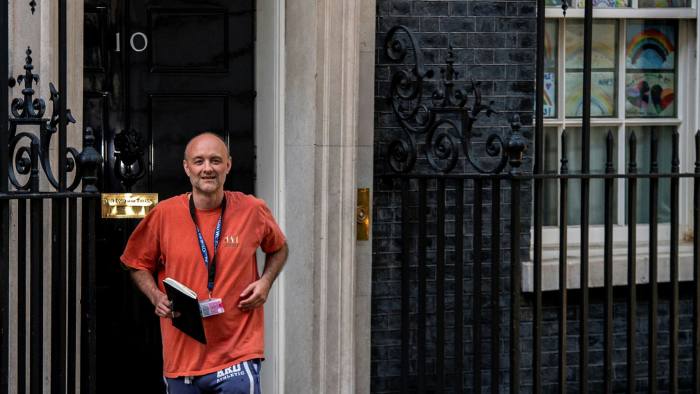
Dominic Cummings decision to drive his wife and their four year old son from their home in London to a separate property in Durham in order to overcome and protect themselves from Covid 19 was and remains incomprehensible. For his home is a property in London where they could always have self-isolated themselves, yet still have been in easy reach of medical help and any other assistance that was needed.
    It was not that they did not have anyone to turn to for help or advice. For even when Boris Johnson was in St. Thomas's hospital with the virus, Cummings still had sound links and connections with key members of the Cabinet. Sorting out help could not have been easier for a person in his position. 
   The fact that he then took his wife and son on a trip from Durham to Barnard Castle so he could test to see if his eyesight had been damaged by the virus is even more astonishing. What if he had found that his eyes had actually been effected ? And what if he had only discovered the problem after bumping into another car or injuring a pedestrian ?
    There are easier ways of testing your eyes than by driving a car.  Even just sitting in the driver's seat and having a look through the windscreen can be added to a standard form of eye test.
    The Government had instructed people that for two weeks after experiencing coronavisis they should not travel, even at the cost of missing the passing and the funerals of loved ones. People who followed these requirements must be gutted by Dominic's actions for his wife had Covid 19 symptoms. 
   In a long and rambling article on his facebook site my local Conservative MP Lee Rowley comes up with this very inappropriate conclusion -
" based on what I know, I’m not going to condemn Dominic for wrestling with the guidance and trying to work out what to do his best in difficult circumstances."    
   I appreciate that many people will have needed to make difficult choices recently over their Covid 19 experiences. But Dominic isn't just a normal person, he could have sorted out and turned to many in a key position for advice and have stuck with the Government's guide lines.  His failure to do this is a clear matter for his dismissal from his Government post or for his resignation.

Click here for a useful source of information. 

Thursday, October 10, 2019

LEE ROWLEY'S PARLIAMENTARY RECORD


This item has been updated to cover Lee Rowley's first full parliamentary period from the June 2017 General Election until its final dissolution. 
In the 2017-19 period Lee Rowley was the Conservative MP for North East Derbyshire.  I served as Labour MP for the same constituency from 1987 to 2005. 

I give below my assessment of his parliamentary record with many of the details being drawn from Hansard. I initially cover the period from the 2017 General Election up to the proroguing of parliament on October 8th this year for a fresh Queen's Speech. It is only near the close that I cover the recent and short parliamentary session from 14th October up to 6th November. The main and opening material refers to the earlier and much longer period covering 29 months.

In parliament Rowley involved himself much more fully with activities in Westminster Hall than with those on the floor of the Commons. In fact he was seldom seen in his place in the Commons' Chamber.

Whilst Westminster Hall is an area which many MPs need to use on occasions it is much smaller than the Common's Chamber and is more thinly attended, having no facilities for a normal parliamentary division to take place. And also it sits for much shorter periods than does the Commons Chamber. So Lee Rowley sometimes used it to criticise his own Government over matters such as their traditional stance on fracking, but as there are no contested votes in Westminster Hall this will then have given him no real trouble from the Government Whips.

On the floor of the Commons in this period he made 17 speeches. Around a speech every two months. But these lasted for only an overall total of 89 minutes, yet this time also covers intervention from other MPs. So they have really averaged less than 5 minutes. He often left the Commons soon after he has made his contributions, so others didn't then respond to him in such circumstances. Back in March he carried the first reading of a 10 Minute Rule Bill to restrain fracking operations, but in the remaining seven months of the parliamentary session he did not then get the Commons' authorities to print the proposed Bill. Yet the authorities are helpful and skilled in providing the technical details of what any proposed Bill requires. With the proroguing of parliament for the recent Queen's Speech his former authority to have his Bill printed was then lost. He should have acted earlier to deliver on this matter.


His equivalent contributions in Westminster Hall (who meet for much shorter periods) was  24 speeches, lasting in his case twice as long as those in the Commons - at a total of 181 minutes (again allowing for interventions). And whilst in the Commons he has only ever once introduced an item (the one above under the 10 Minute Rule procedure), he obtained the right to introduce debates on several occasions in Westminster Hall. These added to his total number for such contributions, for they also led on to him having concluding contributions and he also intervened during numbers of these debates. Then an MP can barely disappear from a debate which they have introduced. Debates on a topic are normally much shorter in Westminster Hall than those in the Commons Chamber and are more normally thinly attended.

There is nothing wrong with making good use of Westminster Hall debates, but these should not be used as a substitute for also pressing matters on floor of the Commons. 

He also submitted 94 Questions for written answer. That is roughly at the rate of one a week for when parliament was sitting. 31 of these related to fracking, 16 to rail or other forms of transport, 7 to health issues, 5 to drones and only 3 on Brexit.

He involved himself with the work of certain All Party Groups. Chairing the groups on the Impact of Shale Gas and on Alternative Lending (which seeks to ensure private market development.) He was also Vice Chair of the Group on Artificial Intelligence and a member of the group on Data Analytics.

He was and still is Co-Chair of an outside group of free-market freaks called FREER and has written articles for the House of Commons Magazine and newspapers on their behalf, expressing strong free market ideas. FREER are a body which propounds free enterprise principles such as those pursued by INEOS and other fracking companies. This clashes with his anti-fracking stance, which he clearly pursues merely for local electoral purposes. See here and then here with its claim that “we need to make the moral case for capitalism”.

Then there is a helpful parliamentary avenue he refused to use – Early Day Motions. These are published by the Commons and are normally used by back-bench MPs only. Technically they seek a Commons debate on their proposals. Although very few achieve this objective, unless other avenues are then also pursued. But they can be used to publicise a proposal and give the MP who submits an EDM the opportunity to see which fellow MPs then add their signatures to their proposal. This can be very helpful in building up support on a issue – even cross-party support. In just over a week of the opening of parliament after I was first elected in 1987 I submitted an EDM (supported by Jeremy Corbyn) aimed at getting the relevant Conservative Government Minister to agree to meet a deputation to seek Government assistance to deal with the consequences of a local underground fire in Dronfield. I then pursued other parliamentary avenues on the matter and the meeting was later granted. It was just a start down this track. 

However, Lee Rowley breached his principle of not signing EDMs on a single occasion during the parliamentary period under review. Being amongst 82 Conservative and DUP MPs adding their names to an EDM from Bill Cash, entitled "Exciting the European Union". So we can now ask him, "why that one and not any others ?"     

Excluding my own first two years as an MP for which I can't find relevant records, the Commons shows that over my next 16 years as an MP I submitted a total of 503 EDMs, seconded 31 and signed another 12,010. Yet Lee Rowley until near the end of his first parliament he had not submitted, supported nor amended a single EDM. He claims that they cost too much to publish and are just a pretense at doing something. Yet they can be used especially at the start of a parliamentary (or wider) campaign, with MP's then finding further opportunities to refer to their contents in relevant Commons' debates. They also let people know where an MP stands on a wide range of issues. Lee Rowley's refusal to make use of this established parliamentary avenue except once in his first parliament (along with his few appearances on the floor of the Commons) is just  a failure to pursue aspects of his parliamentary responsibilities.

On his facebook site Lee Rowley recently said "We’ve got to stop this; people are tired of MPs messing around and want Brexit sorted. I’ll keep trying to ensure that happens." Yet why did he not press his views about what should happen (and how) to the Commons during its recall and prior to the last election? The past Speaker provided ample (and even excessive) opportunities for MPs to do this. Yet there is no record in Hansard of Rowley making a single such contribution. And when I looked at the TV coverage at various key periods he was nowhere to be seen.

Then his parliamentary record in the recent short parliamentary session from 14 October to 6th November was very strange. He was selected by the Government to move support for the Queens Speech which set out proposals for what could have been a long parliamentary session if the coming General Election had not got in the way. This shows that dispite his past conflict with Boris Johnson when a Westminster Councillor (see the details later), he has now moved closer to the Prime Minister's general stance. Yet in an 11 minute parliamentary contribution (when theoretically supporting the Queen's Speech) he said little or nothing about the Speech and its contents nor just why it should be supported. This is a very stange form of support for what is really a Prime Minister's speech read out by the Monarch. You can check my claims for yourself by reading his strange ideas which theoretically are in support of the Queen's Speech - click here. 

Then although parliament then sat for another 14 days before the General Election, Lee Rowley only managed then to ask a single parliamentary question.
   
Just who is Lee Rowley ?
He is aged 39. Although born in Chesterfield near NE Derbyshire, he later spent time outside our North Derbyshire area. First studying at Oxford and Manchester Universities, then holding various positions with Barclays, a multi-national professional services network called KPMG and Santander. From 2006 to 2014 he served on the Westminster City Council (living in that area). He became their Cabinet Member for Parking and sort to introduce certain parking charges, but this was opposed by environmental and disability campaigners and he faced calls to resign. His stance was even criticised by Boris Johnson when Mayor of London and it was then blocked by the High Court. In 2010 he stood unsuccessfully for parliament in the Bolsover Constituency.

In the Commons he served on the Statutory Instruments Select Committee from October 2017 to April 2018. They check Government measures which are pursued under authority granted to them by Acts of Parliament. He then became a member of the Public Accounts Committee in February 2018 and then soon resigned from his position with the Statutory Instruments Committee. The Public Accounts Committee examines the value for money of public expenditure. He prefers to press for restraining public rather than exploitative private powers.

He records his parliamentary interests as being energy, housing, planning, financial services, transport and artificial intelligence. We need to appreciate that this is all in the context of his overriding commitment to the unrestrained powers of free-market capitalism.

There is also a coverage of his parliamentary voting record - click here. It shows that he voted 427 out of 463 divisions, voting in line with the Conservative whip 415 times and rebelling 12 times. Each rebellion was in opposition to the deal which the Conservatives  had then struck for leaving the EU and for nothing else. He was then for leaving with "no deal". But when the deal was slighly adjusted under Boris Johnson, he moved to supporting it. He missed votes (or abstained) 36 times.  

Added 6 March 2020. From July 2019 until the December 2019 General Election, Lee Rowley served as one of the two Private Parliamentary Secretaries (PPS) at the Treasury, which meant that he was then obliged to follow the Conservative Government's whip. After the 2019 General Election he was re-appointed as a PPS, but I am still searching to find whether his post is still the Treasury one.   Added 17 April 2020 - I have finally discovered via the Cabinet Office that he is now no longer a PPS.

Tuesday, January 01, 2019

Natascha Engel's Angles


The following item appears in the current edition of "Private Eye" which covers the period from 22 December 2018 to 10 January 2019.

The publication runs a section for reader's letters, but prefers short comments. The current edition carrying 25 letters.

Anyone wishing to add points to the following item should do so quickly in order to seek to catch the next edition. The Private Eye e-mail editorial address being strobes@private-eye.co.uk and their postal address is Private Eye, 6 Carlisle Street, London W1D 3BN.

Image may contain: text

Friday, November 16, 2018

Labour And Brexit - What Jeremy/May Never Achieve

Theresa May and Jeremy Corbyn

Although I did not want a referendum and voted to remain when it was forced upon us, I accept that I lost out on both counts.

Whilst I see a fully-fledged Brexit as being a disaster, I do not support the idea of having a fresh referendum on the issue. To do so would be to fly in the face of the decision which was backed especially by many of those who at one time were often solid working class Labour supporters and are now some of the most deprived and excluded members of our society.

So Labour should have moved to a position where it pressed for the best deal we could feasibly look for. Using avenues to pressurize the Government and to push the E.U. negotiators. One avenue to have sort in order to mobilize support would have been via our membership of the Party of European Socialists.

Instead Labour very late in the day and never previously having fully covered such combined areas, finally adopted its six tests. Five of these (depending on how they are interpreted) seem to me to be feasible although they emerged far too late. These seek (1) "a strong and collaborative relationship with the EU", (2) "the fair management of migration", (3) to "defend rights and protections and prevent a race to the bottom", (4) to "protect national security and our capacity to tackle cross-border crime" and (5) to "deliver for all regions and nations of the UK". The area of greatest concern in the final category seeming to me to be Northern Ireland.

But there is also a further item which seems to me to be an impossibility. Namely to "deliver the 'exact same benefits' we currently have as members of the Single Market and Customs Union". First of all, the EU negotiators are never going to agree with this. Then if somehow they did, it would virtually mean that we would be placed in an impossible position. We would retain the key elements of our current membership of the E.U. without having any internal say over these matters in the future. That seems to me to be a democratic non-sense - even if the EU isn't all that democratic a body. (Some of us have a long record of pressing for its democratic and social improvement).

As the above item will not (and should not) be granted in full, Labour is then likely to call for a fresh referendum. I am totally against such an idea. We should not have a second referendum just because some people did not like the result of the first one. Not at least until we enter a new era, when the question might then be whether we reapply for EU membership.

The problem we currently face is that although only a slightly tweaked version of Teresa May's proposals can ever be put to parliament within the current time-scale, they are (with inadequacies) the best we can expect. Labour should adopt an official parliamentary position of either giving them critical support or calling for abstentions. Come what may, some Labour MPs will disobey any whips recommendations.  But the Party's official stance is important.

Whatever suicide moves take place on the Conservative, SNP and DUP benches, Labour should not officially participate in the same game. Then perhaps some Labour common sense might have an impact on the final outcome.  

21 November : This is a proposal that is worth pursuing - click here.


Friday, March 17, 2017

The Two Worlds of George Osborne

 Image result for George Osborne

So far this year, George Osborne has only managed to make verbal contributions on the floor of the Commons or during Westminster Hall Debates on a total of three occasions.

The two items in the Commons were on the Industrial Strategy Consultation on 23 January and during the European Union (Notification of Withdrawal Bill) on 3 February. Then on 7 March he contributed to the O'Neill Review in Westminster Hall.

Now that he has become a newspaper editor will he even manage to keep up monthly contributions ?

To keep an eye on what he manages to do under various Parliamentary Procedures pay an occasional visit to this link.

It is clear that MPs can not serve the parliamentary interests of their constituents or society in general if they have extra employment and outside paid interests. Perhaps Osborne could seek to produce a Private Members Bill of his own on such lines, before deciding on whether he should retire from either the Commons or from his editorial role - and from other paid work. 

Wednesday, October 02, 2013

Cynical Attack On the Under 25s


In attacking benefit payments for under 25 year olds, Cameron is not only playing on prejudices which he feels are widespread, especially amongst Daily Mail readers; he is also aware that there is a serious under-registration for the vote by the under 25 age group.  So they can't snap back.

But even in terms of electoral advantage, he could be making a blunder. Under 25 year olds have parents and grandparents who may be deeply offended by Cameron's proposals. And he might simulate many under 25 year olds into registering to vote.

What we need is action on Ed Miliband's pledge that Labour will pursue the biggest electoral registration drive in a generation.

David Cameron 

Thursday, May 23, 2013

Where Does Miliband Stand On The Future Of Capitalism?


In making his speech to Google yesterday and as part of his advocacy of "responsible capitalism", Ed Miliband made the following statement as a means of distancing his views from those of his Marxist father, Ralph Miliband. Democratic Socialists don't have to be Marxists to the extent that Ralph was in order to be deeply disturbed about the nature of Ed's brief argument.

His father, he said, "thought that the route to a fair society was not through capitalism but through socialism based on public ownership. It wasn't just my dad who thought it, of course. Until 1995 this view was enshrined on the membership card of the party I now lead. Tony Blair got rid of it and rightly so, because nationalising the major industries is not the route to a fair society."

A problem with this argument is that Ed does not distinguish nationalisation from other possible forms of public ownership. If he feels that it is public ownership itself which is problematic, what does he feel should happen to the remains of our public services in areas such as the NHS, the Royal Mail, the Armed Forces and in the remnants our post-war school system? If Ed sees the future economic pattern as one that should be dominated by "responsible capitalism", then is there a limit to his vision? Or has the "inevitability of gradualness" which Sidney Webb saw as being associated with the advance of public services, now been transferred to the growth of Ed's favoured form of responsible capitalism? Does he want more capitalism or less?

There are many possible forms of non-capitalist economic and social structures - including co-operatives, worker-controlled firms, voluntary bodies, services by local authorities, public services and nationalised firms (whose operations could be democratised to overcome any problems which arose from the model pursued by Labour immediately after the Second World War). These all need forms of regulation and patterns of worker and consumer involvement - which (at the least) is what  Ed will need in his efforts to make capitalism act responsibly. For I assume that he knows that preaching is not enough to get exploitive and corrupt capitalism to behave reasonably. Of course, even if we can find some nice cuddley capitalists, these will not be able to ignore the logic of the market in which there are pressures to purchase in the cheapest market (whether for raw materials, technological improvement, or for labour costs) and to sell in the dearest market (via cheap transport, advertising and other marketing techniques).

When Tony Blair came along with his vision of New Labour, many in the Labour Party went along with him thinking it was only a gimmick to ensure the return of a Labour Government. They soon learnt that this was not the case, although far too many Labour activists then just accepted what they were given. Is the same pattern happening under Ed?  Perhaps his "One Nation Labour" owes far more to the ideas of Benjamin Disraeli than is being assumed. Is Labour now being re-shaped to seek  to do no more than tackle what Ted Heath called the "unacceptable face of capitalism"? At the best, Labour would then be aiming to become a non-Thatcherite version of the Conservative Party. But Labour would then be the descendants of Disreali and not of Keir Hardie. It would be much better to have a modern varient of the views of the latter, than of the former.


Wednesday, March 28, 2012

The Government Manipulates Public Opinion

It is clear that the Government has acted to create a run on petrol, in an attempt to line up public opinion against UNITE. It is also a ploy to get people to stock-up on petrol, so that UNITE's position will be weakened if eventually a strike should emerge. It is all a move to weaken the Union's negotiating position. It is classical Thatcherism.

UPDATE : The following from Charles Moore in the Daily Telegraph on 30 March, confirms my above claim - "now that I have heard the Conservatives’ private explanation, which is being handed down to constituency associations by MPs, I begin to feel angry. The private message is as follows. 'This is our Thatcher moment. In order to defeat the coming miners’ strike, she stockpiled coal. When the strike came, she weathered it, and the Labour Party, tarred by the strike, was humiliated. In order to defeat the coming fuel drivers’ strike, we want supplies of petrol stockpiled. Then, if the strike comes, we will weather it, and Labour, in hock to the Unite union, will be blamed' ”.

Friday, February 11, 2011

Prisoners and Voting - Yesterday in Parliament

There were two grounds on which MPs could have voted yesterday against the motion in Commons on “Voting by Prisoners”. The first of these was to uphold the right of the European Court of Human Rights (ECHR) to determine what the position should be. The second was out of a belief that prisoners should have the vote. It was, of course, possible to have voted against the motion whilst holding to both of these positions.

Unfortunately, in the absence of many Labour MPs in the Chamber the debate was dominated by Conservative MPs who were opposed to the general role of the Court and also were strong critics of the EU (although the ECHR isn’t an EU institution.) The few people who opposed the motion mainly defended the ECHR, so the coverage of the issue of whether prisoners should have the vote was only thinly dealt with.

With the addition of the tellers for the “No” vote, only 24 MPs voted against the motion. 10 were Lib Dems, 3 Welsh Nationalists (PC), 1 Green, 1 Conservative (Peter Bottomley) and only 8 were Labour – only 3 of whom who spoke in the debate (Kate Green, Yasmin Qureahi and Jeremy Corbyn).

I find the general failure of Labour MPs to give serious consideration to franchise rights to be highly disturbing but not surprising. The list of Labour MPs who supported opposition to the ECHR and prisoners voting rights is particularly worrying.

Thursday, November 25, 2010

Trying To Put Howard To Flight

Howard Flight is in trouble again. He just won't follow the autocue.

I once attempted to nail him for raising a question to the then Prime Minister (Tony Blair) relating to an item in his own Declaration of Interests which referred to what was then his deputy chairmanship of Guinness Flight Hambro Asset Management Ltd. I claimed that his question was unparliamentary in that it amounted to advocacy on behalf of that body.

I raised the matter via a written complaint to the Parliamentary Commissioner for Standards preceded by a couple of points of order to the Speaker, Betty Boothroyd. But when Howard Flight responded the Commissioner accepted his submission. The Commissioner's response was then accepted by the Commons' Standards and Privileges Committee. This is the link to their report.

In 2005, Flight was secretly recorded stating that if the Conservatives won the coming election they would make more spending cuts than those they had promised to the electorate. It led to a spat with the Tory Leader Michael Howard and the blocking of Flight's re-selection as a candidate. But perhaps it is exactly what Flight then said that appealed to David Cameron who recently recommended him for a Peerage. But then he should have known that Flight can't keep his lip buttoned.

Well I did try to sort this out in 1997.

Wednesday, November 17, 2010

Passion and Precision

There is an art in an opposition MP using the nooks and crannies of parliamentary procedure to seek to alter practices by the Coalition Government and its officials which are socially harmful.

My local Labour MP Natascha Engel (see photo) led a Westminster Hall debate on 27 October which had exactly this intent. She spoke with passion, understanding and precision.

Her topic was the future of work capacity assessments. These were brought in on April 2010 by the previous government to assess the work capability of people who are long-term claimants of incapacity benefit. However she raised concerns that their increasing use was solely to "bring down the welfare bill" and urged the government to see "people not the benefit". A video of the full half hour debate can be found here.

On this matter Natascha has worked closely with the Derbyshire Unemployed Workers' Centres, who are chaired and supported by Graham Baxter who was the subject of this earlier item I posted.