Wednesday, October 10, 2018

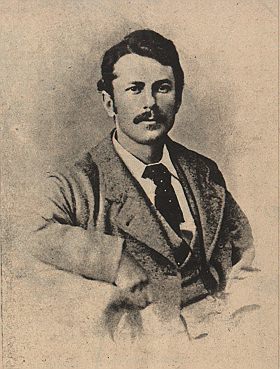
Our local Edward Carpenter


Edward Carpenter lived from 1844 to 1929 and became a prominent socialist, poet and writer who wrote many books and lectured across the country, whilst being based at his home at Millthorpe from 1883 to 1922. He lived close to my own home in nearby Dronfield. He also involved himself in Extra-mural teaching at Sheffield University, where I also taught from 1966 to 1987. 

Though efforts have been made to remember Edward Carpenter, his important writings have largely been forgotten. Even in neighbouring Sheffield it is not possible to walk into a book shop and buy  copies of even his most famous works. However, one can easily purchase a copy of Walt Whitman's Leaves of Grass, the poem that inspired Carpenter to write Towards Democracy.

Typesetting for a new edition of Towards Democracy is now. however, largely completed.  All that is needed is money to pay for the printing, and to launch a relevant co-operative so that it can continue via its members' involvement onto further projects.

For further details about this project and how you can support it, link here to see the work being undertaken by Millthorpe Press which is a key co-operative that will be largely led by its members, who will have a vote in further publications by the co-operative, as well as receiving a newsletter, and invitations to stand for its board. Your involvement and support would be most welcome.

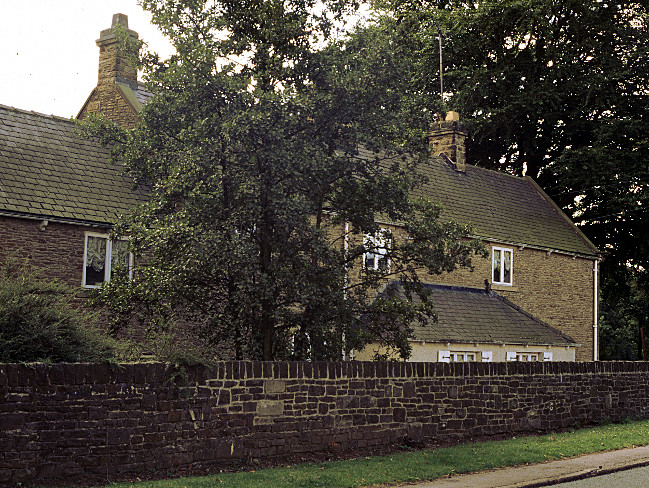
Carpenter's former home at Millthorpe.

 The house which Carpenter had built.

For more information about the importance of Edward Carpenter click here and much more can be found by googling. There is a valuable article about him click here.

HAT TIPS to Michael John Hattersley and Mick Walpole of "Dronfield Through Time". Here is a photo taken in the early 1900s on the main Sheffield Road through Dronfield with Edward Carpenter in the centre -
 Image may contain: one or more people, crowd and outdoor


Sunday, September 23, 2018

INEOS - Who Are They And What Are They Up To ?


The above book is published by Biteback Publishing, 2018. ISBN 978-78590-388-5. At a cover price of £20. (But you can push for your Library to get a copy if you wish to limit profits going to INEOS). 


INEOS mainly operates as a multinational chemicals company with its current (but seemingly temporary) headquarters situated in the United Kingdom. It runs some 181world-wide operations many related to petrochemicals, manufacturing, natural gas, oil, polyethylene and plastics - although with such a widespread and complex empire it can be subject to changed boundaries at any time.  It also owns the Lausanne-Sport Football Club in Switzerland. Yet an effort by its recently knighted boss and key owner Jim Ratcliffe to take-over Chelsea failed. He owns a controlling 60% of INEOS's international empire and as we will see does not like failure. So watch our Chelsea fans.

In the United Kingdom, INEOS runs some 15 operations including five offshore sites and inland activities at places such as Newton Aycliffe, Runcorn and Cleveland. It is, however, best known in the UK for matters related to its operations at Grangemouth in Scotland.

It took over control of its Grangemouth site in 2005 and soon engaged in two bitter struggles with its workforce about their terms and conditions. In 2008, it attempted to close down the workers' final salary pension scheme. But the workforce took industrial action over the issue and were initially victorious after a 48 hour strike. INEOS then dug in and eventually prepared for the closure of the plant in 2013, unless their "survival plan" with significant cuts in worker's conditions was accepted. They triumphed in this second conflict, forcing their workers' acceptance of a no-strike agreement plus a pay freeze for over the following three years. Job losses and reduced conditions also occurred, including the sacking of the major trade union organiser on the site.

Then in 2015, INEOS obtained rights from the Government to follow procedures granted to them in order to operate underground fracking operations to extract shale gas from across widespread areas in England. Whilst it will, no doubt, process much of this shale gas at Grangemouth it will also be free to sell it on to others. But in preparation for its shale-gas bonanza in England, it started to import shale gas for its own purposes (such as the production of plastics) from the United States - as shown in the shipments' photo below.

 The JS Ineos Insight


Around about the time of INEOS gaining its potential shale gas areas from the Government, the Scottish Parliament banned fracking operations in its territory. But once shale gas is extracted by INEOS from its operations in England it can be moved to Grangemouth for processing. At the moment INEOS are moving towards numbers of potentially fully-fledged fracking operations in many areas of England, especially in numbers of shale-gas prone former coal mining areas. If fracking operations with the potential for creating sink holes are granted under or near your home or beneath your front street or under any social facilities in your area (such as your children's schools) neither yourself nor your local council have rights under current Government legislation to prevent such operations taking place. So much for any property rights.

Jim Ratcliffe who is the dominant controller of INEOS, has massive powers. Apart from enjoying access to 10 Downing Street and obtaining a recent knighthood, he has been declared to be the richest person in the UK according to the Sunday Times Rich List - being over 40 times richer than the Queen who is down in 344th position. He has also been recently reported as planning to move the headquarters of INEOS from Lyndhurst in Hampshire to the tax free haven of Monaco.

Evading UK taxes is not, however, something that is new to Ratcliffe. The Herald of Scotland newspaper linked him to the infamous "Paradise Papers" and showed that INEOS were placing funds in overseas tax-free havens. Whilst the trade union UNITE (who are the main body he has been in conflict with at Grangemouth) have shown him to have allocated funds to five off-shore tax havens. 

Jim Ratcliffe has himself been involved in the production of the book which is modestly entitled "The Alchemists : The INEOS Story- an industrial giant comes of age." I find the most informative and useful sections of the book to be a couple of appendices at its close. The first is entitled "The Business Structure Of INEOS" showing which categories of petrochemicals, oil and gas, refining and other business areas it owns. Then there is a two page summary of the main scope of its operations since its formation in 1998. The second appendix is entitled "The Petrochemicals World And INEOS", with a flow chart and then a six page summary of its operations. These are not in themselves details of INEOS's full operations, but they do provide avenues to start searching things out. Clicking into such items via the internet, can give fruitful details about their international operations.

I also find that the book's many photographs can, at times, be informative. They show something of the nature of INEOS's plants which operate in Cologne, Texas, Antwerp, Grangemouth and Lavera in France. Alhough these are just the tip of the INEOS iceberg, they give telling pictures of some of their major operations. If these photos are linked with a rather dark map which is also published showing the positions of INEOS's 181 or so operations around the world, then we can see the magnitude of the financial and political strengths which are at Ratcliffe's elbow. A more detailed map can, however, be found on INEOS's web-site which can be linked to here. When you do this you can scawl across the map that is provided in order to cover the full INEOS global empire

Unfortunately, there are also far too many photos of Ratcliffe himself. Then he selects one showing Mark Lyon his leading trade union opponent at Grangemouth in 2013, who happens to be carrying a banner and has his mouth wide open and is shouting. It is selected to give the impression that Lyon was a loud mouth - unlike the "modest" Jim Radcliffe !  If, however, you then turn to Mark Lyon's own book entitled "The Battle of Grangemouth" (shown below) which deals with the industrial disputes I referred to earlier, you will get to a very different impression and will hopefully agree with the quote from Jeremy Corbyn on the cover of the book, stating "This is a story of a fight for justice for working people told from the worker's point of view. I commend this enthralling book to everyone" - even though that 2013 struggle was lost. Tomorrow is, however always a different day. (Below I show Mark Lyon's book, published by Lawrence and Wishart in association with Unite the Union, 2017. ISBN 978-1-912064-00-7. Cover price £12.50p)

The Battle of Grangemouth by Mark Lyon


The main text of the INEOS book is actually written by Ursula Heath and not by Jim Ratcliffe. She is no independent spirit, but one of his employees. This is her first book. Hopefully some day she will take to publishing her very own independent writings and be free from Radcliffe's domination.

Out of the 300 pages of the book, all that appears under Ratcliffe's name is a short 24 page introduction and two pages of acknowledgements. Yet even then, half of these short number of pages are taken up with favourable quotes obtained mainly from his top-level employees. They clearly all knew which side their bread was buttered on.

Early during the main coverage itself by Ursula Heath it is claimed that Radcliffe moved from rags to riches. But this is over the top, as it emerges that his father actually moved out of their early council dwelling when he ran a factory making laboratory furniture. Whilst Ratliffe has made it to being super-rich, it does not appear that he really emerged out of super-poverty. Although (as we will see next) he does believe in the need to climb mountains and reach out for impossible destinations. Hence his rise from his "poverty" background is given a similar twist.

In fact the coverage of Ratcliffe's early life is very thin in the book. Two of his sons get mentions, but mainly because they went on expeditions with him to Kilimanjaro and to the South Pole. It is his own achievements which he is really plugging. His daughter gets only a brief mention, but neither of his two wives are even referred to. So just what makes him tick is difficult to judge. But he likes to be seen to have made super-journeys - whether physically or financially.

Early into the main section of the book by Ursula Heath an incredible claim is made about Ratcliffe. It is said that "Jim's first fundamental priority is safety...the first subject he discusses at every chief executive meeting." Then we might ask, why is he into fracking at all ? Numerous environmental and safety problems arrive from such operations. However, the section I quoted ends "Safety, reliability and profitability all go hand in hand". We can only assume that when it comes to the crunch it is the later which counts.

It was on 5 May 1998 that the basis of Ratliffe's existing company was drawn together and given the name "INEOS". The title has a Latin and two Greek roots and overall is supposed to mean the "dawn of something new and innovative". Yet such entrepreneurial forms of go-getting and exploitation have over 250 years of experience in Britain which is the home of the Industrial Revolution. Over time capitalists have moved in a variety of ways. In 1799 Robert Owen started out as an industrialist in New Lanark in Scotland and then used his base to become a major developer of co-operative forms of ownership. If Ratciffle would like to earn himself a positive and lasting reputation, then he just about has enough time left to adopt a similar approach. Then he will reach the real heights.

INEOS's empire in the UK would clearly benefit from such a co-operative spirit. The current move by John McDonnell seemingly to argue that Labour should see that large firms gradually move on to hand up 10% of their ownership to their workforce, would impact upon the operations of INEOS in this country in a positive direction by drawing from Owenite ideas. Grangemouth mellowed by New Lanark would be a move in a much better direction.   

Selections from the "The Alchemists" can be found via clicking here. 

Added 8th October. For the latest on INEOS's shortcomings click here.

Added 18th November.  For a link to a list of key Financial Times articles about Jim Ratcliffe and INEOS click here.   

Added 31st December. For more on Ratcliffe's multi-national empire building click here.

Added 7 February.
 Image may contain: 5 people, people smiling, people standing and outdoor


Friday, August 24, 2018

Tactics To Undermine Fully Fledged Fracking

The Planning Inspector's decision to allow a vertical hydrocarbon core-well to be established at Bramleymoor Lane, near Marsh Lane in North East Derbyshire was made on 16 August and can be found here. The Inspectors photo from the enquiry itself appears below.
 Image result for Elizabeth Hill Planning Inspector

For those of us who are strongly opposed to this development, much of our attention now needs to be directed towards how we can seek to block a likely consequential move by INEOS to obtain permission for horizontal underground fracking operations from the same (or a neighbouring) site.  I raise what I hope is some food for thought.

Whilst I appreciate that the Planning Inspector's decision would still have gone against us, I feel that the Derbyshire County Council made an error at the enquiry in not going far enough with its own reasons for rejecting the initial planning application for use of the site. For it only raised three main objections to INEOS's proposals. These were restricted to (1) green belt concerns, (2) night time noise problems and (3) highway and transport matters.

Whilst these were key concerns, many more matters were raised by anti-fracking sources at the County's own public enquiry which was held at Matlock. These included (a) the seismic effects of drilling, (b) concern about dangers from past coal mining operations in the area, (c) problems concerning the operation of the Coal Aston airstrip, (d) landscape problems, (e) air quality dangers, (f) ecology issues, (g) the use of agricultural land and (h) problems with surface water. As it was not the County Council who raised such points, they were all rather briefly dismissed by the Planning Inspector. Yet the County's objections received much deeper answers from the Inspector and numbers of conditions were laid down by her for their agreed operation. These points included (1) that the drilling period should be limited to 5 months, (2) repairs should be made to any otherwise lasting damages, (3) a noise monitoring system should be operated and (4) a vehicle-reversing warning system will be required.

These may be minor points in the overall picture of what will happen, but if the Derbyshire County Council had widened its objections some extra (yet minor) concessions might have emerged. But every little helps.

And although the "protective factors" provided by the Inspector are limited and could have been much greater, they can now be used to try to undermine the eventual full application for horizontal fracking powers in the area.

A key avenue to pursue is with the Coal Authority. Why did it raise no problems nor seek any conditions for the coming INEOS operations at Bramleymoor Lane ?  For they hold clear and substantial records of former mine workings in the area. Then their current "Coal Authority Annual Report and Accounts, 2017-18 (House of Commons 1168)" states on page 101 that "The Coal Authority has obligations under the 1994 Act and Subsidence Act 1991 to investigate and settle claims in respect of coal mining damage arising outside designated areas of responsibility associated with licences granted to coal mining operators. Surface hazards provisions relate to the costs of treating ground collapses, shaft collapses and other hazards relating to former coal mining activities. The Coal Authority has obligations under the 1994 Act and Subsidence Act 1991 to investigate and treat hazards arising from coal and to have regard for public safety".

The Coal Authority also has a new Chief Executive in Lisa Pinney - see her photo below. It is hoped that if pushed, a new broom will sweep clean. Furthermore, the Coal Authority operates from Mansfield. So it is easy for nearby local MPs and Councils to seek meetings with her and to otherwise push for the rejection of fully fledged fracking measures.

The Coal Authority Interactive Map reveals masses of problems in the Bramleymoor Lane and related areas, which need the fullest consideration. The work on this matter which has been undertaken by the Coal Authority is substantial and of great importance. What we need is for them to pursue the very problems which are in front of their eyes, thanks to their own work in the past - which is still continuing. They should not be nobbled by Jim Ratcliffe who owns 60% of INEOS, just because he is the richest person in the country, has access to 10 Downing Street and last month obtained a knighthood from the Queen - who only holds a 57th of Jim's wealth. Especially, when he is moving to tax-free Monaco to avoid UK taxes to protect those aspects of his wealth which aren't already hidden away in tax-havens.
Image result for Lisa Pinney MBE


Sunday, August 05, 2018

Who Do You Think You Are ?


As I failed 'O level' maths, you will need to check my calculations.

But let us assume that for those of us who live in England that four generations of our ancestors were born in each century back to the times of the figures published in the Domesday Book in 1086. There are of course, also national boundaries to consider as these altered over time and parentage would  often cross boundaries Then also births normally take place at a later stage today, than in the distant past.

My assumption of four generations being born per-century is based on the notion that relevant births occurred around 25 years periods. Say 1600, 1625, 1650 and 1675. So I am not over-egging the pudding in my analysis.

On my assumption that means that someone born in the year 2000, with parentage mainly from this country may be part of the 38th generations since the publication of the Domesday Book figures. Back then it was estimated that the English population was only 2 million. So we are likely to be much more closely related to each than the programme "Who Do You Think Your Are ?" generally indicates. For if we were all entirely unconnected genetically the population in 1086 (ignoring various overseas settlers and departures) would have needed to be massive and not just a mere 2 million. Then our heritage is complicated by the fact that we are normally unaware of whom was born the wrong side of the blanket. Maybe more of us have an aristocratic linkage than we could ever imaged. For even just back to 1086, we would have needed a population then of some 250 trillion to have created today's population without there being any forms of even the remotest cross breeding.

So "Who Do You Think You Are?" makes more sense, if it just dives back no more than three or four generations - and finds fairly reliable genuine parentages. Beyond that we should see ourselves as part of a general melting pot. Those with a long term aristocratic background may have a greater assurance about their physical heritage. Yet it only takes one slip to have dented their pattern.

Friday, July 27, 2018

All Party Parliamentary Group Looks At Fracking In Former Coal Mining Areas.

Image result for Fracking and Coal Mining


I attended a meeting of the following group in a parliamentary building on Tuesday. The following is a written submission I had earlier sent to them. But as I was placed fourth on the agenda, there were serious time pressures by my turn was reached and people from the floor of the meeting needed their opportunity to contribute. So I spoke very briefly. The group is chaired by Lee Rowley M.P.


To : All Party Parliamentary Group on “The Impact of Shale Gas“.

Dear Lee Rowley and Associates,

This is my submission for consideration at your meeting on 24 July when you will be investigating “Shale Impacts In Former Mining Areas”. I hope to attend your meeting and hopefully face questions related to this submission.

I am a Member of “Coal Aston and Dronfield Against Fracking” which is a non-political organisation drawing its membership from across the political spectrum. This presentation is made on their behalf. Whilst this body pursues a range of wider concerns, the matters I deal with below are part of their brief and are intended to cover the specific topic you are currently pursuing.

(1) Much Underground Fracking Will Operate Under Built-Up Areas.

In recent years, the Government have issued a wide range of “Petroleum Exploration and Development Licences” (PEDLs) given to firms who are permitted to seek authority to engage in exploratory vertical underground operations which will then (the firms hope) lead them on to engage in related horizontal fracking operations. The great bulk of these PEDLs cover territory where wide ranges of coal mining operations have taken place in the past and/or where untapped coal seams still remain. For it is in such areas that shale gas is the most likely to be found.

When these firms seek initial rights to engage in exploratory vertical operations in order to discover whether the surrounding underground territory will be able to deliver the quantities of shale gas they are seeking, such explorations tend only to be practical when they initially are undertaken either in rural areas or within significant green field territory contained within a basically urban unit. The early use of urban territory for purposes of exploration being restricted by the fact that very heavy traffic will need to be used during exploratory processes and these will prove to be extremely difficult to operate from in major built-up areas. For such areas already tend to have obvious high level transport operations. So any significant additions will be seen by planning authorities as being likely to lead to major bottlenecks. Although there are still major transport problems which many of us believe will arise in approaching the more rural sites.

But whilst vertical searches for initial access points for the discovery of shale gas will often be centred upon rural terrain, the bulk of shale gas sources themselves will eventually be found beneath urban territory. The entry points initially used by fracking firms in mainly rural territory, will thus often be used to lead onto underground access points which will undermine neighbouring urban territory. There are two main reasons why urban facilities have come to be built on top of former coal mining areas.

First of all, coal getting goes back 5,000 years to Neolithic times and was advanced especially by the Romans hundreds of years ago. Coal was initially only obtained close to the surface via digging into hillsides or via shallow digging into surface areas. Small mines with a single entrance each were then developed known as “bell pits” - these often came to run (one after the other) in single rows along the top of specific coal seams. Then shallow mines were operated, each with an entrance and exit in close proximity to each other. Often entrances came to double as exits. In time (when the above forms of shallow mining became inadequate or were worked out) the land they had previously occupied often came to have houses, gardens, paths, roads, shops, schools and other communal facilities built upon them. This occurred because the population in England needed such facilities as it grew rapidly over time from just over 2 million in 1500 to some 50 million by 2000. Formerly worked mining territory being seen as ideal spots for such developments.

A second factor leading to housing and other social provisions being built on top of exploited coal mining territory, was the dramatic increase in coal production which took place from the time of the birth of the Industrial Revolution. Miners and their families were moved into newly established coal mining areas, with their homes and other facilities being built above (or close to) the seams of coal which were being dug out. Whilst nowadays (apart from a small number of drift mines) coal production has ended in the UK, yet many former miners' residential areas remain occupied. So their current residents still live above or in the vicinity of former underground coal seams.

From the above pattern, it follows that the great bulk of proposed fracking operations (whilst often starting out from rural territory) will come to operate beneath much urban territory. For the starting point for any fracking operations will fan out from its underground (and normally rural) starting point. For instance, INEOS claim that when they move to horizontal fracking techniques they can fan out for a mile and a quarter from their starting point – which can be a total of two and a half miles if taken in opposing directions Yet in the USA (where INEOS admit they will need to hire fracking experts) the firm Haliburton claim that they have engaged in fracking operations which fan out for some three and a half miles.

(2) Will Underground Fracking Create Surface Damages ?

When a firm engages in fracking techniques under current government legislation, its seismic operations (which are a key to its procedures) are expected to operate at 1,000 metres or below; although the Government have powers to reduce this minimum level in specific cases. There is also the question of how closely the Government agencies will check that firms are always operating within the established guidelines.

The question that then arises is whether fracking taking place beneath former or remaining coal seams will cause surface problems. For this could be particularly damaging and dangerous when underground fracking operations take place. If disrupted by seismic fracking operations, there is the possibility that remaining low level or former coal seams might experience disruptions but (with luck) this might play itself out before surface sink holes or the like emerge. Although I know of an area in the past whose residents could at times hear such mining operations taking place beneath their homes.

However, if underground seismic fracking shakes up land which has had former coal mining operations taking place close to its surface, then ground level collapses could well be even more prevalent. For such disruptions have no time to settle before they reach ground level. An indications of some of the types of territory which could well be effected emerge via experiences from past natural earthquake activities. On 27 February 2008 an earthquake took place at Market Rasen in Lincolnshire which led to the United States Geological Earthquake Programme working with the Daily Telegraph and others to obtain reports from people whose land and properties had experienced the effects of this incident at its different levels of local intensity. Unfortunately, many people would not have been aware that the survey had taken place. Yet within my own area alone, the following number of disruptive incidents were recorded – Chesterfield 83, Sheffield 303, Rotherham 88. Mansfield 51 and Derby 150. See the following - https://www.telegraph.co.uk/news/uknews/1580010/UK-earthquake-town-by-town-statistics.html

But whilst there are limits to what can be done to protect people from natural earthquakes, they do not need to be exposed to dangers from man-made fracking operations. These can be blocked. A body which your APPG could pursue on this matter is .the British Geological Society. They hold details on underground fracture lines which could well be effected by man-made seismic operations.

The dangers of underground seismic fracking operations mainly as experienced in the USA is covered in a substantial work entitled “Methods of Environment and Social Impact Assessment”, edited by Riki Therivel and Graham Wood (Routledge). It states-
"Seismic Risk is a significant problem in some parts of the world.....For example, hydraulic fracturing ('fracking') can potentially cause significant geological problems that as ESIA (i.e. an "Environmental and Social Impact Assessment". HB) for a fracking operation would need to assess. Fracking involves pumping liquid under pressure into rock formations to force shale gas out. The main geological risks are that expelled gas might contaminate underground aquifers, and the possibility of earthquakes. Earthquakes caused by fracking are usually small, but associated waste-water disposal by injection into deep wells can induce larger earthquakes (Ellsworth 2013). For example, a fracking-induced 5.7 earthquake in central Oklahoma in November 2011 destroyed 14 homes and injured two people....Subsidence and slope stability are also factors that should be considered. Subsidence is caused by underground mining and is usually associated with traditional coalfield areas. where the subsidence extends for considerable distances around collieries". For more details see -

(3) Important Coal Authority Sources.

A major body which should concern itself about the dangers of seismic forms of damage from fracking operations is the British Coal Authority. It has a fine past record in discovering where past mining operations have taken place. And it points out that it has by no means yet discovered every site given the long, complex and often unrecorded ancient history of mining operations in this country. For instance, I lived immediately next to the Unstone-Dronfield By-Pass when it was constructed in the early 1970s. The Coal Authoritiy Interactive Map shows that over 20 former mine exits and entries appear under the road's construction, with many more of these being within close proximity of the road.

A major source for discovering the up-to-date records of past forms of mining operations which have taken place in the British Isles is the Coal Authority Interactive Map. Specific areas can be homed into on their Interactive Map and different categories can then be checked out. These include all discovered mine entries and exits, development risk areas, areas of past and probable shallow mine workings, coal outcrops, areas of underground workings and some two dozen further categories. In some cases (such as the crosses which show mine entries and exits) these can also be linked into and more specific details will appear such as those showing the depth of the mine shafts concerned. It would be helpful for your APPG to examine the Interactive Map, by linking it to a large screen. The Common's Library would also be an avenue which specific MPs could turn to for Coal Authority print outs of their own Constituency areas. The Interactive Map can be found here -

A whole host of other valuable coal mining data can also be traced from the Coal Authority's other sources, such as the following -

(4) Current Failures By The Coal Authority.

Unfortunately, when either Council or Government Planning Enquiries are being held to determine applications for planning permission for vertical or horizontal operations, the Coal Authority are currently failing to make adequate use of the information they hold.

In a printed submission from the Coal Authority relating to an application by INEOS for vertical exploration on a site near Bramleymoor Lane, Derbyshire S2 15RD which was made available for the public when a Planning Inspectorate held a public enquiry on the matter in Chesterfield recently, they stated that “There are no known coal mine entries within 20 meters of the boundary of the property” concerned. This was a phrase repeated in the written evidence which was also supplied by INEOS, but without them quoting its source. The quotation coming from the Coal Authority document “CON29M Non-Residential Report”, initially issued on 23 December 2016.

I appreciate that it is common practice for the Coal Authority to use such 20 metre measurements. But why do they not also point out that (a) there could be other coal mine entries within the 20 meter area which have not yet been discovered – especially as these are in the vicinity of other recorded mine entries and (b) provide us with the actual distance of the nearest known former mine entry ? For when INEOS made its initial application to the Derbyshire County Council for vertical operations in a field off Bramleymoor Lane, this showed that their operations were intended to take place either above or very close to two former recorded mine entrances. It was only under public criticism that INEOS then moved their site somewhat to the south of the same field. This has enabled them to evade the 20 metre limit which could have led to criticism from the Coal Authority. But the Coal Authority should not have allowed the final INEOS application to escape criticism, just for the sake of what can only be a few metres. (The initial map which was used by INEOS had added a red box to the Coal Authority's own Map showing its initial plans for its operations. It, appears as the second map on this blog item I ran - http://threescoreyearsandten.blogspot.com/2017/12/is-this-frackings-greatest-danger.html )

An illustration of the danger of surface collapses from past underground mining operations can be seen within a mile of my home at our aptly named “Coal Aston” area. At a house at Eckington Road in 2011 on land at its back garden, there was a collapse which was serious enough to require assistance from the facilities of the Coal Authority themselves and from other public bodies. This is at a spot next to the roads on which INEOS are currently seeking to employ heavy transport - if they can gain permission for vertical underground operations at nearby Bramleymoor Lane.
( I have found difficulty attaching the source for the above, but I will bring the relevant 22 page document with me to your session).

(5) A footnote : what expertise do I hold on these matters ?

A persistent question asked by INEOS at a recent Planning Authority enquiry into their proposals for the Bramleymoor Lane site, was what expertise contributors held on the matters they raised. So I had better pre-empt such a hurdle.

Although I have never worked in any aspect of coal mining, I come from solid mining stock. My father and father-in-law were miners and up to the age of 27 I was brought up in a solid mining community in County Durham at Easington Colliery. Also my six uncles all became miners and two of my aunts (obviously plus my mother) married miners. There was a pit disaster there when I was 14 years old, killing 81 miners and then two rescue workers. At the time, my father was in a different seam from where the explosion occurred. I also had numerous cousins who were miners or married to miners. At Easington I also came to work closely with the local MP Mannie Shinwell, who earlier as the Minister for Fuel and Power had nationalised the then coal industry.

I later taught separate Yorkshire and Derbyshire miners groups on Industrial Day Release classes run by the Sheffield University Extramural Department, annually over a period of 21 years. Also having close links with people such as Peter Heathfield who became the Secretary of the NUM. Then I became the MP for North East Derbyshire for 18 years, which for previous periods covering a total of 68 years from 1908 onwards had had ex-miners as MPs. It was during my period as an MP that the final deep mines were closed in Derbyshire, so these matters and ex-miners' futures were always solidly on my agenda. Then the future of the drift mine “Moorside Mining” (which still exists and is just five miles from my home) and its operations became a major item on my agenda.

In my time as an MP, four of my former day-release students were fellow MPs and one had previously served as an MEP. Another was a former Yorkshire Miner whom I had studied alongside when an adult student at Ruskin College in Oxford. Whilst many of my former mining students became local councillors, NUM officials, social workers and the like. Then in the Commons I had close links with my neighbouring MP Dennis Skinner, who is a former Derbyshire Miner. I was also member of a group of MPs who pursued miners and ex-miners concerns.

Given the massive social problems arising from the decline of local mining, I was faced with a wide-range of complex problems as an MP which would not have emerged in more settled circumstances.

From my own collection of books on the Mining Trade Unionism, I stress the three which are relevant to my own background. (1) W.R. Garside “The Durham Miners 1919-1960” - George Allen and Unwin 1971, (2) Frank Machin “The Yorkshire Miners” - NUM Yorkshire Area 1958, (3) J.E. Williams “The Derbyshire Miners” - George Allen and Unwin 1962. Williams impressive book is especially substantial, being 933 pages long. He taught on our Miners' Day Release Classes before I did.

Yours sincerely,
Harry Barnes.
Sunday, July 15, 2018

Fracking Dangers for Coal Aston and Dronfield


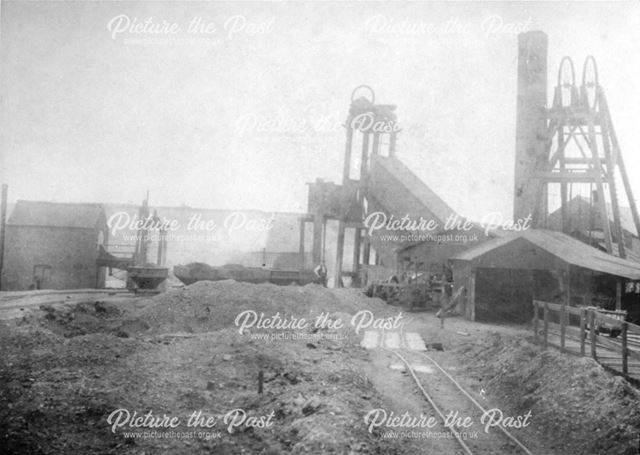
Image result for Gosforth Colliery Dronfield

Gosforth Colliery, Dronfield. In 1896 it employed 95 underground and 35 surface workers.

To access significant areas of shale gas, INEOS's need to engage in underground fracking operations using horizontal techniques in areas which have either (a) remaining untouched coal seams and/or (b) have had past coal mine workings. The appropriately named "COAL Aston and Dronfield Against Fracking" body covers territory which completely fits both of these categories. Untouched coal seams remain in areas such as the High Street and Church Street, because they had been built upon before coal mining operations expanded throughout the rest of what was then Dronfield's green fields, especially in the 19th and early 20th Century. And also at times well before that.

To see the range of former coal mining activity across the whole area covered by the Dronfield Town Council, it is essentail to visit this Coal Authority Interactive Map and home into our area - which is south of Sheffield. There is a key index to link into at the top right hand corner of their map. The former mining operations which have been discovered so far, mainly took place in the 19th Century. Although some go back much longer than that. (Of course, the general points I make below about the Interactive Map also apply to many other parts of the country and they should be more widely checked out.)

All of Dronfield is supposed to be part of the Coal Authority's area of concern. We fall completely into their three categories as (1) a surface coal research area (2) a coal mining report area and (3) a coalfield consultation area. Then they cover over 90% of the area in their abandoned mine catalogue. Red crosses used on the Interactive map show over 250 mine entries, whilst brown crosses are used to show over 80 separate mine exits - although many mines also used their entrances as exits.

A whole range of other categories reveal problems - including Development High Risk Areas, Past Surface Mining, Shallow Coal Mine Workings and Coal Outcrops. A series of green crosses can be found. If you click into these it will tell you the deepth of the pit shafts concerned. Many of these being about just 100 feet deep. The working dates of the operations can be found by linking into a range of some 40 purple crosses. These are mainly from the 19th century.

There is much more information which can be obtained. Those living in the territory can check to see how close they live, work, shop, school, park, walk, drive, worship or obtain entertainment near such areas. Then they can assess how they would feel if INEOS's seismic operations were to take place beneath such areas. Without INEOS being under an obligations to cover the costs of any damages. And without anyone having the right to stop INEOS operating beneath their properties - not even the Derbyshire County Council when it comes to our schools.

The Coal Authority Interactive Map may be difficult to master, but it is well worth the effort. But it is a pity that the Coal Authority are not themselves also pressing such matters. They raised no objections to INEOS's proposals at the recent Bramleymoor Lane enquiry. Even though their interactive map shows two mine shafts in close proximity to INEOS's proposed operations. And these are also categorised as being "Development Risk Areas".

If eventually INEOS came to be able to use its Bramleymoor Lane site for underground fracking operations, these would easily reach to Coal Aston. Then a firm Haliburton in the USA operated over a much longer distance in Texas - far enough to get from the Bramleymoor Lane site to the Unstone-Dronfield By-Pass. The main entrances to the former Gosforth Valley mine (as shown in the above photo) being close to the point where the By-Pass is now carried over a viaduct. There it is close to the entry to the large Tarmac housing estate on Gosforth Valley.

Added 19 July, 2013. Here is a link to a 351 page article by A.N. Bridgewater concerning former North Derbyshire Coal Mines. It contains many maps and photos. Pages 128 to 133 (with some later items) give details about many former coal mines which operated in the Dronfield and Unstone areas. Showing detailed maps and photos. Then "Bramley Moor Old Mine" (of relevance to the recent INEOS application) appears on page 140 during coverage of mines in the Eckington and Mosborough areas. Killamarsh is then dealt with. The writer also points out that sections of the Chesterfield area show the existence of 900 former mining operations. See here. 

A book (with numerious photos) which is also well worth pursuing is "The Coal Industry of Sheffield and North East Derbyshire" by Ken Wain (Amberly 2014).  Link here. 


This is the Coal Authority Map which you need to click into (via the earlier link above) -


Tuesday, May 22, 2018

Once More - Beyond Our Ken


The statement which led to Ken Livingstone's suspension from Labour Party membership (and now to his resignation) was his claim that Hitler had "supported Zionism" when first coming to power in Germany "before he went mad and killed six million Jews". This is a clumsy reference to a deal which the Third Reich struck with leaders of the Zionist Movement on 7th August, 1933. Hitler engaged in the deal in order to remove many Jews from Germany. It was a prelude to events such as resorting to prison camps, Kristallnacht (and the like) and then to his fully fledged mass extermination programme. The words used by Ken to described the early start of such developments clearly need to be have been adjusted.

For Hitler was "mad" in terms of the depth and nature of his anti-semitism (and on many other matters) well before the above deal was ever agreed to. For instance, Mein Kampf was published in two volumes back in 1925 and 1926 and contained clear anti-Semitic claims and attacks upon Judaism. It claimed that Aryans were the master race.

The 1933 development which Ken expressed briefly and badly is, however, contained in great detail in Edwin Black's book "The Transfer Agreement'. The introduction to the 1984 edition of his book stating that - "On August 7, 1933, leaders of the Zionist movement concluded a controversial pact with the Third Reich which, in various forms, transferred some 60,000 Jews and $100 million...to Jewish Palestine".

Edwin Black is himself Jewish. His grandmother was murdered in Treblinka, having pushed her young daughter (who was later to become Edwin's mother) out of the train that was taking them to the camp. The young man who was to become Edwin's father escaping from a group of Jews who were being led to their execution by Nazis in Poland. Edwin's book is solidly researched and he is certainly in no way anti-semitic. If Ken had stuck with its approach, he would not have upset the apple cart. Yet the fact that he badly expressed the nature of this significant historical arrangement does not by itself make him anti-semitic. Nor can I find other evidence to substantiate this claim. But he could have conceded my point.

Informaton on Edwin Black's book and extracts from it can be found via this link.

22 May : According to a Guardian report, Ken Livingstone has now "apologised for his controversial remarks" on Hitler and Jews. If he had done this some time ago (even pointing to what actually happened), it would have been helpful and might have saved a lot of hassle within the Labour Party by cutting the ground from under his opponents.

25 May : Link here for a two year old Foreign Office definition of anti-semitism, although others may employ other definitions as useages often only share family resemblances. But on which items in the Foreign Office's criteria was Ken Livingstone and some other 80 Labour Party members accused ? 

28 May : Link here for 39 cases of claimed anti-semitism in the Labour Party, although one is the late Gerald Kaufman who himself had Jewish parents. Another is Ken Livingstone. But it provides numbers of claims that can be further checked out.

29 May : Link here for Ken's full statement on his resignation from the Labour Party, which I have just discovered. 

27 July : "How Should Anti-Semitism Be Defined?". See this in today's Guardian.  

28 July : A valuable coverage and attached debate on "Racism in Israel". See here. 

1 August : As the philosopher Wittgenstein pointed out, many of the words we use tend to share a family resemblance rather than just having exact, precise and rigid meanings. The broad meaning of a word then being discoverable by examing the range of ways in which it is used. This does not, however, mean that usuages of specific words don't also have rough and ready boundaries. Then dictionaries are into the business of attempting to define words for us and, therefore, offer a precision which attempts to get to the heart of their use. So my Concise Oxford Dictionary defines an anti-Semite as being "a person hostile to or prejudiced against Jews". Whilst Wittgenstein encourages us to go beyond such exact definitions, this does not mean substituting dictionary sytle and brief definitions for over-elaborate ones which then seek to capture the use of a word. And whilst there is nothing wrong with the International Holocaust Remembrance Alliance stressing its concerns about anti-semitism in its own elaborate statement containing no less than eleven categories, this does not make their statement THE definition of anti-semitism which bodies such as the Labour Party or you and I are obliged to adopt. As long as our approach has a wide ranging anti-racist stance which firmly rejects anti-semitism we are on the correct side. It seems to me to follow from my above approach that the comments which Peter Willsman is being hauled over the coals for (whilst they were both over-emotive and highly undiplomatic) are not anti-semitic. Nor do I feel that Jeremy Corbyn has been anti-semitic, although I always felt that he was incorrect to have associated himself too closely with Hamas. Along with his past links with a then military Sinn Fein, his former opposition to our membership of the European Union and his refusal to see that after the invasion of Iraq (which I also strongly opposed) possibilities had changed and we needed to work with progressive forces inside Iraq such as its re-emerging trade union movement; these were all matters why I never voted for him for the leadership of the Labour Party - abstaining on the second ballot. Yet the realities of his becoming leader have thankfully led to him shifting his stance on such issues. So I feel that the reality is to now move forward with him as leader - whilst (as always) seeking to influence our direction of travel.

This is from Pete Willsman's report of the NEC Meeting of 17th July 2018. 

General Secretary's Report -
* Labour Party Code of Conduct in Relation to Anti-semitism Issues
The NEC Working Group - Antisemitism, had presented a full report to the Organisation Committee on 3rd July. The accompanying documents at the Org Ctte had set out a wide range of important recommendations. These included a NEC Code of Conduct - Antisemitism, which had been improved nem con by the Org Ctte.
Jennie gave a very comprehensive introduction concerning all the work that the staff had undertaken on this issue over many weeks. Jennie stressed that it was obligatory upon us that we agree a way forward that is fair and just and totally defensible. Jennie emphasised that it was essential that we sit down with all of the Jewish groups and identify their concerns. These can then be addressed in a fair and just manner. The specific details of the concerns are not that clear since most of the criticisms are presented in very broad brush terms. The NEC then discussed at length and in a very thoughtful and concerned manner the points raised in the documents and by Jennie. It was agreed that we need to keep the whole matter under constant review and clear the backlog of cases without delay. A special meeting of the Disputes Panel, that will last a whole day, was agreed so that all remaining cases could be progressed. It was pointed out that due to the very small size of the NCC, there are always inevitable delays in getting 3 person panels up and running for each case (NB The Democracy Review will address this problem by recommending a significant increase in the size of the NCC). During the discussion, I drew to attention to the letter by 68 Rabbis in that morning's Guardian. The Rabbis stated that "antisemitism within sections of the Labour Party has become so severe and widespread that we must speak". I pointed out that no evidence whatsoever has ever been produced by anyone to give any credibility to this rather wild assertion. I added that we have been told that there is a backlog of some 70 cases that need to be considered. Our Party has over 500,000 members and to portray 70 out of 500,000 as "severe/widespread" would be generally considered to be somewhat of an exaggeration. I would like to add here that in The Guardian of July 18th, the facts were yet again in error. The Guardian reports that "Pete Willsman at the NEC asked for a show of hands of who believed that there was antisemitism in the Labour Party". In fact, what I ACTUALLY said was, "Hands up those who have seen antisemitism in our Party, since, in over 50 years I never have myself". Other speakers highlighted the fact that there is certainly a problem with Islamophobia in the Tory Party (as constantly highlighted by the constant complaints by Lady Warsi - see below). But of course, not only the are the Tory Party doing little if anything about it but the Tory lapdogs in the press and media deliberately ignore it.
Our Party, with Jennie taking the lead, will keep the whole issue including the Code of Conduct under constant review. There is a total commitment on the part of the NEC to constructive dialogue, to talk through all the issues of concern and reach a concensus that is generally acceptable. Everyone present vehemently hoped that the Jewish groups would respond positively to our desire to a thorough dialogue. If the groups declined to engage in any dialogue that would be very negative and unhelpful. To simply use the press and media as a megaphone to continue to make rather wild assertions that have no evidential basis is not the way forward. 

5 August : We now have this video from Jeremy.


Sunday, April 29, 2018

Michael Martin

I am very sorry to hear about the death of Michael Martin who was a former Speaker of the House of Commons for a period when I was an MP.

A huge personal debt I owed to him is explained in this item which I placed on this blog back in 2009.     

Sunday, April 01, 2018

Does The Left Have A Jewish Problem ?

A problem which I am seeking to pay attention to is whether anti-semitism has become a matter of significance within the Labour Party, especially with (and around) the election of Jeremy Corbyn as our leader. It is a matter I hope to return to in the future.

Within the last 18 months or so, I read Dave Rich's book "The Left's Jewish Problem : Jeremy Corbyn and Anti-Semitism". I made some notes of it at the time and slipped the following comment inside the copy I hold - now slightly tweaked. Did I say anything of significance or just get hold of the wrong end of this slippery stick?

In criticizing Dave Rich's book, I need to point out that I never voted for Jeremy Corbyn for leader - making a positive abstention in the second vote. And amongst a number of reservations I had about Jeremy was his rather uncritical links with Hamas. Although I now feel that Jeremy has adjusted his stance in numbers of the areas of my concern and I would certainly not favour a further leadership contest at this stage, nor a gang-of-four type split. When confronted by two extreme viewpoints, it can sometimes be helpful to seek to transcend these by working for a synthesis - which is more than a surrender or a compromise. This can be done (in this case) without people being involved in a sell-out of their basic values.
The Left's Jewish Problem: Jeremy Corbyn, Israel and Anti-Semitism


"One page 236 of his book, Dave Rich states that the "left is divided between those who identify with Jewish aspirations for nationhood and oppose anti-Semitism as part of their anti-racism, and those who oppose Israel and Zionism for exactly the same reason". This conclusion is typical  of his wider approach, where he argues for the first position.

Yet don't many of us fall into alternative positions - not just one of these two extremes? Including those of us who were highly sympathetic to the needs of Jewish people to share a safe and common homeland (especially given our knowledge of the Holocaust), yet also have concerns about the problematic impact which the establishment of Israel had for many Arabs throughout Israel and Palestine. The resulting conflict between, say, Hamas and Israel being something many of us are keen to help to transcend via, say, a two-state solution. Just as many of us have been associated with moves to peace and reconciliation in Northern Ireland/the Irish Republic, we have the same approach in relation to Israel/Palestine. 

The fact that many of us have feelings of concern about the treatment of Aborigines in the formation of Australia and of Indians in the formation of the USA, does not mean that we feel that these nations should not be fully recognized in international law. Yet we can also still currently criticize moves made by such nations on whole hosts of current matters.

In the first words to the Forward of his book, David Rich indicates that his work is based upon a PhD which he has recently acquired. I have not come across a full link to his thesis, but I would be keen to access it. For I find it hard to believe that he would gain a Doctorate based on the one-sided analysis of his book - as readable and as itemised as it is. For academics usually insist on the dialectics of debate within a thesis, before awards are granted. (Although I admit I have never attempted one). Surely, this is necessary even when one goes on to draw conclusions in an academic analysis which finally come down solidly on one side. Academics (and the rest of us) also need to put their opponent's cases at its most plausible, if they then wish to cap it. In his book Dave Rich does not really attempt this. Yet as John Stuart Mill pointed out, a person who only knows their own side of the case knows little of that."  

For the Commons' Debate related to this issue on 17 April   - Click here.

Sunday, February 18, 2018

How To Use The Coal Authority Interactive Map - showing the dangers of fracking


The Coal Authority Interactive Map can be found via this link. You can use it to search for areas where coal seams have been discovered, including many which have been excavated in the past and where seismic activity (from say earthquakes or underground fracking operations) could lead to subsidence. Many of these areas have since been urbanized, so that seismic disturbances and other forms of ground instability can lead to subsidence beneath built-up areas such as homes, gardens, shops, public buildings, roadways and pathways. We can do little about earthquake dangers, but we should place a block on future fracking operations which will invariably be sort in areas with shale gas and thus linked to the existence of past or remaining coal seams. 

As shown below, the first Coal Authority Interactive Maps shows past and remaining coal seam areas throughout England, Scotland and Wales. You can then (via the Interative Map) home-in to the specific area which interests you. So that, for instance, my second map (to its east) shows the largest combined area of all, with Sheffield near its centre. Via the Interactive Map, specific areas can then be homed into such as the Bramleymoor Lane site being targeted by INEOS near Marsh Lane in Derbyshire.

By then using a list of categories shown in the indexes in the top right corner of the Interactive Map, a wide range of different categories can then be found for the area you have chosen to examine covering items such as Mine Entries, Development High Risk Areas, Underground Workings, Past Shallow Mine Workings and Mine Entry Potential Zones of Influence. Even the red crosses showing the Mine Entries can be clicked onto to see if the Coal Authority holds further details for a specific site, such as the depth of a former shaft. People will often be shocked by the numbers and shallow depths of former workings in their vicinity.

Unfortunately, it will often be unhappy hunting - showing that granting licences to fracking firms is highly dangerous. This is something the Coal Authority should be telling us from the quantity of the information they hold. Their silence is deafening. 


Sunday, January 28, 2018

Fracking, Flaws and Fracturing

This year the 4th Edition of the book shown below has just been published. It is 724 pages long, being made up of an introduction by its editors plus a further 19 articles drawing from a total of 35 highly qualified authors, including the editors themselves. Only four of the articles have a single author, the rest having two or three joint authors. I only temporally hold a Library copy of this book, which I obtained via the inter-library loan system. Below I quote from one of its key articles and later draw attention and give access to one of the key references it employs.
 Methods of Environmental and Social Impact Assessment: 4th Edition (Paperback) book cover


From page 87 in an article entitled "Soils, land and geology" by Chris Stapleton, Hugh Masters Williams and Martin J  Hodson  they make the following important statement related to fracking -
"Seismic Risk is a significant problem in some parts of the world.....For example, hydraulic fracturing ('fracking') can potentially cause significant geological problems that as ESIA (i.e. an "Environmental and Social Impact Assessment". HB) for a fracking operation would need to assess. Fracking involves pumping liquid under pressure into rock formations to force shale gas out. The main geological risks are that expelled gas might contaminate underground aquifers, and the possibility of earthquakes. Earthquakes caused by fracking are usually small, but associated waste-water disposal by injection into deep wells can induce larger earthquakes (Ellsworth 2013). For example, a fracking-induced 5.7 earthquake in central Oklahoma in November 2011 destroyed 14 homes and injured two people....Subsidence and slope stability are also factors that should be considered. Subsidence is caused by underground mining and is usually associated with traditional coalfield areas. where the subsidence extends for considerable distances around collieries".

The article referred to above under the reference "Ellsworth 2013" is by William L. Elsworth and is entitled "Injection-Induced Earthquakes". It was published on 12 July 2013 in Science Volume 341 (see www.sciencemag.org) and can be found via clicking into this link. It includes key sections to follow under the following sub-headings "Earthquakes Induced by Hydraulic Fracturing", "Earthquakes Induced by Deep Injection", "Paradox Valley" showing major seismic problems which arose on that site which is in Colorado and "Hazards and Risk of Induced Earthquakes".

The above pubications, therefore, back up the case I have kept pushing.

If it is thought that earthquake problems can never arise in areas such as Sheffield and Derbyshire, then click here for reports from places such as Sheffield, Chesterfield and Derby of the numbers of  events which occurred from a natural incident in February 2008. Then if you also conduct a search of the area via this Coal Authority Interactive Map you will work out the range of subsidence dangers in the area which would be likely to be seriously triggered by fracking-induced seismic activity.

Added 29 January. On the above theme also click here.

Added 30 January.To what extent has the Derbyshire County Council undertaken a full Environmental and Social Impact Assessment in response to INEOS applications over workings on the Bramleymoor Lane site ?  On the local community's behalf, it should clearly have pursued this proceedure (but so should have the Government before it even considered pro-fracking legislation) which is explained via this link.

Sunday, January 14, 2018

125th Anniversary of the ILP

  Coming of Age certif


 The founding conference of the Independent Labour Party (ILP) was held in Bradford exactly125 years ago today. A leading role in setting up the organisation was taken by Keir Hardie. He had been elected as an Independent Labour MP in West Ham the previous year. The ILP then went on to play a major role in the setting up of the Labour Representation Comittee in 1900, which itself became known as the Labour Party in 1906 with Keir Hardie becoming its first leader in the role of Chair of the Parliamentary Labour Party.

The ILP's successor organisation today is Independent Labour Publications.  Barry Winter, its former Secretary provides an important article about the ILP's history on their web-site. See this link. 

Monday, December 04, 2017

Is This Frackings Greatest Danger ?

I refer to this map later. Although if you have more technical skills than I do, it would help if you could enlarge it. Then if you would like to find a similar map for other areas threatened by frackers, this article explains how you can do that.

There are numerous inconveniences and dangers which we face from fracking. Yet it is the problems which arise in former coal mining areas which worry me the most. For where there were (or still are) coal seams this provides key territory for finding shale gas. Yet fracking in such areas will create serious dangers and instability.

A key avenue for discovering where these problems are likely to be is provided via the Coal Authority. You need to turn to their "Interactive Map" which can be found via clicking into this link. If you enter a location (perhaps using your post code) in the section provided in the top left hand corner, you will find the area which interests you. On the Interactive Map you will need to use a set of double clicks to then home-in more closely to your area of interest. It may take trail and error to find exactly what you are after. But it is really worth the effort.

Many people will be surprised by what they find. For instance, Dronfield where I live is seen by many as being a middle class commuter town, yet it is pocked marked with former shallow mine workings which if disturbed could lead to major problems of subsidence. A matter the town has not been free from in the past. Yet its period when coal mining occurred goes well back into history and was often via rather primitive forms of coal extraction, occurring at rather shallow levels. Characteristics which could prove dangerous given modern underground fracking activities.

Once you have found the location which interests you on the Coal Authority Map, then use the index in the top right hand corner to explore the areas make up.

In the map which appears above I show areas such as Dronfield, Unstone and the very northern section of Chesterfield. Then on my map near the right hand side (about a third of the way down) appears Marsh Lane (although it is not easy to find), which is close to where INEOS are seeking their initial right to engage in a vertical underground excavation. In fact, the field they wish to start from appears on my map just below the south of Marsh Lane on the right hand side as you eye moves south towards West Handley. It is exactly where two red crosses appear showing two old mine entries. This danger spot is exactly where INEOS wishes to start its underground operations. See here in the red box provided by INEOS itself -


The masses of red crosses found on Coal Authority maps (such as my top map) are former mine entrances, whilst the brown crosses show mine exits. There are more red crosses than brown ones because old pits often also used their single entrance for exit purposes.

When you examine the Coal Authorities Interactive Map use their index in the top right hand corner.  If you click onto the section "Mine Entry" you will find your own equivalents to the ones on my opening map. On the Interactive Map you can even click onto red crosses and this will give you some information about these mines past workings, sometimes giving you the depth of the workings , which may be very shallow.  Yet shallow mines may well be the most problematic, for the workings they reveal are often just a short distance beneath a house, garden, pavement, road, work place, school, shop or other social provision. Those whose properties are effected are likely to find them falling in value and difficult to insure against subsidence.

The masses of entries and exits shown on the map above are contained in an area with a width of just five miles. Yet the Coal Authority admits that it is unlikely to have discovered everything yet. For instance, some former mine shafts in my area were only discovered following the construction of a modern by-pass which is shown in green on the left hand side of the above map   

To find the equivalent of the black crossed areas which I show, then hit the section in the Coal Authority index marked "Development High Risk Area" - and note the fracking warning this term entails. The more you enlarge the scale of the map, the more such details it will reveal. For instance, the two red crosses where I indicated that INEOS wish to operate from near Marsh Lane can then actually be seen to be placed on top of two small black crosses as shown on my second map. Unfortunately, in its submission to the Derbyshire County Council the Coal Authority itself did not appreciated or even discuss this point.

INEOS themselves admit that when it moves to horizontal fracking techniques its activities can fan out for around a mile and a quarter. Yet in the USA (where INEOS admit they will need to hire fracking experts) the firm Haliburton have engaged in underground operations for some three and a half miles.

The scale of the dangers of fracking operations over wide sections of Derbyshire is also illustrated in the Coal Authority Map showing the full areas of Development Risk via this link. To find similar problems in other areas  link here. 

P.S. At a crude estimate by looking at a larger version of my above map it contains at least 840 mine entrances and exits.

Added 23.10 hours on 5 December. This is the size I was looking for - hat tip to Darren Grayson via "Eckington Against Fracking"
   Affichage de CoalAuthorityMineEntriesAroundWellSite20171205.PNG en cours.  Whoops it has now disappeared