Saturday, October 19, 2013

NHS On The Verge Of Extinction

See today's article by Kailash Chand in today's "Tribune" here  
Then act in conformity with Nye Bevan's message below.

Saturday, October 12, 2013

Wednesday, October 02, 2013

Cynical Attack On the Under 25s


In attacking benefit payments for under 25 year olds, Cameron is not only playing on prejudices which he feels are widespread, especially amongst Daily Mail readers; he is also aware that there is a serious under-registration for the vote by the under 25 age group.  So they can't snap back.

But even in terms of electoral advantage, he could be making a blunder. Under 25 year olds have parents and grandparents who may be deeply offended by Cameron's proposals. And he might simulate many under 25 year olds into registering to vote.

What we need is action on Ed Miliband's pledge that Labour will pursue the biggest electoral registration drive in a generation.

David Cameron 

Wednesday, September 18, 2013

Clunk-Clegg


At the next General Election, Nick Clegg wants us to vote for a further coalition government. He does not seem to know that whilst we might get a coalition government by accident, this can't be achieved openly. This is because there are unlikely to be any Coalition candidates.

Just what mechanism does he wish us to follow to achieve his end?  Do we vote Liberal to show our support for his case?  Yet if he thinks we should do that, are we not then in danger of electing what he says he does not want?  For we could then get a majority Government - a majority Liberal Government.

Then if he is just after a swing to the Liberals from the Conservatives, that could put Labour in office. Whilst alternatively a swing to the Liberals from Labour, could give us a Conservative Government. Only swings from both Cons and Labs to Libs (as long as they ain't too big) could give us a possible coalition which might entail the Libs.

To get us to vote for a hung parliament, he can't even ask us all to vote just as we did in 2010. For numbers of voters have died or moved overseas since then, whilst many others have been newly enfranchised.

He says he wants to get rid of the two-party system. But if we agree with him sufficiently and, therefore, flock to vote Liberal we could get a one-party Liberal set-up and not his desired Coalition.

The only way to provide a reasonable chance of having continuing coalition governments is to encourage the development of a multi-party system; so that no-one will ever know what form of coalition is ever likely to emerge.  It will all depend upon deals between the elected parties.

Given the electoral logic of our first-past-the-post electoral system, a two-party system is always on the cards. Whether he likes it or not, the role of the Liberals is to seek to become a part of the very two-party system which Clegg decries.

We could, of course, get a coalition government after the next election which excluded the Liberals. It could be either a Lab-Con coalition, or one involving third parties other than the Liberals. Then even without an outright winner, there is still the possibility of a minority government.

Friday, August 30, 2013

Well Done Graham Allen


Precedent plays a big role in parliamentary procedures. There was a tradition of Prime Ministers making use of Royal Prerogative powers to lead us into military conflicts, without the prior consent of parliament being required. This is the way that Tony Blair intended to act over the invasion of Iraq, until a campaign led by Graham Allen the MP for Nottingham North helped to change his mind. What happened is explained below in Graham's own words, as they appeared in Hansard. What he did meant that prior to the invasion of Iraq, Blair was pushed into seeking the support of the Commons for his intended actions. Which at least gave the opportunity for large numbers of Labour MPs to oppose the move, even though we failed to block the proposal.

When it came to the proposal to bomb Syria, David Cameron felt obliged to seek the support of the Commons for this probable line of action. The logic of having a coalition Government might have required him to do this anyway, but Graham Allen's precedent also helped considerably. The Prime Minister still enjoys the ability to resort to the use of the relevant Royal Prerogative Power in the future. But yesterday's defeat of the Government's proposals has further helped to ensure that future Government's are likely to feel the need for prior parliamentary permission before they lead us into military action. Well done Graham.

From Hansard of 13 June 2013, here is Graham explanation of the line he pursued in 2003 -  


"Mr Graham Allen (Nottingham North) (Lab): I was one of the organisers of the rebellion, and it was with great sadness that I rebelled against my party and my Prime Minister. Will my right hon. Friend concede that the vote was not gifted by the Government, but hard fought for? Many of us worked for many months to obtain the vote. Indeed, there was to be an alternative convening of Parliament in Church House, at which we would have had a critical mass, and only 48 hours before the Government conceded that there would be a vote. We had enough Members to convene a Parliament to discuss the Iraq war, and the former Speaker, Bernard Weatherill, was prepared to chair it. It would have included Members from across the House, including some very brave Conservative Members, Members from the Liberal party and friends from the smaller parties across the political spectrum. But 122 Labour Members voted on the first occasion, and indeed the numbers went up on the second vote, which is unheard of, given the whipping operation against those who did not want us to go to war. It was not a gift of the Government; it was hard fought for ".

Also, see here on the parliamentary arithmetic of yesterday's vote.

Tuesday, August 27, 2013

Don't Destroy A Good Idea


The Institute of Public Policy Research (IPPR) are proposing that first time voting should be made compulsory, yet other voting should remain voluntary. See here.

Whatever, the rights and wrongs are for compulsory voting: the IPPR are wrong to propose having a two-tier voting system, with voting being compulsory for some and not for others. All voters should be given the same status.

Labour is supposed to be interested in the IPPR Report, with a view to attaching the notion to their proposal for Votes for 16s. This would make things even worse. How can we treat 16 year olds as adults and give them the vote, then say because they are not really adults they will be forced into using their first vote? Talk about crossed messages.

Let us have votes at 16, with electoral registration taking place via schools for 15 year olds in readiness for them attaining the vote. Then run courses for the 15 year olds at school about voting and democracy.

Schools, Colleges and Universities can then be used as a means of updating registers. For those who have left educational institutions, a pro-active re-registration system can be put in place. This would track and catch up with people as they move, in order to get them to re-register. Advertising could also be used to alert people to the need to re-register. If Wonga can use the media to sell their dangerous services, then the State can do it for a worthy purpose. If the State adopted relevant legislation, they could oblige the media to run their adverts for free. Electoral Returning Officers could also be funded to arrange for door to door canvassing to encourage re-registration. All registration should be compulsory, with the numbers fined starting to match up to the numbers of non-registrations. 

But we should treat everyone in the same way.  Not forced voting for some, but it not mattering for others.

My own preference is for all voting to be voluntary. It is up to political parties, individual candidates, political activists and the media to start interesting people in politics and to show that it can have real meaning to people's lives.  As the Labour Party are now advocating votes at 16, they have a special responsibility on this matter.

A universal franchise is only part of the democratic process. But it is an essential element.

Monday, August 19, 2013

Labour and Votes at 16

http://news.bbcimg.co.uk/media/images/63424000/jpg/_63424732_votes.jpg

It is being reported in the media that Labour has come out in support of votes at 16.

There is now a key opportunity to provide important add-ons to the policy, which will (a) ensure full electoral registration for those acquiring the vote, (b) encourage a good turnout from the newly enfranchised and (c) will enable these 16 and 17 year olds names to be retained on the electoral registers as they grow older.

Providing voting rights from 16 can be used as an essential step to tackling the serious problem of voter under-registration. The Electoral Commission reported that at least 6 million people are missing from electoral registers. Yet we also see that the under-registration figure is likely to be larger than this, as census details have revealed 1.57 million people in England and Wales have second addresses and this will entitle many of them to double registration. If, say, 1 million throughout the UK have done this, that means that under-registration is actually over the 7 million mark. There are even indications recently by the Electoral Commission that 2 million more may need to be added to these under-registration figures.

With votes at 16, the names of "attainers" would be included on registers when they were 15, showing the dates of their coming birthdays and their then entitlement to vote. If registration for these first-time voters took place via their schools, an initial registration of almost 100% could be achieved. A proactive registration system could then be put in place to ensure that most of those who initially registered did not slip through the net later in life.

As under-registration is high among the 18-25 age group, the poor, the rootless and ethnic minorities; this also leads to a situation where the boundaries of parliamentary constituencies are seriously distorted. A system of initial registration via schools, with an associated and imaginative educational programme, could start to correct this imbalance and develop a commitment amongst young people to use and improve the democratic process. With almost universal registrations being achieved for 16 year olds via their schools, electoral registration officers could also be given the authority and resources to trace the addresses of the people concerned as they grow older and have often moved their homes. This would have an early impact by ensuring that most of those newly enfranchised would be on the registers as they moved into the under-represented 18-25 age range.  Many of the newly enfranchised 16 year olds will also, of course, already fit (or come to fit) into the categories of other groups who currently suffer from under-registration.

Provision for pro-active electoral registration methods (including relevant education programmes in schools for 15 year olds about the democratic process) can hopefully be added to Labour's welcome commitment.

Monday, July 29, 2013

Alice : Who Art Thou?

A prison warden, Hettie Wheeldon, Winnie Mason, and Alice Wheeldon in January 1917 File:Hettie Wheeldon, Winnie Mason and Alice Wheeldon.jpg


Alice Ann Wheeldon (1866 – 1919) was a member of the Independent Labour Party, a  pacifist and a campaigner against our involvement in the First World War. She was arrested in 1917 along with her family and imprisoned. Evidence given in the case against them was fabricated by a government which was eager to disgrace the antiwar movement. She was falsely convicted of conspiring to kill the Prime Minister, Lloyd George.  See here for more details.


 Derby People's History

A FESTIVAL FOR PEACE AND JUSTICE 1913 -2013
Alice Wheeldon: a daughter of Derby to be proud of
Derby Guildhall
Saturday 14th Sept : 10.30 – 22.30
This year Derby has honoured Alice Wheeldon with a Blue Plaque; recognising that an injustice was done to her family. Our day will look at the conditions before and during and before the WW1, with talks, music, performance, an Art Exhibition and discuss peace and justice at a time of war. It will be lively and enjoyable, so book your place now and tell your friends.
We have the fabulous Peggy Seeger in the evening (£12.00 and £10.00), Robb Johnson & Rosa’s Lovely Daughters, Workshops and Art (£1.00 day ticket).
Tickets from Derby Live Website.

Tuesday, July 23, 2013

The Third King Harold.

Prince William, Kate middleton, Royal Baby


If you can't beat them, join them. What will the baby's name be? Have a bet on "Harold".

As everyone knows, a King Harold ruled and was killed with an arrow in his eye by the forces of William the Conqueror in 1066.  But he is a huge figure in our history. He was King Harold II. There having been an earlier King Harold from 1035-40.

In 2066, the new baby will reach 53 years of age. His father, Prince William will make 84 that year. Unless the likely coming reign of King Charles III, leads to the end of the monarchy; then William V is likely to hold the crown in 2066 - as nowadays wealthy and privileged people can be kept alive well into their old age. 

William can then resign in favour of his son in 2066, bringing the crown to Harold III exactly 1,000 years after it was held by the really famous King Harold.

Besides my proper name is also Harold and the new baby was born on my 77th birthday. When that is discovered the media can really start giving the chap some coverage in deepth.

Update : He has been called George. The Royal Family obviously have no sense of history. Good job that I never got round to putting a bet on.

Tuesday, July 09, 2013

Should Democratic Socialists Seek To Engage With "One Nation Labour"?

The above question is currently being debated on the Web-Site run by Independent Labour Publications (ILP).

To follow and join in the debate, you can use this link.

That takes you to an article which I have contributed. But at the close of my contribution, you will also find a series of key links to items by others who generally take differing lines to myself.

We can only advance our own understandings by entering into genuine debates with others.  As the Labour Party is seeking to move its ground from New Labour to One Nation Labour, how should democratic socialists respond? With enthusiasm, opposition or in our own third way? 

Saturday, June 15, 2013

EXTRACT FROM THE BRITISH MEDICAL JOURNAL

"A forthcoming trade treaty between Europe and the United States could have far-reaching implications for the NHS. Some observers believe the Health and Social Care Act was designed with this deal in mind. Will it add a new dimension to competition in the health service? Peter Davies reports.

The European Union and the United States are about to agree terms for negotiating a free trade treaty. Prime minister David Cameron has made reaching agreement a priority for the meeting of the G8 countries on 17-18 June, which he is chairing. It is hoped the treaty will be signed by the end of 2014. The European Commission says it will be “the biggest bilateral trade deal ever negotiated,”1 adding £73bn (€85bn; $110bn) a year to the EU’s economy.

Officially titled the transatlantic trade and investment partnership (TTIP), this is the latest in a series of agreements to “liberalise” trade between wealthy nations. The EU has been negotiating a similar deal with Canada, the comprehensive economic and trade agreement (CETA), since 2009. These agreements focus on “harmonising” regulation and opening up markets: often this involves privatising public services. Though governments negotiate the agreements, they are designed to benefit large transnational corporations and protect foreign investors.

Cameron said of the TTIP talks: “Too often in trade, the voices defending special interests shout loudest. But it makes no sense to exclude vital parts of the economy. Everything is on the table with no exception. ”.

Some health policy analysts have deduced that the NHS will be one of the markets the government opens to US interest. Since the Health and Social Care Act 2012 it has been primed to make ever more use of competition, in England at least. The result could be many more NHS services contracted out to private providers...."

FOR SOURCE  SEE HERE.

Thursday, May 23, 2013

Where Does Miliband Stand On The Future Of Capitalism?


In making his speech to Google yesterday and as part of his advocacy of "responsible capitalism", Ed Miliband made the following statement as a means of distancing his views from those of his Marxist father, Ralph Miliband. Democratic Socialists don't have to be Marxists to the extent that Ralph was in order to be deeply disturbed about the nature of Ed's brief argument.

His father, he said, "thought that the route to a fair society was not through capitalism but through socialism based on public ownership. It wasn't just my dad who thought it, of course. Until 1995 this view was enshrined on the membership card of the party I now lead. Tony Blair got rid of it and rightly so, because nationalising the major industries is not the route to a fair society."

A problem with this argument is that Ed does not distinguish nationalisation from other possible forms of public ownership. If he feels that it is public ownership itself which is problematic, what does he feel should happen to the remains of our public services in areas such as the NHS, the Royal Mail, the Armed Forces and in the remnants our post-war school system? If Ed sees the future economic pattern as one that should be dominated by "responsible capitalism", then is there a limit to his vision? Or has the "inevitability of gradualness" which Sidney Webb saw as being associated with the advance of public services, now been transferred to the growth of Ed's favoured form of responsible capitalism? Does he want more capitalism or less?

There are many possible forms of non-capitalist economic and social structures - including co-operatives, worker-controlled firms, voluntary bodies, services by local authorities, public services and nationalised firms (whose operations could be democratised to overcome any problems which arose from the model pursued by Labour immediately after the Second World War). These all need forms of regulation and patterns of worker and consumer involvement - which (at the least) is what  Ed will need in his efforts to make capitalism act responsibly. For I assume that he knows that preaching is not enough to get exploitive and corrupt capitalism to behave reasonably. Of course, even if we can find some nice cuddley capitalists, these will not be able to ignore the logic of the market in which there are pressures to purchase in the cheapest market (whether for raw materials, technological improvement, or for labour costs) and to sell in the dearest market (via cheap transport, advertising and other marketing techniques).

When Tony Blair came along with his vision of New Labour, many in the Labour Party went along with him thinking it was only a gimmick to ensure the return of a Labour Government. They soon learnt that this was not the case, although far too many Labour activists then just accepted what they were given. Is the same pattern happening under Ed?  Perhaps his "One Nation Labour" owes far more to the ideas of Benjamin Disraeli than is being assumed. Is Labour now being re-shaped to seek  to do no more than tackle what Ted Heath called the "unacceptable face of capitalism"? At the best, Labour would then be aiming to become a non-Thatcherite version of the Conservative Party. But Labour would then be the descendants of Disreali and not of Keir Hardie. It would be much better to have a modern varient of the views of the latter, than of the former.


Friday, April 26, 2013

May Day Rally Meeting on the NHS


In founding the NHS, Aneurin Bevan (left) said that : "It will survive as long as there are folk left with the faith to fight for it".


                       NEXT PUBLIC DISCUSSION MEETING 


SPEAKERS           MARTIN RATHFELDER  and VAL GRAHAM

TOPIC                    THE FUTURE OF THE HEALTH SERVICE

DATE                      MONDAY, 6th MAY 2013 (MAY DAY)

TIME                       1.30pm to 3.15pm

VENUE                   COUNCIL CHAMBER, NORTH EAST DERBYSHIRE 
                                DISTRICT COUNCIL, SALTERGATE, CHESTERFIELD


Martin Rathfelder is the Director of the Socialist Health Association and Val Graham is from "38 Degrees - Save our NHS Chesterfield and North Derbyshire". 


What do we think the NHS is ? Is the only important principle that patients don't pay when they need treatment? Or is there more to it than that?

Also - see a thread here on the NHS.

Friday, April 12, 2013

Friday, January 25, 2013

An Extra Argument For Votes At 16


 Yesterday in the Commons, there was a two and a half hour back-bench debate on whether people should be entitled to have the vote from 16 years of age. As the Commons was acting as a debating society and was not dealing with legislation, only 25% of its MPs turned up to vote. The vote for the proposal was carried by 119 votes to 46. Nevertheless despite the boycott, it was a fruitful effort for those who support the principle. It is now a proposal that is supported by almost all parties, except the Conservatives. Steve  Williams the Lib-Dem MP for Bolton West moved the proposal and he has also put forward a Bill to seek to impliment the measure. It is entitled the "Voting Age (Reduction to 16) Bill"  (Bill 125). Whilst the Conservative-dominated Government are likely to kick the current efforts into the long grass, what has just happened can only aid the cause. I feel, however, that an important point in favour of Votes at 16 was missed both in the debate and in the related Bill. I have put my case in an email to Stephen Williams, with copies being sent to several other MPs who share his stance. Whether I get any responses (positive or otherwise), we will have to wait and see.

My e-mail runs -    

Dear Stephen Williams,

There is an important argument in favour of votes at 16 which was missing from yesterday's debate. Namely, that providing voting rights from that age could be used as an essential step to tackle the serious problem of voter under-registration. The Electoral Commission has reported that at least 6 million people are missing from electoral registers. Yet we also see that the under-registration figure is likely to be larger than this, as census details have revealed 1.57 million people in England and Wales have second addresses and this will entitle many of them to double registration. If, say, 1 million throughout the UK have done this, that means that under-registration is actually over the 7 million mark.

With votes at 16, the names of "attainers" would be included on registers when they were 15, showing the dates of their coming birthdays and their then entitlement to vote. If registration for these first-time voters took place via their schools, an initial registration of almost 100% could be achieved. A proactive registration system could then be put in place to ensure that most of those who initially registered did not slip through the net later in life.

As under-registration is high among the 18-25 age group, the poor, the rootless and ethnic minorities, this also leads to a situation where the boundaries of parliamentary constituencies are seriously distorted. A system of initial registration via schools, with an associated and imaginative educational programme, could start to correct this imbalance and develop a commitment amongst young people to use and improve the democratic process. With almost universal registrations being achieved for 16 year olds via their schools, electoral registration officers could also be given the authority and resources to trace the addresses of the people concerned as they grow older and often moved their homes. This would have an early impact by ensuring that most of those newly enfranchised would be on the registers as they moved into the under-represented 18-25 age range.  Many of the newly enfranchised 16 year olds will also, of course, already fit (or come to fit) into the categories of other groups who currently suffer from under-registration.

Provision for pro-active electoral registration methods (including relevant education programmes in schools for 15 year olds about the democratic process) can be added to your Private Members Bill if it ever makes progress. It could also be added to any later parliamentary initiatives on the matter.

I am circulating this e-mail to Natascha Engel, who succeeded me as the MP for North East Derbyshire - as well as to certain others who have shown a positive interest in Votes at 16. 

All the best,
Harry Barnes.

Saturday, January 19, 2013

Philosophy Can't Provide The Answers

This seems to be clear proof that philosophy can't provide all of the answers. Well, once more, this particular philosopher can't.

Monday, December 24, 2012

Friday, December 07, 2012

Get Your Socialist New Year Calendar

 The Following Is Taken from the ILP's Web-Site. I Have Just Ordered My Copy.


Cartoon Calendars to Mark ILP’s 120th Anniversary

Nov 19th, 2012 | By Matthew Brown | Category: Articles, Frontpage, News
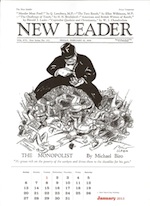
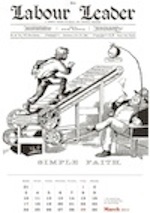
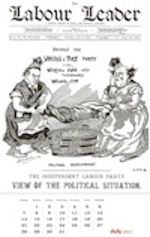
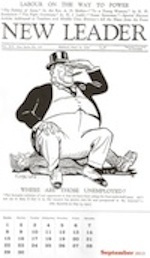
Iconic political cartoons from the 1890s and 1920s are featured in a new wall calendar published by the ILP to mark our 120th anniversary next year. ILP Calendar cover

Launched to celebrate the founding of the Independent Labour Party in Bradford in 1893, the A4 calendars are illustrated by biting socialist cartoons first published in Keir Hardie’s newspaper, Labour Leader, in the 1890s and its ILP successor, New Leader, in the 1920s. They are not only a poignant reminder of our past but retain significant political relevance today.
The founding conference of the ILP on 13 January brought together local ILPs which had already been established, particularly in the north of England, plus the Scottish Labour Party and many individuals eager to promote its cause. The ILP became Independent Labour Publications in 1975.
The ILP 1893-2013 wall calendars cost £9.00, including postage and packing, from Independent Labour Publications, PO Box 222, Leeds LS11 1DF. Cheques payable to ‘ILP Trust Ltd’.
To buy a calendar by PayPal, click here.
For more information email: info@independentlabour.org.ukILP Calendar Jan
—-
To read more about the ILP’s history visit our History section here.
To mark the anniversary, the ILP will also be publishing an updated version of The ILP: Past & Present in the new year while this website will feature a series of biographical articles on significant ILPers from Labour history.
More details of 120th anniversary publications and events will be published here in due course.
ILP Calendar FebILP Calendar MarILP Calendar JulILP Calendar Sep                   

Sunday, December 02, 2012

Where Prisoners Have The Vote

The nations in Europe where prisoners have the vote are Albania, Croatia, the Czech Republic, Denmark, Finland. Ireland, Latvia, Lithuania, Macedonia, Montenegro, Serbia, Spain, Sweden, Switzerland and the Ukraine. See here.

What makes us different, apart from prejudice?