Showing posts with label Socialism. Show all posts
Showing posts with label Socialism. Show all posts
Sunday, August 09, 2020
Needed - A Red Wall.
Apologies : At the moment I am experiencing technical problems and I am unable to add photos nor links to click into, nor can I present material in separate paragraphs so I have added rows of dots at what should be the gaps between such paragraphs. ...............,,,,,,,,,,,,,,,,,,,,,,,,,,,,,,,,,,,,,,,,,,,,,,,,,,,,,,,,,,,...........
In Chapter 2 of Steve Rayson's important book “The Fall of the Red Wall” (see https://www.amazon.co.uk/Fall-Red-Wall-Labour-represents-ebook/dp/B08C37JNKF)he points out that it is estimated that “about one million Labour voters backed the Conservatives in the 2019 General Election. The majority of these were in traditional Labour seats where an estimated 700,000 to 800,000 transferred their votes directly to the Conservatives”. He goes on to point out that (1) ” the single biggest category of people switching directly from Labour to Conservatives were retired people” no less than 38.8% of them, (2) “ 94% of the people who switched from Labour to Conservative identified as White British”, (3) “79.5 % of Labour to Conservative switchers identified with the Leave side of the EU referendum”,(4) 35 traditional Labour seats such as Bolsover were won by the Conservatives at the last election, (5) yet “Labour had been losing socially conservative, anti-immigration votes for some time...forty percent of this group of voters were lost before Brexit or the election of Jeremy Corbyn as Leader...between 2005 and 2015 Labour votes declined by 14% in Bolsover...the two regions where Labour support fell the most were the North East and East Midlands”, (6) “There has been a lot of discussion about the dramatic falls in the Labour vote in 2019 and these were undoubtedly significant. However, if we look back over a longer period, we can see that equally significant was the fall in Labour’s vote and the increase in the Conservative vote share over the previous eighteen years. ....................................................................
Steve Rayson's book builds upon these important themes and is well worth studying by those with interests in the material I list above. Below I offer a few thoughts of my own.............................................................................
Even as late as 1997 Labour was still able to draw significantly from its past working class support, even though the structure of the working class had by then been subject to dramatic changes with the decline of traditional industries such as coal, steel and cotton which hit their communal cohesion. For still in Labour's substanial electoral victory of 1997 these people came out mainly to vote Labour and often in a dramatic way. Travelling around North East Derbyshire where I was the Labour candidate I came across the longest queue of voters I have ever seen – and I have been involved in electoral activity way back since I first obtained the vote in 1957. It was at a solid working class section of Clay Cross early in the morning and was mainly made up of women, often with young children in prams and pushchairs. They could not wait to get rid of a Conservative Government which had come out of the Thatcherite tradition.....................................
But Blair's large victory at that election rested also on the fact that he made his appeal to many middle class values. For instance,Dronfield where I live having by then become a rather middle class commuter territory yet it voted roughly 50 % Labour, 25% Liberal and only 25% Tory, But the turnout at the subsequent General Election then fell dramatically mainly due to disillusionment with Blairite practices by a still deprived working class.................................
From 1997 Labour (apart from bits and pieces) had no substantial programmes to tackle the wide-ranging problems of job insecurity, no avenues for the provision of accessible decent homes for the needy nor a program for improved access to life-long learning and the opportunities it provides................................
Without generally linking in with working class people and seeking to improve the quality of their lives, Labour allowed others to exploit harmful alternatives.......
So rather than directing working class people's attention to the need to reform the European Union via democratic and social improvements, we left the door open for the advocates of Brexit. Then when no credible viewpoint was put forward by Labour on how to tackle working class deprivation many (especially older) white working class people came to believe that it was immigrants and temporary summer workers from the EU who had stolen their job opportunities from them. A view that is now at its strongest in working class areas where there are actually few from immigrants backgrounds. These make-up many of the Labour seats we lost at the last General Election, often for the first time since before 1945.................................
Labour requires programmes which meet the needs of working class people from whatever their ethnic, regional or industrial backgrounds. Then there are universal interests which should be used to draw us all together - such as the tackling of climate change, overcoming Covid 19 and helping to tackle wide scale international disasters...........................................................................
Structuring a Labour Party which will act in ways to seek to tackle such problems is our biggest and most immediate task. At one time we had a Parliamentary Labour Party with a substantial number of people who emerged from Trade Unions and when initially selected as candidates already lived in or near the Constituencies they came to represent. And many Branch and Constituency meetings were full of working class activists. That is a bit different from today's pattern. Yet we need to build out from where we currently stand. But we need to appreciate the depth of the task which confronts us. A united parliamentary party directing its attention to tackling peoples basic national and international needs is essential. It would help if this is firmly on Starmer's agenda.

Wednesday, January 15, 2020
Labour and Life Long Learning
In a speech to the Association of Colleges on 14 November 2017 Jeremy Corbyn said "Just as Nye Bevan created the National Health Service in the aftermath of World War 2, the next Labour Government will create a National Education Service. We will offer cradle to the grave education that is free at the point of use." This was a huge and massively important commitment which Labour now needs to retain and develop for the future. When achieved it will help to transform and improve our society massively. Providing us with a seriously minded society (yet one that is more happy and fulfilled) and which uses its developing understandings to ensure that our political system will be fully democratized and meet the needs and requirements of masses in our society who are currently in depressed and deprived circumstances.
The establishment of an appropriate system of Lifelong Learning will, however, be much more complex than setting up the NHS was. For generally a person (or their relatives and friends) will be aware whether they are in need of help from a doctor, ambulance or hospital services. Determining when someone is in need of forms of adult learning facilities (and whom they should approach) will require a more complex range of life-time openings.
The Labour Party Manifesto at the recent General Election included a section which briefly spelt out Labour's intended direction of travel on the matter of Lifelong Learning. See the items entitled "Further Education and Lifelong Learning" which appear on pages 40 and 41, click here.
Unfortunately, this was not an issue which was able to obtain much coverage during the General Election period itself. This was partly due to failings by the media, but it also arose from the fact that Labour's own work in shaping its approach was only reaching fruition when the election was on top of us.

A "Lifelong Learning Commission" co-chaired by Estelle Morris and Dave Ward only issued its Interim Report in July 2019. It was then only able to come up with its final 85 page report containing more detailed recommendations as we moved into the dissolution of parliament for electoral purposes in November. Click here. A summary of its 16 major recommendations appear on pages 58 and 59 of the report.
I will now confine myself to what has been my own specific interests in forms of adult learning, which is just the tip of the iceberg.
My own commitment towards forms of lifelong learning developed after some of my early failures via school education and from later experiences starting from the time when I undertook my National Service as an 18 to 20 year old. My involvement with forms of lifelong learning being mainly restricted to the areas of politics, economics, industrial relations and philosophy. Labour's proposals go well beyond these matters. But I will now restrict myself to my own experiences.
As an only child, I came from a solid coal mining background. My father and his five brothers all came to work at the same local pit and his only sister married a local miner. Only my Uncle Arthur finally moved away and joined the RAF. My mother's two brothers also started work in the pit, one then moving into nursing. My mother and one of her three sisters also married coal miners. This meant that I had the advantage of being brought up in a tightly mining environment with close social bonds.
But my shortcomings at Primary School were centered around extreme shyness and a serious inability at spelling. So I failed the then 11 plus exam and went to a Secondary Modern School and not a Grammar School. Then I had never read a book from cover to cover until at 12 a teacher took our class into the school library and made us borrow and read a book. I read John Buchan's "Mr Standfast" and was hooked. I later made it to Grammar School via an "occasional admissions" exam. But I was no success there when it came to the "O level" exams at 16, failing the key subjects of English Language and Maths. But in a post war period shaped by the Attlee Government there were lifelong job opportunities and I made it as a Railway Clerk. By then I was regularly into purchasing books such as H.G. Well's "Short History of the World" and visiting the local library, where my mother also borrowed serious novels.
A key step in my own form of lifelong learning started when I undertook my National Service via an RAF Movements Unit at Basra, linking in with Iraqi State Railways. I was shocked by the harsh living and working conditions I saw many Iraqi people experiencing
Then there was a book shop I visited in Basra which sold Rational Press Association books which challenged what had been my Methodist background. There were other books to buy and I also ordered works by writers such as G.B. Shaw, GDH Cole, James Joyce (recommended by a corporal), a volume of Shakespeare's plays and Tolstoy's "War and Peace".
The man who ran the shop said that he had been stopped from my ordering Karl Marx's "Das Capital" when he checked the matter out with the local chief of police. But I also obtained the "New Statesman" weekly on rice paper, plus "Reynolds News" and the "Observer" which came by sea and were then two weeks old.
I was finally demobbed at 20 in the midst of political turmoil around the British invasion of the Suez Canal and the Russian invasion of Hungary. It was a politically stimulating period. My initial avenue for expressing my developing political views were letters to the local press. Then a year after my demob I joined a body stimulated by GDH Cole called the International Society for Socialist Studies and even heard him addressed them. I also joined the Labour Party and after a few months became a local branch secretary and arranged for the meetings to rush through business each second month and then have a speaker and a discussion. A local Fabian Society was then founded at near bye Peterlee and I became their Secretary. I was into the dialectics of political debate.
I then attended a Fabian Summer School held at Ruskin College in Oxford where I discovered that the College itself was for people like me, who had an interest in subjects such as Politics and Economics but no relevant "A" level qualifications as a pathway into such studies. I later made it into Ruskin College via references (one from Manny Shinwell my MP), writing an essay for them and attending an interview. My fees and living allowance being met by the Durham County Council. After 2 years full-time study, this led me to obtain an Oxford University Diploma in Economics and Political Science which enabled me to get a place at Hull University where I gained a degree in Politics and Philosophy.
But that was only a leg up to my fuller involvement with Lifelong Learning. For from 1966 to 1987 I was a tutor in the Sheffield University Extramural Department (later called the Division of Continuing Education) taking Day Release Classes for Trade Unionists from areas such as the Coal, Steel and Railway industries plus classes for shop stewards. I mainly taught Politics, Industrial Relations and Student Skills. Numbers of my students also moved on to full time study at Adult Education Colleges, including Ruskin. Others became more fully involved in their Trade Unions and in areas such as Local Government.

1983 Derbyshire Miners Day-Release Class
Then my Department established an Access Course mainly providing openings into Sheffield University for adults without formal qualifications. I taught classes on Philosophy and then acted as Course Director. Those who successfully made it to full-time University Studies at Sheffield via our classes ended up generally with above average degree results.
Then when I became an MP in 1987 three of my fellow Labour colleagues were former Yorkshire Miners whom I had taught on Industrial Day Release Classes and another Labour MP from that background had been a fellow student with me when I was at Ruskin. Dennis Skinner had also attended our Derbyshire Miners classes, then Ruskin. He was a day release student with us the year I arrived in Sheffield, but I was then teaching a different Derbyshire Miners Class.
Although I studied and taught politics for 21 years before becoming an MP and then took many classes down to parliament on day trips, my parliamentary activity was also a huge learning curve. Not only was the range of parliamentary activity widespread, but constituents came forward with a complex range of problems which needed to be tackled. Luckily I soon learnt that if an issue was new to me, the first place of call to find out about a topic was the research staff in the Commons Library. For Conservative Government Ministers (at the best) would only answer the specific questions I asked them. Whilst a researcher would know that I was new to a topic and would explain what I really needed to know and pursue. The loss of their services are the main thing I have missed since retiring from the Commons in 2005.
As an MP lifelong leaning was an issue I pursued, but circumstances dictated that this had to be in a defensive capacity. Thatcherism struck at the work of Adult Education Colleges such as Ruskin and also ended payments of student fees. Next even Tony Blair (with my full opposition) removed University allowances for students for living purposes, thus adding further to their borrowing costs. These matters still need to be tackled.
When I finally retired from parliament in 2005 I returned to an old habit of setting up monthly discussion meetings. This time as Political Education Officer for my local branch of the Labour Party in Dronfield where I have now lived for 50 years. I only passed on that commitment last year, but I still keenly participate in the group's discussions. In fact this item on Lifelong Learning arises because Bob Heath a former Sheffield University Extramural colleague of mine (whom I initially studied with at Ruskin College and then Hull University) discussed this very issue with us at our last meeting. Click here. John Halstead who involves himself in both ILP activities and our local discussion group, being a further colleague from my Extramural days. He works closely with the Society for the Study of Labour History.
Then three other sources feed my attempts at my own form of continuing adult learning. First, I continue to read works in my areas of interest. Having found hardly any scope for fiction since I first turned up at Ruskin in 1960. Secondly, I scan the Internet for serious forms of information relevant to my interests - whilst seeking to avoid those comment boxes where people just fart at each other about politics. Then also there is the ILP. Under the influence of Keir Hardie it was founded in 1893 and helped shape the Labour Party. But in experiencing a departure by Labour from its basic values, it set out on its own in 1932. It finally returned to the fold in 1975 changing its name to Independent Labour Publications. I then joined and participated with them in a wide range of Labour movement discourse.
Whilst I am for the forms of adult learning which I have stressed, Labour's recent publication correctly goes way beyond these matters, showing the wide number of areas where varying forms of Life Long Learning are very deeply needed. The whole issue should not just be an add on to Labour Policy, but needs to be at its heart.
The establishment of an appropriate system of Lifelong Learning will, however, be much more complex than setting up the NHS was. For generally a person (or their relatives and friends) will be aware whether they are in need of help from a doctor, ambulance or hospital services. Determining when someone is in need of forms of adult learning facilities (and whom they should approach) will require a more complex range of life-time openings.
The Labour Party Manifesto at the recent General Election included a section which briefly spelt out Labour's intended direction of travel on the matter of Lifelong Learning. See the items entitled "Further Education and Lifelong Learning" which appear on pages 40 and 41, click here.
Unfortunately, this was not an issue which was able to obtain much coverage during the General Election period itself. This was partly due to failings by the media, but it also arose from the fact that Labour's own work in shaping its approach was only reaching fruition when the election was on top of us.
A "Lifelong Learning Commission" co-chaired by Estelle Morris and Dave Ward only issued its Interim Report in July 2019. It was then only able to come up with its final 85 page report containing more detailed recommendations as we moved into the dissolution of parliament for electoral purposes in November. Click here. A summary of its 16 major recommendations appear on pages 58 and 59 of the report.
I will now confine myself to what has been my own specific interests in forms of adult learning, which is just the tip of the iceberg.
My own commitment towards forms of lifelong learning developed after some of my early failures via school education and from later experiences starting from the time when I undertook my National Service as an 18 to 20 year old. My involvement with forms of lifelong learning being mainly restricted to the areas of politics, economics, industrial relations and philosophy. Labour's proposals go well beyond these matters. But I will now restrict myself to my own experiences.
As an only child, I came from a solid coal mining background. My father and his five brothers all came to work at the same local pit and his only sister married a local miner. Only my Uncle Arthur finally moved away and joined the RAF. My mother's two brothers also started work in the pit, one then moving into nursing. My mother and one of her three sisters also married coal miners. This meant that I had the advantage of being brought up in a tightly mining environment with close social bonds.
But my shortcomings at Primary School were centered around extreme shyness and a serious inability at spelling. So I failed the then 11 plus exam and went to a Secondary Modern School and not a Grammar School. Then I had never read a book from cover to cover until at 12 a teacher took our class into the school library and made us borrow and read a book. I read John Buchan's "Mr Standfast" and was hooked. I later made it to Grammar School via an "occasional admissions" exam. But I was no success there when it came to the "O level" exams at 16, failing the key subjects of English Language and Maths. But in a post war period shaped by the Attlee Government there were lifelong job opportunities and I made it as a Railway Clerk. By then I was regularly into purchasing books such as H.G. Well's "Short History of the World" and visiting the local library, where my mother also borrowed serious novels.
A key step in my own form of lifelong learning started when I undertook my National Service via an RAF Movements Unit at Basra, linking in with Iraqi State Railways. I was shocked by the harsh living and working conditions I saw many Iraqi people experiencing
Then there was a book shop I visited in Basra which sold Rational Press Association books which challenged what had been my Methodist background. There were other books to buy and I also ordered works by writers such as G.B. Shaw, GDH Cole, James Joyce (recommended by a corporal), a volume of Shakespeare's plays and Tolstoy's "War and Peace".
The man who ran the shop said that he had been stopped from my ordering Karl Marx's "Das Capital" when he checked the matter out with the local chief of police. But I also obtained the "New Statesman" weekly on rice paper, plus "Reynolds News" and the "Observer" which came by sea and were then two weeks old.
I was finally demobbed at 20 in the midst of political turmoil around the British invasion of the Suez Canal and the Russian invasion of Hungary. It was a politically stimulating period. My initial avenue for expressing my developing political views were letters to the local press. Then a year after my demob I joined a body stimulated by GDH Cole called the International Society for Socialist Studies and even heard him addressed them. I also joined the Labour Party and after a few months became a local branch secretary and arranged for the meetings to rush through business each second month and then have a speaker and a discussion. A local Fabian Society was then founded at near bye Peterlee and I became their Secretary. I was into the dialectics of political debate.
I then attended a Fabian Summer School held at Ruskin College in Oxford where I discovered that the College itself was for people like me, who had an interest in subjects such as Politics and Economics but no relevant "A" level qualifications as a pathway into such studies. I later made it into Ruskin College via references (one from Manny Shinwell my MP), writing an essay for them and attending an interview. My fees and living allowance being met by the Durham County Council. After 2 years full-time study, this led me to obtain an Oxford University Diploma in Economics and Political Science which enabled me to get a place at Hull University where I gained a degree in Politics and Philosophy.
But that was only a leg up to my fuller involvement with Lifelong Learning. For from 1966 to 1987 I was a tutor in the Sheffield University Extramural Department (later called the Division of Continuing Education) taking Day Release Classes for Trade Unionists from areas such as the Coal, Steel and Railway industries plus classes for shop stewards. I mainly taught Politics, Industrial Relations and Student Skills. Numbers of my students also moved on to full time study at Adult Education Colleges, including Ruskin. Others became more fully involved in their Trade Unions and in areas such as Local Government.
1983 Derbyshire Miners Day-Release Class
Then my Department established an Access Course mainly providing openings into Sheffield University for adults without formal qualifications. I taught classes on Philosophy and then acted as Course Director. Those who successfully made it to full-time University Studies at Sheffield via our classes ended up generally with above average degree results.
Then when I became an MP in 1987 three of my fellow Labour colleagues were former Yorkshire Miners whom I had taught on Industrial Day Release Classes and another Labour MP from that background had been a fellow student with me when I was at Ruskin. Dennis Skinner had also attended our Derbyshire Miners classes, then Ruskin. He was a day release student with us the year I arrived in Sheffield, but I was then teaching a different Derbyshire Miners Class.
Although I studied and taught politics for 21 years before becoming an MP and then took many classes down to parliament on day trips, my parliamentary activity was also a huge learning curve. Not only was the range of parliamentary activity widespread, but constituents came forward with a complex range of problems which needed to be tackled. Luckily I soon learnt that if an issue was new to me, the first place of call to find out about a topic was the research staff in the Commons Library. For Conservative Government Ministers (at the best) would only answer the specific questions I asked them. Whilst a researcher would know that I was new to a topic and would explain what I really needed to know and pursue. The loss of their services are the main thing I have missed since retiring from the Commons in 2005.
As an MP lifelong leaning was an issue I pursued, but circumstances dictated that this had to be in a defensive capacity. Thatcherism struck at the work of Adult Education Colleges such as Ruskin and also ended payments of student fees. Next even Tony Blair (with my full opposition) removed University allowances for students for living purposes, thus adding further to their borrowing costs. These matters still need to be tackled.
When I finally retired from parliament in 2005 I returned to an old habit of setting up monthly discussion meetings. This time as Political Education Officer for my local branch of the Labour Party in Dronfield where I have now lived for 50 years. I only passed on that commitment last year, but I still keenly participate in the group's discussions. In fact this item on Lifelong Learning arises because Bob Heath a former Sheffield University Extramural colleague of mine (whom I initially studied with at Ruskin College and then Hull University) discussed this very issue with us at our last meeting. Click here. John Halstead who involves himself in both ILP activities and our local discussion group, being a further colleague from my Extramural days. He works closely with the Society for the Study of Labour History.
Then three other sources feed my attempts at my own form of continuing adult learning. First, I continue to read works in my areas of interest. Having found hardly any scope for fiction since I first turned up at Ruskin in 1960. Secondly, I scan the Internet for serious forms of information relevant to my interests - whilst seeking to avoid those comment boxes where people just fart at each other about politics. Then also there is the ILP. Under the influence of Keir Hardie it was founded in 1893 and helped shape the Labour Party. But in experiencing a departure by Labour from its basic values, it set out on its own in 1932. It finally returned to the fold in 1975 changing its name to Independent Labour Publications. I then joined and participated with them in a wide range of Labour movement discourse.
Whilst I am for the forms of adult learning which I have stressed, Labour's recent publication correctly goes way beyond these matters, showing the wide number of areas where varying forms of Life Long Learning are very deeply needed. The whole issue should not just be an add on to Labour Policy, but needs to be at its heart.
Tuesday, May 22, 2018
Once More - Beyond Our Ken
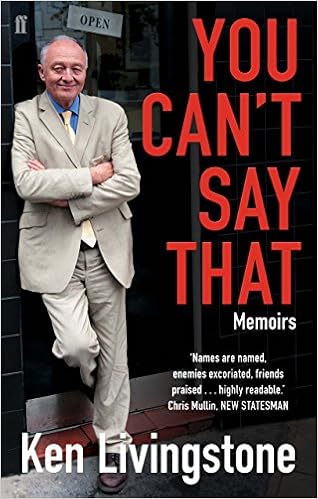
The statement which led to Ken Livingstone's suspension from Labour Party membership (and now to his resignation) was his claim that Hitler had "supported Zionism" when first coming to power in Germany "before he went mad and killed six million Jews". This is a clumsy reference to a deal which the Third Reich struck with leaders of the Zionist Movement on 7th August, 1933. Hitler engaged in the deal in order to remove many Jews from Germany. It was a prelude to events such as resorting to prison camps, Kristallnacht (and the like) and then to his fully fledged mass extermination programme. The words used by Ken to described the early start of such developments clearly need to be have been adjusted.
For Hitler was "mad" in terms of the depth and nature of his anti-semitism (and on many other matters) well before the above deal was ever agreed to. For instance, Mein Kampf was published in two volumes back in 1925 and 1926 and contained clear anti-Semitic claims and attacks upon Judaism. It claimed that Aryans were the master race.
The 1933 development which Ken expressed briefly and badly is, however, contained in great detail in Edwin Black's book "The Transfer Agreement'. The introduction to the 1984 edition of his book stating that - "On August 7, 1933, leaders of the Zionist movement concluded a controversial pact with the Third Reich which, in various forms, transferred some 60,000 Jews and $100 million...to Jewish Palestine".
Edwin Black is himself Jewish. His grandmother was murdered in Treblinka, having pushed her young daughter (who was later to become Edwin's mother) out of the train that was taking them to the camp. The young man who was to become Edwin's father escaping from a group of Jews who were being led to their execution by Nazis in Poland. Edwin's book is solidly researched and he is certainly in no way anti-semitic. If Ken had stuck with its approach, he would not have upset the apple cart. Yet the fact that he badly expressed the nature of this significant historical arrangement does not by itself make him anti-semitic. Nor can I find other evidence to substantiate this claim. But he could have conceded my point.
Informaton on Edwin Black's book and extracts from it can be found via this link.
22 May : According to a Guardian report, Ken Livingstone has now "apologised for his controversial remarks" on Hitler and Jews. If he had done this some time ago (even pointing to what actually happened), it would have been helpful and might have saved a lot of hassle within the Labour Party by cutting the ground from under his opponents.
25 May : Link here for a two year old Foreign Office definition of anti-semitism, although others may employ other definitions as useages often only share family resemblances. But on which items in the Foreign Office's criteria was Ken Livingstone and some other 80 Labour Party members accused ?
28 May : Link here for 39 cases of claimed anti-semitism in the Labour Party, although one is the late Gerald Kaufman who himself had Jewish parents. Another is Ken Livingstone. But it provides numbers of claims that can be further checked out.
29 May : Link here for Ken's full statement on his resignation from the Labour Party, which I have just discovered.
27 July : "How Should Anti-Semitism Be Defined?". See this in today's Guardian.
28 July : A valuable coverage and attached debate on "Racism in Israel". See here.
1 August : As the philosopher Wittgenstein pointed out, many of the words we use tend to share a family resemblance rather than just having exact, precise and rigid meanings. The broad meaning of a word then being discoverable by examing the range of ways in which it is used. This does not, however, mean that usuages of specific words don't also have rough and ready boundaries. Then dictionaries are into the business of attempting to define words for us and, therefore, offer a precision which attempts to get to the heart of their use. So my Concise Oxford Dictionary defines an anti-Semite as being "a person hostile to or prejudiced against Jews". Whilst Wittgenstein encourages us to go beyond such exact definitions, this does not mean substituting dictionary sytle and brief definitions for over-elaborate ones which then seek to capture the use of a word. And whilst there is nothing wrong with the International Holocaust Remembrance Alliance stressing its concerns about anti-semitism in its own elaborate statement containing no less than eleven categories, this does not make their statement THE definition of anti-semitism which bodies such as the Labour Party or you and I are obliged to adopt. As long as our approach has a wide ranging anti-racist stance which firmly rejects anti-semitism we are on the correct side. It seems to me to follow from my above approach that the comments which Peter Willsman is being hauled over the coals for (whilst they were both over-emotive and highly undiplomatic) are not anti-semitic. Nor do I feel that Jeremy Corbyn has been anti-semitic, although I always felt that he was incorrect to have associated himself too closely with Hamas. Along with his past links with a then military Sinn Fein, his former opposition to our membership of the European Union and his refusal to see that after the invasion of Iraq (which I also strongly opposed) possibilities had changed and we needed to work with progressive forces inside Iraq such as its re-emerging trade union movement; these were all matters why I never voted for him for the leadership of the Labour Party - abstaining on the second ballot. Yet the realities of his becoming leader have thankfully led to him shifting his stance on such issues. So I feel that the reality is to now move forward with him as leader - whilst (as always) seeking to influence our direction of travel.
This is from Pete Willsman's report of the NEC Meeting of 17th July 2018.
General
Secretary's Report -
*
Labour Party Code of Conduct in Relation to Anti-semitism Issues
The
NEC Working Group - Antisemitism, had presented a full report to the
Organisation Committee on 3rd July. The accompanying documents at
the Org Ctte had set out a wide range of important recommendations.
These included a NEC Code of Conduct - Antisemitism, which had been
improved nem con by the Org Ctte.
Jennie
gave a very comprehensive introduction concerning all the work that
the staff had undertaken on this issue over many weeks. Jennie
stressed that it was obligatory upon us that we agree a way forward
that is fair and just and totally defensible. Jennie emphasised that
it was essential that we sit down with all of the Jewish groups and
identify their concerns. These can then be addressed in a fair and
just manner. The specific details of the concerns are not that clear
since most of the criticisms are presented in very broad brush terms.
The NEC then discussed at length and in a very thoughtful and
concerned manner the points raised in the documents and by Jennie.
It was agreed that we need to keep the whole matter under constant
review and clear the backlog of cases without delay. A special
meeting of the Disputes Panel, that will last a whole day, was agreed
so that all remaining cases could be progressed. It was pointed out
that due to the very small size of the NCC, there are always
inevitable delays in getting 3 person panels up and running for each
case (NB The Democracy Review will address this problem by
recommending a significant increase in the size of the NCC). During
the discussion, I drew to attention to the letter by 68 Rabbis in
that morning's Guardian. The Rabbis stated that "antisemitism
within sections of the Labour Party has become so severe and
widespread that we must speak". I pointed out that no evidence
whatsoever has ever been produced by anyone to give any credibility
to this rather wild assertion. I added that we have been told that
there is a backlog of some 70 cases that need to be considered. Our
Party has over 500,000 members and to portray 70 out of 500,000 as
"severe/widespread" would be generally considered to be
somewhat of an exaggeration. I would like to add here that in The
Guardian of July 18th, the facts were yet again in error. The
Guardian reports that "Pete Willsman at the NEC asked for a show
of hands of who believed that there was antisemitism in the Labour
Party". In fact, what I ACTUALLY said was, "Hands up those
who have seen antisemitism in our Party, since, in over 50 years I
never have myself". Other speakers highlighted the fact that
there is certainly a problem with Islamophobia in the Tory Party (as
constantly highlighted by the constant complaints by Lady Warsi - see
below). But of course, not only the are the Tory Party doing little
if anything about it but the Tory lapdogs in the press and media
deliberately ignore it.
Our
Party, with Jennie taking the lead, will keep the whole issue
including the Code of Conduct under constant review. There is a
total commitment on the part of the NEC to constructive dialogue, to
talk through all the issues of concern and reach a concensus that is
generally acceptable. Everyone present vehemently hoped that the
Jewish groups would respond positively to our desire to a thorough
dialogue. If the groups declined to engage in any dialogue that
would be very negative and unhelpful. To simply use the press and
media as a megaphone to continue to make rather wild assertions that
have no evidential basis is not the way forward.
5 August : We now have this video from Jeremy.
5 August : We now have this video from Jeremy.
Sunday, January 14, 2018
125th Anniversary of the ILP

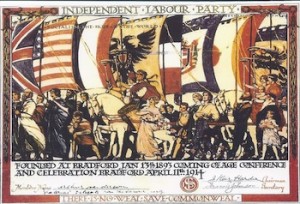
The founding conference of the Independent Labour Party (ILP) was held in Bradford exactly125 years ago today. A leading role in setting up the organisation was taken by Keir Hardie. He had been elected as an Independent Labour MP in West Ham the previous year. The ILP then went on to play a major role in the setting up of the Labour Representation Comittee in 1900, which itself became known as the Labour Party in 1906 with Keir Hardie becoming its first leader in the role of Chair of the Parliamentary Labour Party.
The ILP's successor organisation today is Independent Labour Publications. Barry Winter, its former Secretary provides an important article about the ILP's history on their web-site. See this link.
Thursday, November 09, 2017
60 Years Hard Labour : Easington and Beyond
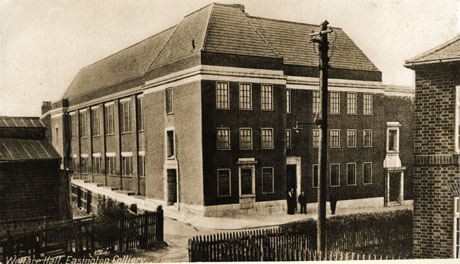
Easington Colliery Welfare Hall : Venue for Labour Party Branch Meetings - Past and Present
60 years ago today (at the age of 21) I attended my first Labour Party event. It was a meeting of the Easington Divisional Labour Party in County Durham and was held at the Workmens' Club Hall at Blackhall Colliery. It was well attended, for I am aware that a later annual meeting I went to had 76 delegates present.
I had applied to join my local Labour Party as a means of entering an essay competition on nationalisation which was being run and paid for by the local Labour MP, Manny Shinwell. I don't know how many people entered this contest, but my essay was numbered 16.
I was given the second prize of £3 (which is considerably more at today's prices) and went to the meeting at Blackhall for Shinwell to present me with my winnings. The first prize went to John Alderson who was an English Teacher at Shotton Colliery Secondary Modern School. Ann, the girl I was later to meet and marry was one of his students around that time, being seven years younger than myself. Within the following two years an active local Fabian Society was established at nearbye Peterlee, with John as Chair and myself as Secretary.
The first Labour Party Branch meeting which I attended was held the following month at Easington Colliery where I lived (the above photo shows the venue). At the following year's Annual Meeting a few months later I became their Branch Secretary, acting as a sub-agent for Manny Shinwell at the 1959 General Election. Shortly before then I was also runner-up for the position of Constituency Party Secretary, when the former long serving Secretary stood down and five of us sort his post.
But my initial burst of Labour Party activity came to a halt after almost three years, when I went to study Politics and Economics full-time at Ruskin College in Oxford from October 1960. Because of the clash of dates, I even pulled out of being my constituency's delegate to the 1960 Labour Party Conference - missing Gaitskell's famous "fight, fight, fight and fight again" speech. Yet it was a resolution adopting a "ban the bomb" position (in opposition to Gaitskell's stance) which I had drafted which had become our Constituency Party's policy.
Whilst attending Ruskin College for two years and then during the first year of my subsequent studies at Hull University, I still retained my Easington Colliery Labour Party membership. But when Ann and I married in 1963 and we moved to Hull, I stopped being a card holder for the following five years. I was now studying politics and philosophy at University, whilst keeping links with the Labour Movement by attending Tribune and similar meetings.
My lapse of Labour Party membership was due to the fact that Ann and I were moving around via Hull, Worksop and Sheffield until we finally settled in Dronfield in Derbyshire; where I have now been an active member of the Labour Party for the past 48 years. This has included a spell as the local Labour MP for 18 years. At the moment as an octogenarian I hold the positions of Political Education Officer (for our activities, click here ), delegate to the Constituency Labour Party and member of its Executive Committee. But at my age and hobbling with a stick I tend to let my fingers do my walking - a bit like writing that essay for Shinwell's competition.
Tuesday, October 31, 2017
Vote, Vote, Vote for Harry Barnes
I first attended an internal Labour Party meeting at Blackhall Colliery in County Durham on the 9th November 1957, almost 60 years ago. It was a prelude to my quickly becoming a local Labour activist via its Easington Colliery Branch.
I later became an adult full-time student studying politics and related matters and eventually settled in Dronfield in North East Derbyshire. I have been an active member of its local Labour Party Branch now for over 48 years. I moved to Dronfield when teaching politics and industrial relations to classes of trade unionists. This was a role I went on to fulfill for 21 years, until I became the local Labour MP for North East Derbyshire from between 1987 to 2005.
After my retirement I became Political Education Officer for the Dronfield Branch of the Labour Party and have run over 120 discussion meetings for activists since then - mainly involving outside speakers as can be seen via this link.
Over all this time I have never sort to serve on the National Executive Committee of the Labour Party, but to my surprise I was nominated to stand for that position at my local Constituency Annual Meeting which was held in Dronfield on Saturday. Thinking that I had nothing to lose and perhaps something to offer after years of Labour Party involvement, I accepted the nomination.
My problem now is that this was an entirely unplanned move and I now need another four nominations from Constituency Parties to get my name onto the ballot paper. And these have to be submitted exceptionally soon - by 5pm on 16 November.
One means of checking me out is to look at the blog which I have been running since my 70th birthday. It can be found via this link. (i.e. here, so scrawl down).
Nominations will need to contain my Labour Party Membership number, which I can forward to any Constituency Party which approaches me via (for instance) the two links given above. Those without a blog facility can more easily approach me via the first of these.
For those who wish to check me out, then in addition to my parliamentary record a glance at my above blog may help. It is called "Three Score Years and Ten" to mark its birth.
In parliament I was a member of the Socialist Campaign Group, but I was not just a camp follower and both inside and outside of the Group was willing to express views which sometimes departed from the consensus. For I believe that socialist politics requires more than rubber stamps - even to those I associated myself with.
Yet if that makes me seem a moderate, what about this ? On 28 September 1998, the "Independent" published an article entitled "Revealed : Blair's 'bastard' MPs who could make his life a misery in No.10.". It pointed out that "Since 1992, 38 Labour MPs have voted more than 20 times against their party instructions in the House of Commons. Indeed, 12 of them have rebelled 40 times or more. Unsurprisingly, Dennis Skinner, the "Beast of Bolsover", heads the list with 95 separate acts of parliamentary defiance, followed by Harry Barnes (Derbyshire NE) with 75 and Jeremy Corbyn (Islington North) with 64.".
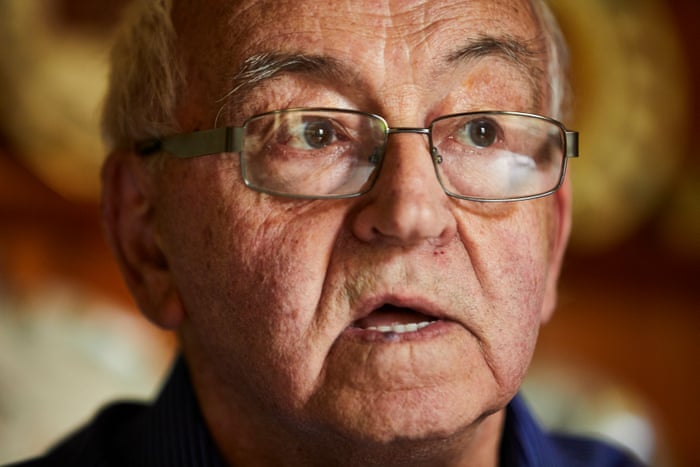
Hat Tip - the Guardian for the photo. Luckily this is not a beauty contest.
Whoops - I only seem to have obtained two nominations, so I never made the ballot paper. Well it is their loss and not mine !
Tuesday, October 10, 2017
Standing Without Clapping - Assessing Corbyn's Labour
An article of mine with the above title has just appeared on the web-site of Independent Labour Publications. It is the successor organisation to the Independent Labour Party. I have had links with them for over 40 years. Click here to find both the article and them.

Hat Tip - Matthew Brown.
Subscribe to:
Posts (Atom)