Putting The Boot Into Foot
In using a book review to condemn Michael Foot's leadership of the Labour Party from 1980 to 1983, Roy Hattersley has opened himself up to criticisms here and here.
A partial understanding of what Roy was himself up to at this time can be shown in his activities at the Labour Party Conference in 1981.
Compromise Or Confrontation
At that time, Roy was Joint Chair of the Solidarity Group of MPs which was considered to be on the right-wing of the Labour Party. Prior to what (in those days) were key elections for the NEC of the Labour Party, he addressed a Solidarity fringe meeting. He opened up two options.
On the one hand, he looked for coming NEC election results which would help to heal the wounds in the Labour Party by seeing an advance by right-wing candidates in the (then) Constituency Section which would facilitate the development of a mixed and broader Church. But then he ended up on a more brutal note about the Bennite Left and quoted the slogan "Do not fire first, but if it is war they want let it begin here".
When the election results were announced, Dennis Healy was safely re-elected as Deputy Leader and five lefties bit the dust in the Constituency Section. The potential broad Church was now tilting well to the right.
The "New Socialist" Debate
Roy's immediate response was to seek a move which would either come to terms with the Bennite Left or would undermine them.
He made his initial move for a position of compromise-through-strength at a fringe debate run by what was then the Labour Party's theoretical journal entitled (believe it or not) "New Socialist".
The journal organised a ding-dong right-left debate with Roy and Roger Godsip of Apex on the one hand and leading Bennites, Audrey Wise and Ken Coates on the other.
Roy started with a number of points designed to interest the left or (if that failed) to appeal over their heads to the audience. These included advocacy of high levels of public investment in manufacturing with equity thereby passing into public hands, a socialist incomes policy that would not be a form of wage restraint, what he called genuine forms of industrial democracy and a system of planning agreements. All raving acts of socialism by today's standards.
But instead of Audrey being wise and Ken cottoning on, they looked around for sticks to beat Roy with, such as the failures of the past Wilson-Callaghan Governments and divisions over the European Union. What they should have done was to have got Roy to reveal his full hand and then to nail its socialist potential to the table.
Frustration
I attempted to get called when the meeting was finally thrown open to the floor, to argue that the left should talk turkey with Roy. I wasn't lucky and the ding-dong continued from both the floor and the platform.
Roy had had enough and he left the meeting before the close. When it was all over I dashed up to the late Audrey Wise and sounded off at her at length for the missed opportunity. She could not get a word in edge ways, which must have been a fairly unique experience for her.
Roy was, in fact, willing to continue with his broad Church efforts for a period after the Conference. I had written up my Conference fringe experiences for the ILP's "Labour Leader" under the title "The Two Worlds of Roy Hattersley". He responded with a detailed letter which dealt with his proposals for Labour's Economic Strategy.
But with the 1983 electoral disaster (and the scuttle from socialism) on its way, the Church which Roy went on to help build did not engage with what was left of the left.
The Westminster Terrain
By I became an M.P. in 1987, Roy was Deputy Leader. At an early meeting of the Parliamentary Labour Party, he revealed that he had settled into a position where he was no longer seeking an accommodation with the left. Chris Mullen had just been elected. He was a former editor of Tribune and had worked closely with Tony Benn. When Chris made a contribution from the floor it was something of a mirror image of Roy's approach at the 1981 New Socialist meeting. Although he was in no position of strength, Chris sort a broad Church approach. In dismissing Chris's comments Roy said (in what passed for humour) "well I have to tell you, we are not taking prisoners."
Roy was now in the wrong one of his two worlds. So when the Tribune Group supported him for re-election as Deputy Leader, I left them.
But once Tony Blair arrived on the scene, Roy moved into his other world. This is because Roy is a labourite wherever he resides. It is a pity that back in 1981 the Left did not know that eventually something alien was waiting for them in the wings -New Labour.
Neil Kinnock and Roy were seen as the dream-team. The paradox is that a real dream team earlier might have been Michael Foot and Roy Hattersley, or even vice-versa. But only if Roy had been in his broad Church mode, whilst next to such a fine comrade.
Showing posts sorted by relevance for query hattersley. Sort by date Show all posts
Showing posts sorted by relevance for query hattersley. Sort by date Show all posts
Monday, March 12, 2007

Monday, August 22, 2016
60 Years of Labour Leadership Contests.
I give below the results of Labour Leadership elections which I have been aware of in my lifetime. I hope that I have not missed any. From 1955 to 1980 only Labour parliamentarians were entitled to vote. The system has varied since then . There have been 13 elections in all. 31 Candidates (some standing more than once) make up a total of 39 contestants.
A strange characteristic for me of the present contest is that at its announcement I found that I knew less about Owen Smith than I had of any of the candidates on this list. On the other hand, I know more about Jeremy Corbyn than about any of the others, as I met him regularly during my 18 year period as an MP as we were both members of the Socialist Campaign Group. But I still have not made up my mind on how (or whether) to vote this time. For I would like to know how the contestants propose to bring about peace and reconciliation within the Labour Party should they be elected. Has anyone heard them say anything on this matter?
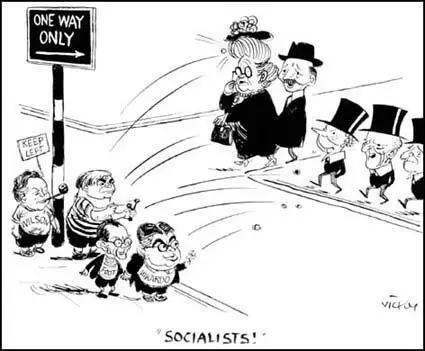
1963 Wilson 115 Brown 88 Callaghan 41
A strange characteristic for me of the present contest is that at its announcement I found that I knew less about Owen Smith than I had of any of the candidates on this list. On the other hand, I know more about Jeremy Corbyn than about any of the others, as I met him regularly during my 18 year period as an MP as we were both members of the Socialist Campaign Group. But I still have not made up my mind on how (or whether) to vote this time. For I would like to know how the contestants propose to bring about peace and reconciliation within the Labour Party should they be elected. Has anyone heard them say anything on this matter?
1955 Gaitskell 157 Bevan
70 Morrison 40.
1960 Gaitskell 166 Wilson
81
1961 Gaitskell 171
Greenwood 59
1963 Wilson 115 Brown 88 Callaghan 41
144
103
1978 Callaghan 84 Foot
90 Jenkins 56 Benn 37 Healy 30 Crosland 17
141
133 38
178
137
1980 Foot 83 Healy 112
Silkin 38 Shore 32
139
129
1983 Kinnock 71.2%
Hattersley 19.29%
1988 Kinnock 88.6% Benn
11.4%
1992 Smith 91.0% Gould
9.0%
1994 Blair 57.0% Prescott
24.13% Beckett 18.87%
2007 Brown unopposed
2010 E Miliband 34.33% D
Miliband 37.78%
50.65%
49.35%
Also - (Balls 11.8% Burnham 8.7% Abbott 7.4%)
Also - (Balls 11.8% Burnham 8.7% Abbott 7.4%)
2015 Corbyn 59.5% Burnham
19.0% Cooper 17.0% Kendall 4.5%
Wednesday, October 10, 2018
Our local Edward Carpenter
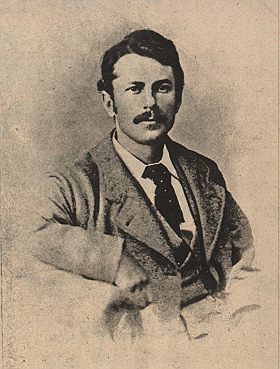
Edward Carpenter lived from 1844 to 1929 and became a prominent socialist, poet and writer who wrote many books and lectured across the country, whilst being based at his home at Millthorpe from 1883 to 1922. He lived close to my own home in nearby Dronfield. He also involved himself in Extra-mural teaching at Sheffield University, where I also taught from 1966 to 1987.
Though efforts have been made to remember Edward Carpenter, his important writings have largely been forgotten. Even in neighbouring Sheffield it is not possible to walk into a book shop and buy copies of even his most famous works. However, one can easily purchase a copy of Walt Whitman's Leaves of Grass, the poem that inspired Carpenter to write Towards Democracy.
Typesetting for a new edition of Towards Democracy is now. however, largely completed. All that is needed is money to pay for the printing, and to launch a relevant co-operative so that it can continue via its members' involvement onto further projects.
For further details about this project and how you can support it, link here to see the work being undertaken by Millthorpe Press which is a key co-operative that will be largely led by its members, who will have a vote in further publications by the co-operative, as well as receiving a newsletter, and invitations to stand for its board. Your involvement and support would be most welcome.
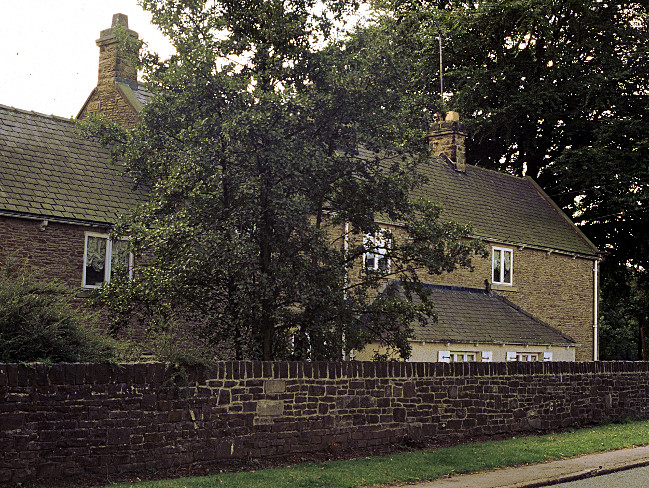
Carpenter's former home at Millthorpe.
For more information about the importance of Edward Carpenter click here and much more can be found by googling. There is a valuable article about him click here.
HAT TIPS to Michael John Hattersley and Mick Walpole of "Dronfield Through Time". Here is a photo taken in the early 1900s on the main Sheffield Road through Dronfield with Edward Carpenter in the centre -

Sunday, May 20, 2007
Beyond Our Ken
John McDonnell's Role Model
John is not the first member of the Socialist Campaign Group (SCG) to fail to gain sufficient nominations to stand for the Leadership of the Labour Party. Ken Livingstone went down that path in 1992.
After Labour's defeat in the 1992 Election, Neil Kinnock and Roy Hattersley bounced the Labour Party into elections for Leader and Deputy by their premature resignations, which gave the Party little time to give the matter much thought.
We can hardly plead that we were unprepared this time - although what is happening is again devoid of questioning and analysis.
Trying To Talk Ken Out Of Standing
As soon as Neil and Roy announced their intention to resign, SCG weekly meetings were dominated by how we should respond. Opinions differed strongly, with some keen to push Ken Livingstone's candidature. After all, Ken enjoyed a high media profile.
Yet there were strong voices arguing against running any candidate. For a while no-one sort to test the water by moving for a vote on the matter. But time started to run out and those supporting Ken needed to move. This was done at a poorly attended meeting which was held as a parliament was either moving in or out of recess - I forget which.
There were only seven MPs present for the crucial meeting. These were Tony Benn, Dennis Skinner, Ken Livingstone, John Austin (who was newly elected and was then known as John Austin-Walker), the late Bernie Grant, the late Bob Cryer and myself.
Crunch Time
At that time, Ken and Bernie had been at loggerheads over the best way to pursue anti-racist activities. Ken was fully involved in the work of the Anti Racist Alliance, whilst Bernie was active with the Anti Nazi League. Ken and Bernie barely seemed to be on speaking terms.
It was, therefore, something of a surprise when Ken informed us that if he stood for the leadership he was in favour of Bernie standing as his running mate for the post of Deputy. Thankfully for Ken, Bernie liked the idea.
Dennis Skinner and Bob Cryer were strong supporters of the notion that the Group should run candidates, so they supported the proposal for a Ken-Bernie ticket.
Tony Benn was probably chairing the meeting, as he did not vote. John Austin-Walker and myself opposed the proposal, as we felt that it would be counter-productive both inside the newly elected Parliamentary Labour Party and throughout the wider movement.
Otherwise tied at 2-2 (Skinner and Cryer vs Austin-Walker and Barnes), the outcome was determined by the votes of the would-be candidates.
Needless to say without Ken and Bernie even having widespread support amongst the missing members of the SCG, they failed badly to obtain the required number of nominations from Labour MPs.
Tony's Contribution
The last time the SCG moved successfully to secure a nomination for the Labour Leadership was in 1988 when Tony Benn challenged the then incumbent Leader, Neil Kinnock. Tony obtained only 11.4% of the vote. (This contest is not to be confused with his famous narrow defeat by Dennis Healy for the Deputy Leadership of the Labour Party in 1981, during the high-water mark of Bennism.)
Before Tony's name went forward, there were again lengthy weekly debates in the SCG. I remember Red Dawn's reaction (i.e. Dawn Primarolo) in particular. She was a strong supporter of Tony Benn's political position and initially she argued forcefully in support of him standing. But when she discussed the situation with left activists in her Bristol Constituency (the very people who she thought would support her line), she was shocked to find them repeating the same warnings that some of us were putting to her at SCG meetings. She then changed her stance. Perhaps this was the start of her move into the Gordon Brown camp.
An immediate consequence of Tony's failed candidature in 1988 was that the Labour Party raised the hurdle for MPs' nominations beyond the then 10% level - a move that was unhelpful to John McDonnell in the long run.
Yield Not To Temptation
The SCG and the left generally need to learn the futility in current circumstances of running their own candidates for top Labour positions. It takes activists to the top of the hill and lets them roll down again - as will be seen in John4Leader's comment box and on many a blog.
It was the above reasoning which led me to press for Peter Hain to stand for Leader and not just for Deputy. I judged that for the left he was a plausible candidate who would clear the nominations hurdle, run a campaign we could associate ourselves with and give us an opportunity to have a marginal influence on the future direction of the Party. I did not expect him to win, but to have some influence on Gordon Brown via his campaign.
As Peter did not stand for Leader (and few saw the significance of pushing him to stand), I eventually moved at the 11th hour to support John McDonnell - as (given the eventual lack of choice) I would have nominated him if I had still been an MP. Which is more than I did for Ken Livingstone in 1988.
But none of us should be placed in such a position. When it comes to issues as key as the Leadership of the Labour Party, the left and its MPs should make coherent moves to seek out feasible candidates. Unfortunately, that position has never won through in the SCG - except as below.
1988, 1992, 2007 Or 1994?
Although I know what went on in the SCG over the 1988 and 1992 Leadership contests, I'm not privy to what happened this year. But I am keen to find out.
There has, however, been one Leadership election where the SCG adopted the approach I favour. In 1994, I actively campaigned alongside Ken Livingstone and others for Margaret Beckett in the contest which Tony Blair won. Margaret might not seem to be a standard bearer for "left of centre" politics in current circumstances, but she did in 1994 (and for periods afterwards). At the least she would have maintained the Labourite stance of John Smith and would not have propagated a New Labour line - she was the Peter Hain of her time.
John is not the first member of the Socialist Campaign Group (SCG) to fail to gain sufficient nominations to stand for the Leadership of the Labour Party. Ken Livingstone went down that path in 1992.
After Labour's defeat in the 1992 Election, Neil Kinnock and Roy Hattersley bounced the Labour Party into elections for Leader and Deputy by their premature resignations, which gave the Party little time to give the matter much thought.
We can hardly plead that we were unprepared this time - although what is happening is again devoid of questioning and analysis.
Trying To Talk Ken Out Of Standing
As soon as Neil and Roy announced their intention to resign, SCG weekly meetings were dominated by how we should respond. Opinions differed strongly, with some keen to push Ken Livingstone's candidature. After all, Ken enjoyed a high media profile.
Yet there were strong voices arguing against running any candidate. For a while no-one sort to test the water by moving for a vote on the matter. But time started to run out and those supporting Ken needed to move. This was done at a poorly attended meeting which was held as a parliament was either moving in or out of recess - I forget which.
There were only seven MPs present for the crucial meeting. These were Tony Benn, Dennis Skinner, Ken Livingstone, John Austin (who was newly elected and was then known as John Austin-Walker), the late Bernie Grant, the late Bob Cryer and myself.
Crunch Time
At that time, Ken and Bernie had been at loggerheads over the best way to pursue anti-racist activities. Ken was fully involved in the work of the Anti Racist Alliance, whilst Bernie was active with the Anti Nazi League. Ken and Bernie barely seemed to be on speaking terms.
It was, therefore, something of a surprise when Ken informed us that if he stood for the leadership he was in favour of Bernie standing as his running mate for the post of Deputy. Thankfully for Ken, Bernie liked the idea.
Dennis Skinner and Bob Cryer were strong supporters of the notion that the Group should run candidates, so they supported the proposal for a Ken-Bernie ticket.
Tony Benn was probably chairing the meeting, as he did not vote. John Austin-Walker and myself opposed the proposal, as we felt that it would be counter-productive both inside the newly elected Parliamentary Labour Party and throughout the wider movement.
Otherwise tied at 2-2 (Skinner and Cryer vs Austin-Walker and Barnes), the outcome was determined by the votes of the would-be candidates.
Needless to say without Ken and Bernie even having widespread support amongst the missing members of the SCG, they failed badly to obtain the required number of nominations from Labour MPs.
Tony's Contribution
The last time the SCG moved successfully to secure a nomination for the Labour Leadership was in 1988 when Tony Benn challenged the then incumbent Leader, Neil Kinnock. Tony obtained only 11.4% of the vote. (This contest is not to be confused with his famous narrow defeat by Dennis Healy for the Deputy Leadership of the Labour Party in 1981, during the high-water mark of Bennism.)
Before Tony's name went forward, there were again lengthy weekly debates in the SCG. I remember Red Dawn's reaction (i.e. Dawn Primarolo) in particular. She was a strong supporter of Tony Benn's political position and initially she argued forcefully in support of him standing. But when she discussed the situation with left activists in her Bristol Constituency (the very people who she thought would support her line), she was shocked to find them repeating the same warnings that some of us were putting to her at SCG meetings. She then changed her stance. Perhaps this was the start of her move into the Gordon Brown camp.
An immediate consequence of Tony's failed candidature in 1988 was that the Labour Party raised the hurdle for MPs' nominations beyond the then 10% level - a move that was unhelpful to John McDonnell in the long run.
Yield Not To Temptation
The SCG and the left generally need to learn the futility in current circumstances of running their own candidates for top Labour positions. It takes activists to the top of the hill and lets them roll down again - as will be seen in John4Leader's comment box and on many a blog.
It was the above reasoning which led me to press for Peter Hain to stand for Leader and not just for Deputy. I judged that for the left he was a plausible candidate who would clear the nominations hurdle, run a campaign we could associate ourselves with and give us an opportunity to have a marginal influence on the future direction of the Party. I did not expect him to win, but to have some influence on Gordon Brown via his campaign.
As Peter did not stand for Leader (and few saw the significance of pushing him to stand), I eventually moved at the 11th hour to support John McDonnell - as (given the eventual lack of choice) I would have nominated him if I had still been an MP. Which is more than I did for Ken Livingstone in 1988.
But none of us should be placed in such a position. When it comes to issues as key as the Leadership of the Labour Party, the left and its MPs should make coherent moves to seek out feasible candidates. Unfortunately, that position has never won through in the SCG - except as below.
1988, 1992, 2007 Or 1994?
Although I know what went on in the SCG over the 1988 and 1992 Leadership contests, I'm not privy to what happened this year. But I am keen to find out.
There has, however, been one Leadership election where the SCG adopted the approach I favour. In 1994, I actively campaigned alongside Ken Livingstone and others for Margaret Beckett in the contest which Tony Blair won. Margaret might not seem to be a standard bearer for "left of centre" politics in current circumstances, but she did in 1994 (and for periods afterwards). At the least she would have maintained the Labourite stance of John Smith and would not have propagated a New Labour line - she was the Peter Hain of her time.
Subscribe to:
Posts (Atom)